
Key Takeaways
- The interval between stocktakes is too long when a location error can go undetected until an outlet order is being picked. The practical test is whether the team still has time to investigate and correct the error before dispatch.
- A correct stock total can hide a picking problem. A distribution centre may have all 24 cartons on record, yet the next delivery can still be delayed if six of them are in the wrong rack bay.
- Start with the locations where a late discovery has the greatest consequence. A check after putaway and before an afternoon picking wave may be more valuable than increasing count frequency across the whole warehouse.
A correct stock total can still delay an outlet delivery
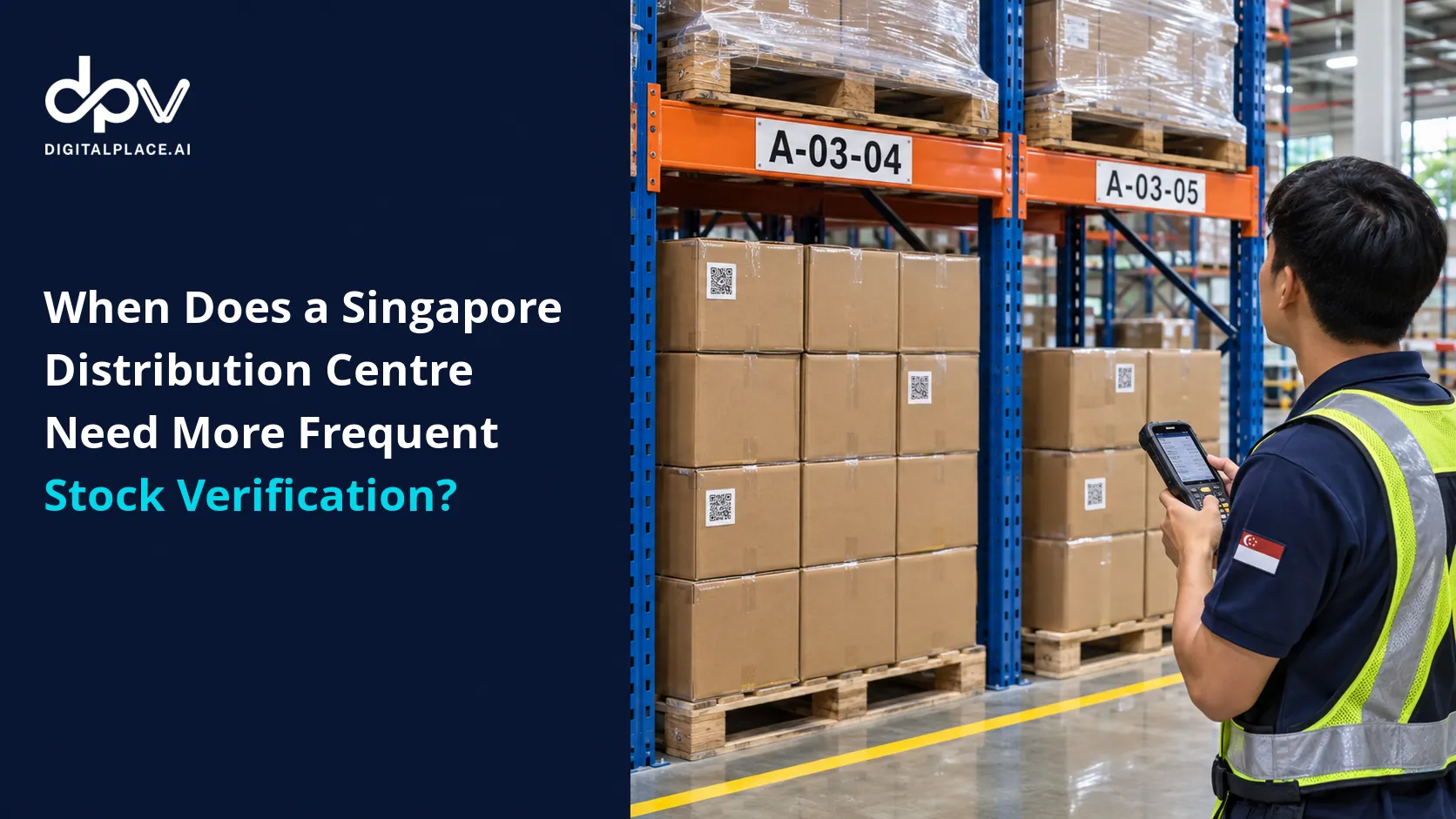
Consider a Singapore distribution centre preparing an afternoon delivery to three supermarket outlets. Its warehouse management system (WMS) shows 24 cartons of cooking oil in bay A-03-04. During morning putaway, six cartons are moved to the adjacent bay to make room for another delivery. The physical move is complete, but the location transfer is still open in the WMS.
Just after lunch, a picker arrives at A-03-04 with instructions to collect 20 cartons. There are only 18. Across the two bays, the distribution centre still holds exactly 24 cartons. At the picking location, however, the team is two cartons short. Someone now has to check the neighbouring racks, review recent movements and decide whether the order can be completed before the vehicle leaves.
In this example, another stocktake at the end of the week would eventually confirm the quantity. The more useful opportunity was earlier that day, after the cartons moved and while the outbound team still had time to act. That is the decision warehouse leaders face when reviewing verification frequency: how late can a discrepancy be discovered before it affects the next outlet delivery?
How to tell when the interval between checks is too long
Start with recent picking exceptions. For each one, establish three times as closely as the records allow: when the last relevant stock movement took place, when someone discovered the discrepancy, and when the affected order needed to be ready. A discrepancy discovered five minutes before dispatch has a different operational consequence from the same discrepancy discovered two hours earlier.
The following patterns can help a warehouse manager decide where more frequent checks are worth considering.
When should you check stock locations earlier?
| What the team repeatedly observes | What it suggests | Where to test an earlier check |
|---|---|---|
| Observation Pickers regularly find the expected cartons one or two bays away. | What it suggests Location records may fall behind physical moves during putaway or relocation. | Next step Check the affected bays after the movement is complete and its WMS transaction is due to be posted. |
| Observation Monthly stocktakes show little quantity variance, but outlet orders still involve rack searches. | What it suggests Total inventory accuracy is masking a location problem at picking time. | Next step Verify selected locations serving the next outbound wave. |
| Observation The same aisle causes problems during promotions or peak receiving periods. | What it suggests The usual checking schedule may be adequate in quieter weeks but too slow when stock moves more often. | Next step Add a temporary check during the busy period, then review whether it is still needed. |
| Observation Staff discover discrepancies early, but corrections remain open into the next shift. | What it suggests The delay may be in investigation or approval. | Next step Review who owns each exception and when it must be closed before adding more checks. |
The last pattern matters. If a supervisor already knows at 10 am that a carton is in the wrong bay, scanning it again at noon adds little if nobody has been assigned to resolve the discrepancy. Increasing frequency makes sense when earlier discovery changes what the team can do.
Set the checking interval around the next stock movement
A practical way to set the interval is to work backwards from an outlet delivery. Suppose picking starts at 1 pm and the team needs half an hour to investigate a location discrepancy. A check completed at 12.50 pm offers little time to recover. One completed before 12.30 pm gives the supervisor a chance to inspect the relevant bays and correct the picking instruction. But if putaway continues in that aisle until 12.45 pm, scanning earlier introduces a different problem: cartons may move again after they have been checked.
For that reason, the most useful schedule may be tied to an event. A distribution centre could verify a selected aisle after a batch of putaway transactions closes, or check the bays assigned to a promotion before the first outlet orders are released. Stable reserve locations with few movements can remain on their existing schedule. The warehouse can retain its periodic stocktake while adding targeted location checks between counts.
Digitalplace.ai supports scheduled checks of high-bay stock locations. For teams assessing whether repeated scans would fit the window between putaway and picking, Digitalplace.ai explains how visible QR codes on cartons can be checked against their recorded rack locations through drone-based stock verification for Singapore distribution centres.
Test one aisle before changing the warehouse-wide schedule
Choose an aisle that has generated recurring picking exceptions and serves a recognisable group of outlet orders. If the trial aisle includes upper rack levels, review how drones can support safer high-bay inventory checks before scheduling more frequent counts.
Use recent shifts as a baseline. Record how often pickers had to search for stock, how much staff time went into those searches, and whether the team completed the affected orders before dispatch. Then introduce one additional verification window and compare shifts with similar order volumes and stock movements.
Three measures will tell management more than the number of scans completed:
| Measure | What it helps management decide |
|---|---|
| Location discrepancies confirmed before picking | Did the additional check uncover problems early enough for someone to act? |
| Outlet orders interrupted by a location search | Did earlier verification reduce disruption for the outbound team? |
| Staff time spent on verification, investigation and correction | Did the new schedule save effort overall, or shift the same work to another team? |
Review individual incidents alongside the totals. If earlier checks repeatedly catch cartons moved without a completed WMS transfer, the findings point to a fix in the relocation process itself. If most scans simply flag transactions that are still being posted normally, move the verification window later. If one busy aisle shows fewer interrupted picks while quiet aisles rarely produce a confirmed discrepancy, there is a sound reason to keep the higher frequency local.
A Singapore distribution centre needs more frequent stock verification when its current schedule leaves too little time between finding a location error and fulfilling the outlet order that depends on it. In the cooking-oil example, catching one unposted move before the afternoon picking wave is a more meaningful result than completing another full count after the truck has left.