Match inventory to demand across Singapore outlets and distribution centres with AI forecasting and replenishment planning—keeping products available while reducing excess stock and pressure on storage space.
Replenishment Planning for Space-Constrained Singapore Outlets
An outlet near an MRT station may sell 24 bottles of tea a day but have room for only a small daily delivery. A neighbourhood outlet selling 12 bottles a day needs 36 to cover three days between deliveries. Planners can use these forecasts, available stock and storage limits to size each order from the distribution centre. If the MRT outlet risks running out before its next delivery, a nearby outlet with surplus stock can cover the gap.
How AI Improves Inventory Planning
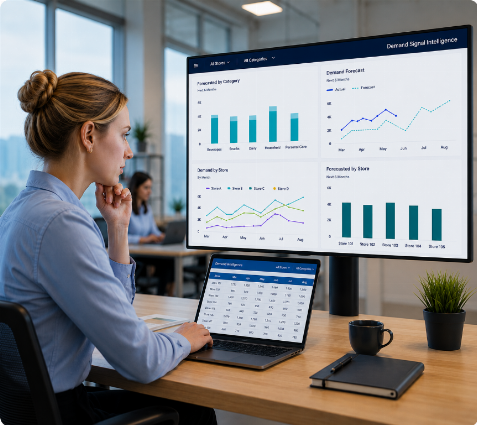
Demand Signal Intelligence
Combines sales history, promotions, seasonality, store-level patterns, and external signals to forecast SKU demand by location.
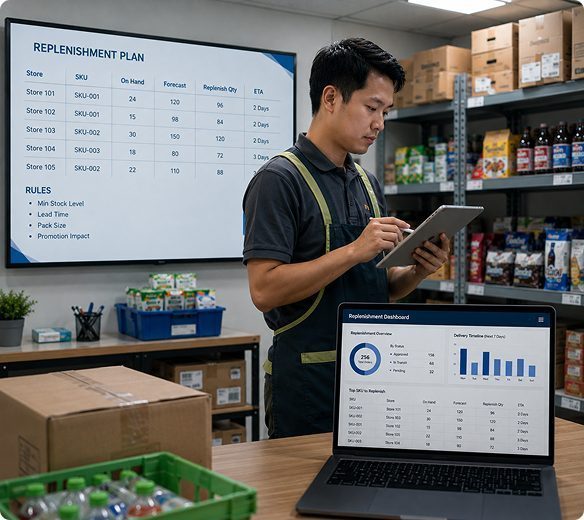
Replenishment Optimization
Calculates replenishment quantities using demand forecasts, stock levels, and operational rules to keep inventory closer to actual needs.
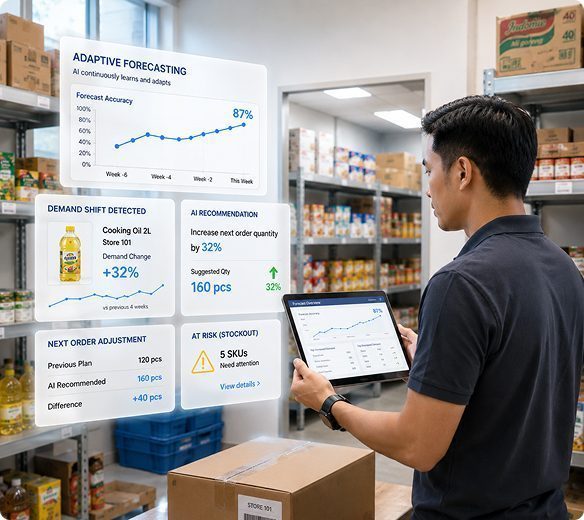
Adaptive Learning
Continuously recalibrates demand forecasts as new sales patterns, promotions, and demand shifts emerge.
Inventory Optimization KPIs for Singapore Retailers
For Singapore retailers with limited backroom space, the challenge is keeping fast-selling products available without tying up cash in excess stock. The figures below reflect average client results. Outcomes vary with outlet size, delivery frequency, product mix and data quality.
>25%
Fewer Days of Inventory
>30%
Fewer Stockouts
>10%
Recovered Profit vs Subscription Cost
100%
Automated Replenishment Planning
Holding fewer days of stock frees up working capital and makes room in compact backrooms for faster-selling items.
Plan replenishment around each outlet’s sales pace so popular items stay available between deliveries.
Compare the profit recovered by avoiding stockouts with the cost of the inventory planning subscription.
Automate routine replenishment calculations so planners can focus on exceptions, such as a promotion that brings an outlet’s next order forward.
A CBD outlet may sell more ready-to-eat meals at weekday lunchtime, while a heartland supermarket may see stronger weekend demand for family packs. Forecast sales by SKU and outlet so each branch receives the stock it needs ahead of its busiest trading days.
Forecast Demand by Outlet
Use each outlet’s sales history to see which SKUs peak on weekdays, at weekends or during festive promotions. Forecast the uplift separately for each branch.
Automate Orders by Delivery Cycle
Generate replenishment orders using stock on hand, expected sales and the next delivery date. A Friday order can then cover a busy weekend at a heartland outlet.
Allocate Stock Ahead of Promotions
When promotional stock is limited, use expected sales at each outlet to decide how many cartons the distribution centre should send to each branch.
Rebalance Stock Between Outlets
After a promotion, identify branches with surplus stock and those likely to run out before their next delivery. Transfer stock where it can sell and reduce the next order at the slower outlet.
If only part of a supplier’s biscuit order arrives before Chinese New Year, which outlets should receive the first cartons? Compare stock at the distribution centre with what each outlet has on hand and expects to sell before its next delivery
End-to-End Inventory Visibility
Compare stock at your distribution centre and across your Singapore outlets with recent sales for each SKU. See which outlets are running low and where stock is available to replenish them.
Prioritise Outlets at Risk
An outlet with six cartons may run out sooner than one with three if it sells four times as fast. Use expected sales and delivery dates to decide which outlet needs stock first.
Supplier-to-Store Coordination
Ahead of Chinese New Year, use each outlet’s demand forecast to plan how many cartons to send from the distribution centre. Then use stock on hand and supplier lead times to decide how much to order and when.
Scale Planning by Store Format
Apply the same planning process across Singapore supermarkets and convenience stores. Set delivery frequency and stock limits by format so each outlet receives quantities it can store and sell.
FAQ
Frequently Asked Questions
How does AI inventory optimisation work for Singapore retailers?
AI-powered inventory optimization uses sales patterns, promotions, seasonality, inventory levels, and other demand signals to improve forecasting and stock-planning decisions. It enables retailers to determine what inventory is needed, where it should be positioned, and when replenishment should occur across stores and distribution centers.
How does the forecast handle festive promotions and one-off bulk orders?
A corporate order for 200 gift hampers ahead of Chinese New Year can make one week’s sales look unusually high. The model separates one-off bulk purchases from regular demand and uses past promotions and seasonal patterns to estimate the festive uplift. This helps planners avoid reordering at the same rate once the event ends.
How much should a small outlet order when backroom space is limited?
Start with expected sales until the next delivery, add a safety buffer and subtract usable stock already on hand or due to arrive in time. Then check the suggested order against the outlet’s storage space and minimum order size. If a full carton would leave too much stock, the planner can review the delivery frequency.
What happens if a promotion shifts demand from one pack size to another?
Both pack sizes need a fresh forecast. If a supermarket promotes a six-pack of drinks, six-pack sales may rise while sales of single cans fall. The model accounts for that shift so the planner can increase replenishment for the promoted pack and reduce the next order for the slower-selling one.
What should a retailer do with unsold stock after a festive promotion?
After Chinese New Year, a Singapore supermarket may still have cartons of gift biscuits on hand. Use the post-promotion forecast to estimate how many each outlet can sell before the best-before date. Planners can then reduce the next order, pause replenishment or return surplus cartons to the distribution centre where return rules allow.
How do outlet forecasts help a distribution centre order from suppliers?
The distribution centre combines outlet requirements by SKU, then checks its available stock, expected receipts and supplier lead times. This gives the planner two quantities: what can be dispatched to outlets now and what needs to be ordered from the supplier to cover upcoming deliveries.
What data do we need to test this across our Singapore outlets?
For a simulation, prepare two to three years of transaction history, a SKU list, outlet and warehouse stock records, minimum display quantities, minimum order quantities and lead times. A promotion calendar and records of goods in transit can improve the analysis, particularly around festive trading periods.
How can we tell whether a pilot is worth rolling out?
Choose pairs of outlets with similar sales volumes, product ranges and shopping patterns. In each pair, use AI replenishment at one outlet and keep the usual ordering process at the other. Track stockouts, days of inventory and net margin at both outlets before and during the pilot. If the AI outlets consistently carry less stock while maintaining product availability and net margin, consider a wider rollout.