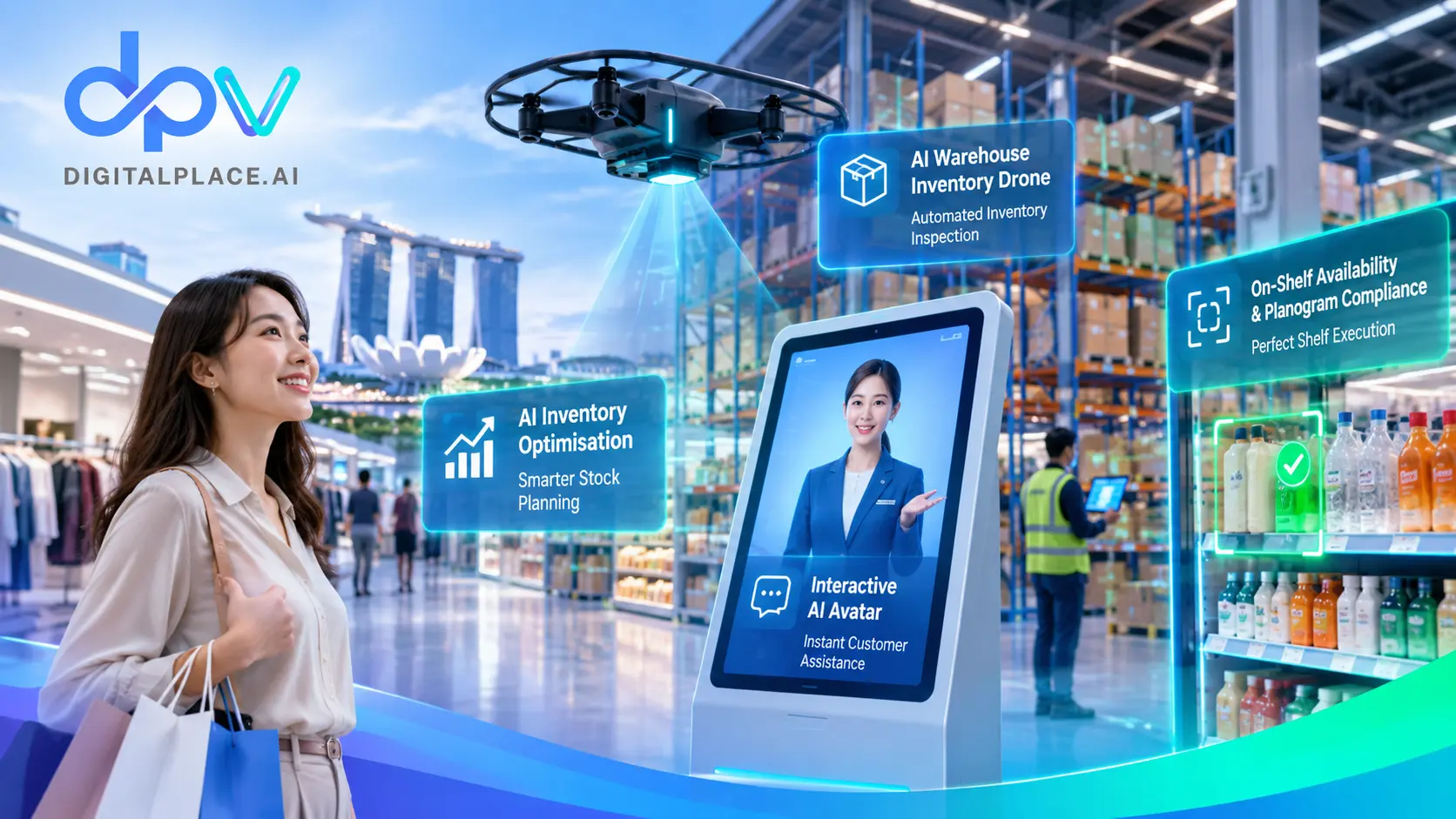
Introduction: The Next Chapter of Singapore’s Retail Industry
Walk into any shopping mall in Singapore, from Orchard Road to Tampines, and you will see how physical retail continues to play an important role in everyday consumer life. Supermarkets, convenience stores, pharmacies, and speciality retailers remain essential parts of the country’s retail ecosystem. Yet behind the shelves and attractive storefronts, retailers face increasingly complex operational demands.
Managing thousands of SKUs across multiple outlets, keeping popular products available, maintaining consistent shelf displays, and delivering responsive customer service require more than traditional retail management practices. Rising operating costs, manpower constraints, changing consumer expectations, and competition from e-commerce have made operational efficiency a critical priority for Singapore retailers.
Artificial intelligence (AI) is creating new opportunities to address these challenges. Rather than focusing exclusively on online shopping, retailers can now apply AI directly to physical store operations, warehouse management, inventory planning, and customer engagement.
For retailers looking to modernise their operations, Digital Place Vision (DPV) provides AI-powered solutions designed to improve inventory visibility, optimise store execution, and enhance customer experiences. This article explores four practical ways AI is transforming offline retail in Singapore and how retailers can apply these technologies to build more efficient and competitive businesses.
Why Singapore’s Offline Retail Industry Needs AI
Singapore’s retail industry operates in a highly competitive environment where customers expect convenience, product availability, and consistent service. Retailers must balance these expectations while managing operational costs and making effective use of their workforce.
The challenge becomes more complicated for businesses operating multiple outlets. A supermarket chain, for example, may experience different purchasing patterns across neighbourhoods, shopping malls, and residential areas. Products that sell quickly in one location may move slowly in another, making inventory allocation and replenishment difficult to manage through conventional planning methods.
Singapore’s retail transformation agenda also reflects this growing need. In May 2026, Enterprise Singapore and the Infocomm Media Development Authority (IMDA) introduced a refreshed Retail Industry Digital Plan to guide more than 2,000 SME retailers in their digital transformation, with greater emphasis on AI-powered solutions. The initiative highlights the increasing importance of technology in strengthening business resilience and competitiveness.
Some of the operational challenges facing retailers include:
- Inaccurate demand forecasting: Promotions, seasonal shopping patterns, public holidays, and changing consumer preferences can make it difficult to predict demand accurately.
- Frequent out-of-stock situations: Popular products may become unavailable before replenishment arrives, resulting in missed sales opportunities.
- Excess inventory: Products with slower sales movements occupy valuable warehouse and retail space while tying up working capital.
- Poor shelf execution: Products may be available in the backroom but remain missing from shelves, or appear in the wrong locations.
- Labour-intensive warehouse operations: Manual stocktaking and inventory verification consume time and require staff to perform repetitive checks.
- Inconsistent customer assistance: Store employees may struggle to respond to every customer enquiry during peak shopping periods.
These problems cannot always be resolved by increasing headcount or conducting more frequent manual inspections. Retailers need better visibility into what is happening across their operations, together with the ability to identify problems and respond before they affect sales.
AI makes this possible by converting operational data and visual information into actionable insights, allowing employees to spend less time on repetitive activities and more time on tasks that require human judgement and customer interaction.
Four AI Solutions Transforming Physical Retail Operations
1. AI-Powered Inventory Optimisation
Inventory management is one of the most important factors influencing retail profitability. Having too little stock can result in lost sales, while holding excessive inventory increases storage costs and ties up capital that could be used elsewhere in the business.
For Singapore retailers managing multiple stores and distribution centres, these challenges are particularly important because demand can differ significantly between locations. A product that sells quickly in a high-traffic shopping mall may have a completely different sales pattern in a neighbourhood convenience store.
AI-powered inventory optimisation uses machine learning to analyse historical sales, promotional activities, seasonal trends, store-level demand, and other relevant signals to generate more accurate demand forecasts. Instead of relying entirely on historical averages or fixed replenishment rules, the system continuously evaluates changing demand patterns and helps retailers determine the appropriate inventory quantities for each product and location.
Key capabilities include:
- Demand forecasting: Predict future product demand using historical sales, promotional effects, seasonal patterns, and location-specific purchasing behaviour.
- Automated replenishment: Generate replenishment recommendations or orders based on forecast demand, current inventory levels, and operational rules.
- Inventory allocation: Distribute available stock across outlets and distribution centres according to their respective demand requirements.
- Stockout and overstock reduction: Improve inventory balance by identifying where additional stock is needed and where excess inventory can be reduced.
For example, a supermarket chain preparing for Chinese New Year may experience increased demand for festive food products, beverages, and household essentials. AI-powered forecasting can help identify these changes earlier and support more appropriate replenishment decisions across individual outlets.
With DPV’s AI Inventory Optimisation solution, retailers can improve demand forecasting, coordinate replenishment, and manage inventory across multiple locations. This helps businesses move towards more proactive inventory planning instead of relying primarily on manual adjustments and reactive stock management.
2. Autonomous AI Warehouse Inventory Drones
Behind every well-stocked retail outlet is a warehouse or distribution centre responsible for storing, organising, and distributing products. However, maintaining accurate inventory records across large facilities can be challenging, especially when warehouses contain thousands of SKUs stored across high-bay racks.
Traditional stocktaking often requires employees to walk through warehouse aisles, scan labels, verify pallet locations, and manually record inventory information. In facilities with high storage racks, some checks may also require specialised access equipment and additional safety procedures.
These activities can consume significant time and manpower, particularly when inventory verification needs to be repeated regularly without disrupting normal warehouse operations.
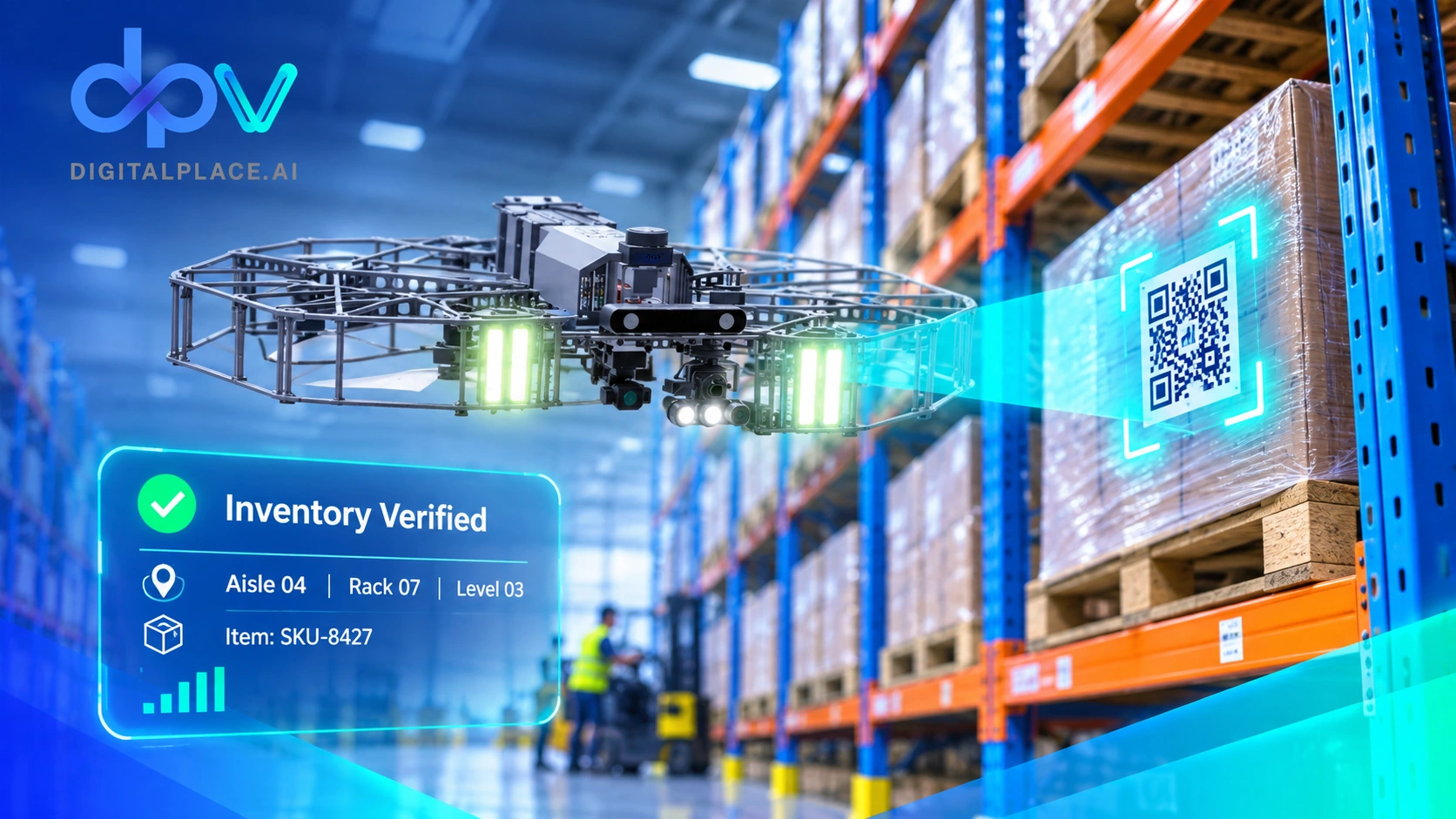
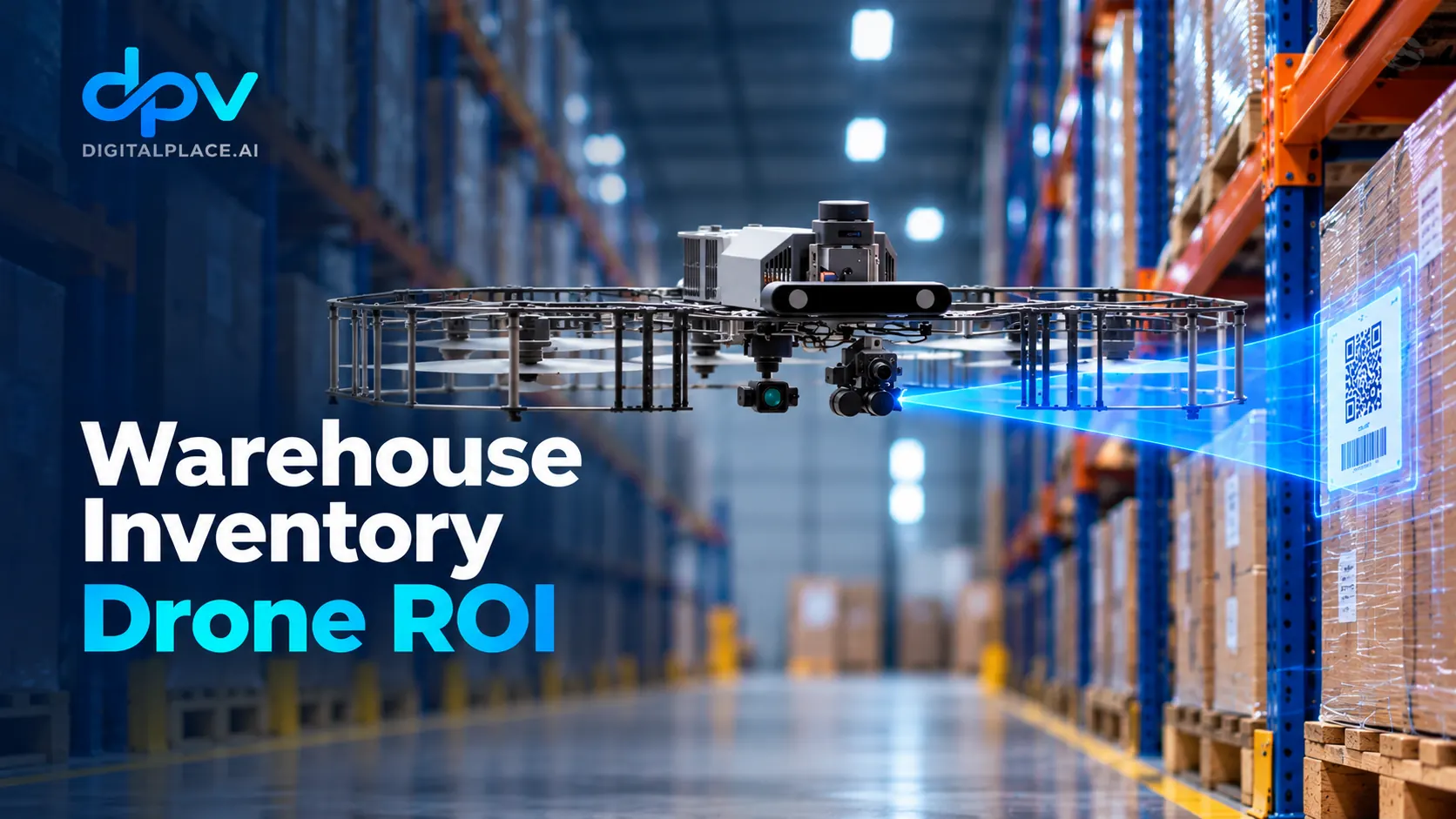
AI-powered warehouse inventory drones offer an alternative by automating scheduled inventory inspections. Using autonomous navigation and visual scanning capabilities, drones can travel through designated warehouse aisles to capture inventory information and verify product or pallet locations.
Depending on the warehouse configuration, the technology can support:
- Automated inventory verification: Scan QR codes or other supported labels to confirm pallet and inventory locations.
- Misplaced inventory detection: Identify discrepancies between recorded inventory locations and actual warehouse positions.
- Empty storage location verification: Detect vacant pallet positions and improve visibility into available storage capacity.
- Cycle counting: Perform scheduled inventory checks across selected warehouse zones or facilities.
- High-bay inventory inspection: Inspect elevated storage locations without requiring employees to perform every check manually.
For Singapore’s logistics and retail distribution operations, where warehouse space and workforce productivity are important considerations, automating repetitive inventory inspections can help improve operational efficiency while reducing the need for routine manual checks at height.
DPV’s AI Warehouse Inventory Drone is designed to help warehouse teams improve inventory accuracy, verify storage locations, and conduct recurring stock inspections with less manual effort. The solution can also be configured around existing warehouse layouts and operational requirements, helping businesses introduce automation without unnecessarily disrupting their daily workflows.
3. Interactive AI Avatar Kiosks for Customer Engagement
Customer experience remains a major differentiator for physical retailers. Whether shoppers are visiting a shopping mall, supermarket, or speciality store, they expect to find relevant information and receive assistance without unnecessary delays.
However, store employees often have several responsibilities to manage simultaneously, including cashier operations, product replenishment, merchandising, and customer support. During weekends, promotional campaigns, and peak shopping hours, providing immediate assistance to every customer can become difficult.
Interactive AI avatar kiosks offer another way to support customer engagement by providing a digital assistant that can communicate with shoppers in a natural and accessible manner.
Powered by conversational AI, these kiosks can respond to customer enquiries in real time, provide information about products and promotions, and guide visitors towards relevant services or store locations.
Potential applications include:
- Product enquiries: Help customers find product information, availability, and relevant recommendations.
- Promotional information: Explain current discounts, special offers, and loyalty programmes.
- Shopping assistance: Guide customers towards specific departments, products, or retail locations.
- QR code engagement: Share digital links to promotions, loyalty programmes, and other customer resources.
- Multilingual interaction: Support customer communication in different languages, depending on the system’s configuration.
For example, a visitor at a Singapore shopping mall could approach an AI kiosk to ask about restaurant promotions, store locations, or ongoing events. Instead of waiting for an available information counter employee, the visitor can receive immediate assistance through an interactive digital avatar.
Digital Place Vision’s AI Avatar solution enables businesses to introduce interactive AI-powered customer assistance through physical kiosks and digital platforms. Beyond traditional retail stores, the technology can also be applied in shopping malls, commercial buildings, healthcare facilities, and other customer-facing environments.
4. AI-Powered On-Shelf Availability and Planogram Compliance
A product being recorded as available in the inventory system does not necessarily mean customers can find it on the shelf.
This is one of the most common operational gaps in physical retail. Products may be sitting in the backroom, placed in the wrong aisle, or displayed incorrectly despite being available within the store’s inventory records.
For retailers operating multiple outlets, manually checking every shelf and verifying its compliance with the approved display arrangement can become a time-consuming process. It can also be difficult for management teams to maintain consistent merchandising standards across different locations.
Computer vision provides a more efficient approach by allowing AI systems to analyse shelf conditions using images or recorded videos captured by store employees.
Through scheduled shelf inspections, the system can compare actual shelf arrangements against approved planograms and identify potential execution problems.
Key capabilities include:
- Out-of-stock detection: Identify empty shelf spaces and products that are unavailable for customers.
- Misplaced product identification: Detect items displayed in incorrect shelf positions.
- Unknown product recognition: Highlight products that cannot be matched to the expected product or display information.
- Planogram compliance monitoring: Evaluate whether shelf arrangements follow the approved merchandising guidelines.
- Display quantity verification: Identify discrepancies between expected and actual product display quantities.
Imagine a retailer conducting routine shelf inspections across several supermarket outlets. Employees simply record videos of designated shelf sections using supported devices, and AI analyses the footage to identify missing products, misplaced items, and planogram deviations.
Instead of relying entirely on manual shelf audits, store teams can receive clearer information about which areas require attention and prioritise corrective actions accordingly.
With DPV’s On-Shelf Availability (OSA) and Planogram Compliance solution, retailers can improve shelf visibility, detect execution issues earlier, and maintain more consistent merchandising standards across their store networks. The solution also supports inspection workflows using compatible devices without requiring permanent camera installations throughout every store.
Read more: High-Bay Warehouse Inventory Checks: Can Drones Improve Safety in Singapore?
Building a Connected and Intelligent Retail Ecosystem
Although each AI solution addresses a different operational challenge, their combined value becomes more significant when they work together.
Retail operations involve several interconnected processes, from inventory planning and warehouse management to product replenishment and customer engagement. A problem in one area can easily affect the others. For example, inaccurate warehouse inventory information may lead to poor replenishment decisions, while products that fail to reach store shelves can result in missed sales even when sufficient stock exists elsewhere in the supply chain.
A connected AI ecosystem helps retailers improve visibility across these different touchpoints:
- Inventory optimisation predicts demand and supports better stock allocation across distribution centres and retail outlets.
- Warehouse inventory drones improve inventory verification and provide more reliable information about stock locations.
- On-shelf availability monitoring identifies missing products and merchandising issues before they create prolonged shelf gaps.
- AI avatar kiosks provide customers with more accessible information and responsive assistance.
When these technologies are implemented as part of a broader retail transformation strategy, businesses can move away from disconnected manual processes towards more coordinated, data-driven operations.
The potential benefits extend across three important areas:
Operational efficiency: Reduce repetitive manual inspections, improve inventory visibility, and help employees focus on higher-value activities.
Customer experience: Improve product availability, maintain consistent shelf displays, and provide faster access to relevant information and assistance.
Business performance: Reduce unnecessary inventory costs, protect sales opportunities, and make better use of working capital and operational resources.
For retailers managing multiple outlets across Singapore, this approach can also help establish more consistent operational standards and support business expansion without relying entirely on additional manual processes.
What Should Singapore Retailers Consider Before Adopting AI?
Adopting AI is not simply a matter of installing new software or purchasing automated equipment. Retailers need to understand their existing operational processes, identify the problems they want to solve, and determine how new technologies will fit into their current business environment.
Before implementing an AI solution, businesses should consider several important factors:
- Data readiness: Ensure that relevant sales, inventory, product, and operational data are sufficiently accurate and accessible.
- Integration requirements: Evaluate how the proposed solution will work with existing POS, ERP, inventory management, and warehouse systems.
- Operational compatibility: Consider store layouts, warehouse configurations, available devices, and existing employee workflows.
- Workforce adoption: Provide appropriate training so employees understand how to use AI-generated insights and incorporate them into daily activities.
- Scalability: Select solutions that can support additional outlets, SKUs, and operational requirements as the business grows.
- Measurable objectives: Establish clear performance indicators, such as inventory accuracy, stockout frequency, shelf inspection time, or replenishment efficiency.
Retailers should also avoid introducing too many technologies simultaneously without a clear implementation strategy. Starting with a specific operational challenge allows businesses to evaluate the results, understand the practical requirements, and expand adoption based on measurable improvements.
Singapore’s refreshed Retail Industry Digital Plan reinforces this practical approach by encouraging retailers to identify business needs and adopt digital and AI-enabled solutions across different operational touchpoints.
Read more: How Do Warehouse Inventory Drones Navigate Without GPS or New Wi-Fi Infrastructure?
Conclusion: Making Singapore’s Physical Retail Operations Smarter with AI
The future of physical retail is not defined by technology replacing the in-store shopping experience. Instead, it is about using technology to make retail operations more intelligent, efficient, and responsive to customer needs.
From predicting product demand and automating warehouse inventory checks to monitoring shelf availability and providing interactive customer assistance, AI offers retailers practical ways to address operational challenges that traditional processes often struggle to resolve.
As Singapore’s retail landscape continues to evolve, businesses that invest in better operational visibility and intelligent automation will be better positioned to manage costs, improve productivity, and deliver consistent customer experiences.
Digital Place Vision aims to support this transformation through its range of AI-powered retail solutions, helping businesses connect inventory planning, warehouse operations, shelf execution, and customer engagement through practical technology.
Ready to explore how AI can improve your retail operations?
Visit Digital Place Vision to discover our AI solutions or contact our team to arrange a personalised demonstration for your business.