On-Shelf Availability & Planogram Compliance for Singapore Retailers
Use AI-powered shelf scans to spot missing SKUs, misplaced products and incorrect facings, so store teams know what to fix before the next peak shopping period.
How a Singapore Supermarket Can Spot a Shelf Gap Before the Evening Rush
Consider a supermarket near an MRT station ahead of the evening commute. The chilled drinks shelf looks full, but a shelf scan flags a gap: the unsweetened tea listed in the planogram is missing, and the regular version occupies both facings. Shoppers looking for the unsweetened option see a full shelf and still leave without it.
The merchandising team can use the scan to flag two actions. First, store staff check the backroom for the missing SKU and replenish it if stock is available. Then they move the regular tea back to its assigned space and restore the correct number of facings. A follow-up scan lets the team verify that shoppers can find both variants in the right place.
Detect Shelf
Gaps Earlier
Shelf gaps can lead to missed sales when products are not visible or available at the moment customers want to buy.
Identify Misplaced and Unknown SKUs
A shelf can look full while the right product is actually missing from its intended position.
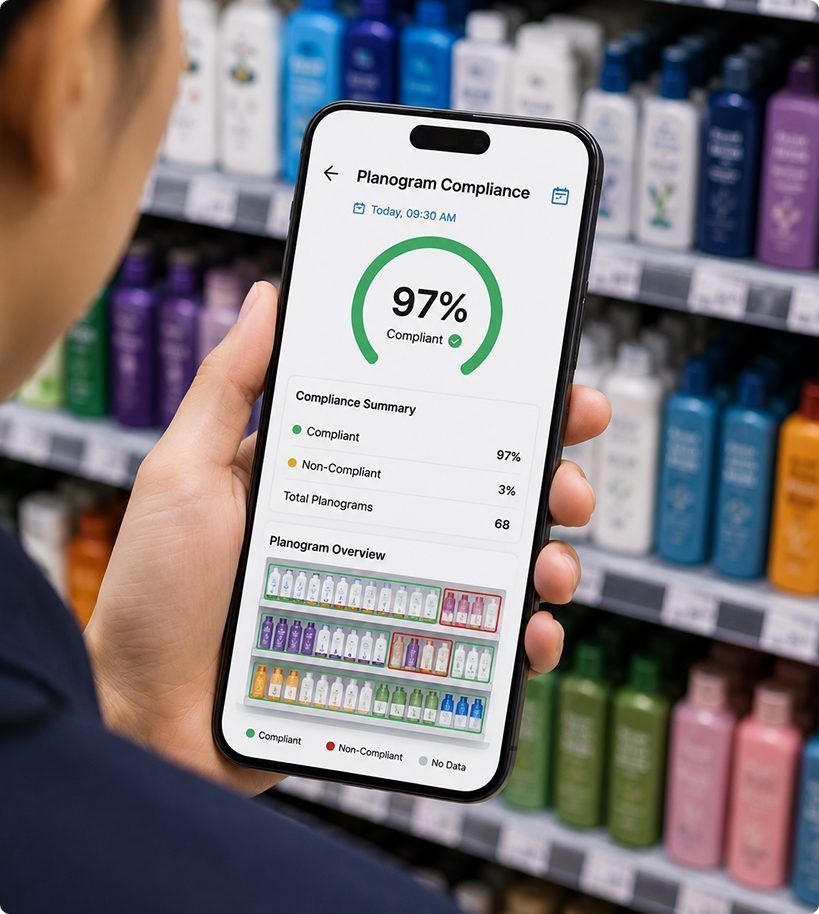
Measure Planogram Compliance More Consistently
Planogram compliance is not only about neat shelves.
Manual Shelf Check VS DPV OSA
A comparison of shelf availability, planogram compliance, and operational efficiency.
Manual spot checks; late visibility
Found after sales are missed
Shelf looks full, SKU is wrong
Inconsistent audit across stores
Scheduled scans; clearer store view
Detected earlier; replenish faster
Flag mismatch vs planogram
Detected earlier; replenish faster
Measurable Improvements
in Shelf Execution
Improve the accuracy and speed of routine shelf checks while giving store teams faster visibility into execution issues. Results shown below reflect average client implementations and may vary depending on store conditions, data quality, device setup, and implementation scope.
>94%
High Product Detection Accuracy
Identify products and their shelf locations with a high degree of detection accuracy during routine store checks.
5.5x
Faster Shelf Checking
Reduce the time required to inspect shelves and identify execution issues, allowing store teams to spend more time on corrective actions and customer service
>1.2x
Improvement in Store Revenue
Better shelf availability and execution can support higher sales by keeping products available, correctly placed, and easier for shoppers to find.
Low Spec Offline Mode
Built for Real Store Environments
Run AI-powered product detection on a wide range of devices, with local processing options that can operate without continuous internet connectivity.
AI Shelf Checks for Singapore Retailers
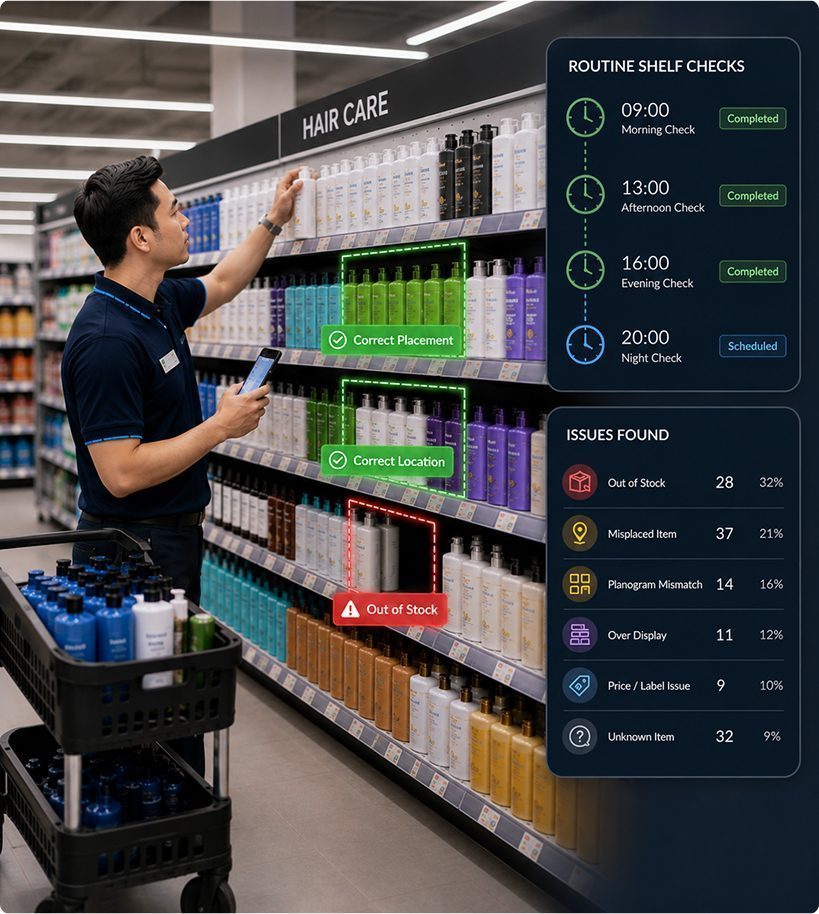
From neighbourhood supermarkets to convenience stores in the CBD, teams can use scheduled mobile scans to spot missing products and check each shelf against the layout approved for that outlet.
See Which Products Need Attention on Each Shelf
Spot a Missing Variant on a Full Shelf
A personal care shelf can look fully stocked even when the fragrance-free shampoo is missing. InfiniShelf compares the scan with the outlet’s planogram and flags gaps or misplaced variants that staff can easily overlook during a shelf check.
Give Store Teams a Clear Next Step
If the missing shampoo is one shelf lower, staff can move it back. If another variant has taken its space, they can restore the planned number of facings and check the stockroom for a refill. A follow-up scan helps the team confirm that shoppers can find the right product again.
Keep Drinks Shelves Ready for Singapore’s Peak Shopping Hours
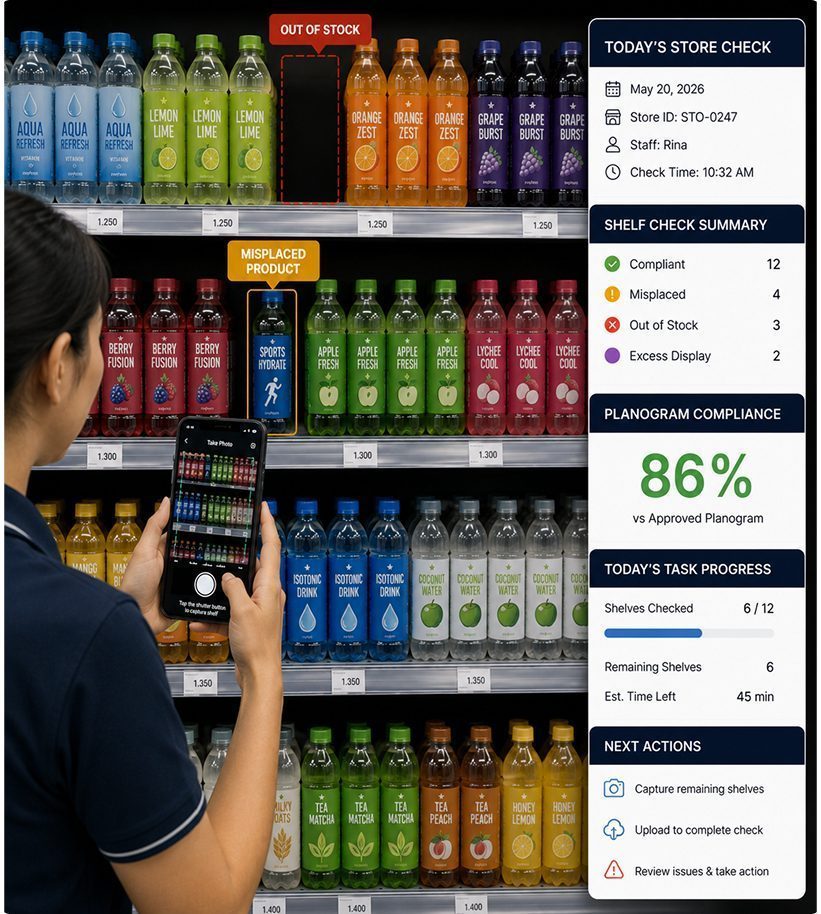
Spot Missing Drinks Before the Lunch Rush
At a convenience store in the CBD, a pre-lunch shelf scan can flag an empty space where chilled lemon tea should be. Staff can check the stockroom and refill the shelf while there is still time before the lunch crowd arrives.
Check Misplaced Drinks and Unfamiliar Packs
A sports drink sitting among fruit juices may be hard for shoppers to find. InfiniShelf can flag the misplaced bottle against the outlet’s planogram. If a scan flags an unfamiliar label, staff can check whether it is a new pack design before moving it.
Prioritise Refills for Each Outlet
A CBD outlet may need bottled water before lunch, while a neighbourhood supermarket may need family-size drinks before the evening rush. Store teams can use the latest shelf check and their knowledge of local demand to decide which gaps to fill first.
Track Planogram Compliance Across Singapore Outlets
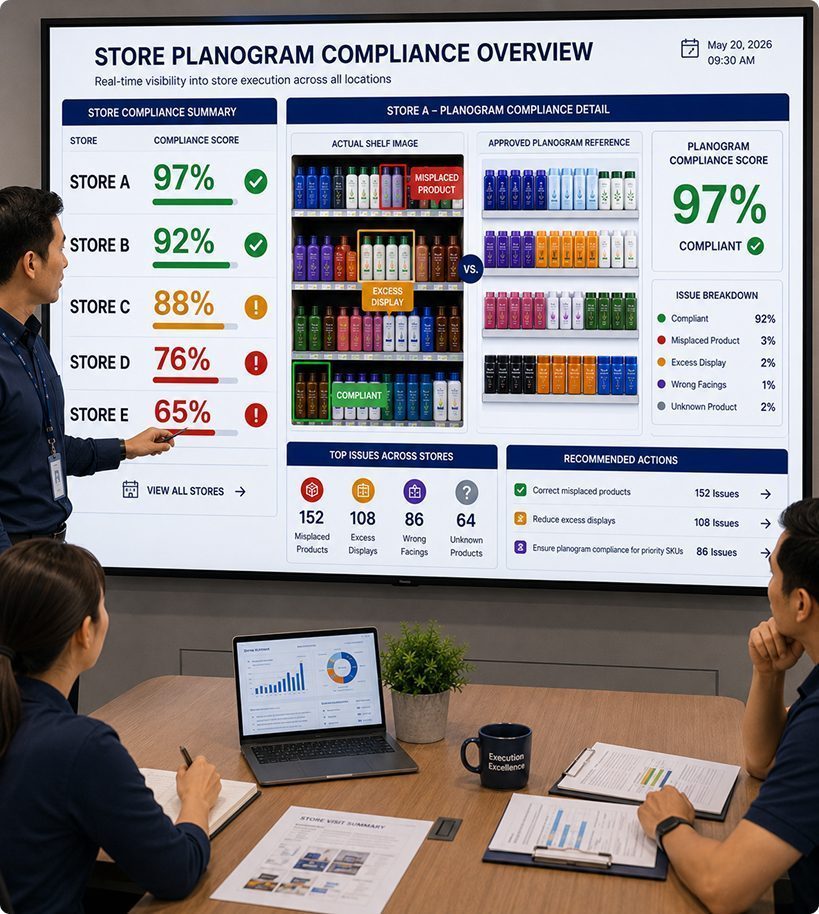
Check Each Outlet Against Its Approved Layout
A convenience store at an MRT station may allocate two facings to a product, while a neighbourhood supermarket allocates four. InfiniShelf compares each shelf scan with the plan approved for that outlet, so area managers can assess both stores fairly.
Spot Products Taking Up the Wrong Shelf Space
During a promotion, a multipack can spread beyond its allocated space and push a single-pack variant out of view. A side-by-side comparison of the shelf image and planogram shows staff which pack to move and how many facings to restore.
Use Store Scores to Prioritise Follow-Up
Area managers can review compliance scores across outlets, then check the shelf images behind a lower score. If the same display issue appears at several stores, the merchandising team can clarify the instructions and use the next scheduled scan to confirm the correction.
Schedule Shelf Checks Around Each Outlet’s Busiest Hours
Fit Mobile Shelf Checks Into the Daily Routine
A health and beauty outlet in Singapore’s CBD might check its shelves before the lunch crowd arrives. A neighbourhood outlet might schedule its check before the evening rush. Staff can scan priority shelves on a mobile device during their usual floor walk, without installing fixed cameras.
Use the Next Check to Confirm a Fix
If the afternoon scan shows a conditioner bottle in the space reserved for shampoo, staff can move it and check whether the shampoo needs a refill. At the next scheduled check, the team can see whether the right product is back on the shelf.
Find Shelf Gaps That Keep Coming Back
Area managers can compare scan results across outlets and shifts. If the same shelf is full at opening but repeatedly empty by late afternoon, the store manager can move the refill earlier and use the following week’s checks to see whether the gap persists.
FAQ
Frequently Asked Questions
It's Time to Make Retail Work Smarter!