Picture two outlets of the same convenience chain, about 20 minutes apart on the MRT. By 1pm, the lunch crowd at the Raffles Place store has cleared the chiller of a popular canned coffee, yet the Tampines outlet still has three cartons of that same SKU sitting in its cramped backroom at closing time. The national forecast did nothing wrong. The chain simply runs dozens of very different demand environments inside a city you can cross in under an hour, and it pays some of the region’s highest rents and wages for the privilege.
On the surface, Singapore retail looks steady. SingStat reported that retail sales rose 1.7% year on year in September 2026, extending 0.8% growth in August, and online sales accounted for about 15.1% of total retail sales in May 2026. Those figures suit a mature market, but they leave almost no room for waste. When costs climb faster than sales, every overstocked carton, empty shelf and badly timed roster comes straight out of margin.
That’s why this article starts with problems rather than technology. AI earns its place when it improves a decision the business already makes: what to order, where to place it, when to discount and how many staff to roster.
Below, we walk through ten challenges Singapore retailers face today, what AI can realistically do about each one, and where human judgement still carries the most weight.
1. Rising Costs Leave Very Little Margin for Error
Ask any Singapore retailer what keeps them up at night, and cost usually comes first. In January 2026, the Singapore Retailers Association named manpower shortages, rental and operating costs, e-commerce competition and shifting consumer demand as the industry’s main headwinds, adding that high rent, manpower and utility bills squeeze SMEs’ already slim margins. Rent alone made up roughly 26% of total business costs for retail firms in 2023, according to MTI. Meanwhile, CBRE still expects prime retail rents to rise by 1–2% across 2026.
Thin margins change the maths behind every operational decision. A one-point gain in stock accuracy or labour planning matters far more when gross profit barely covers the fixed costs of a mall unit.
AI tends to help most in five areas:
- Demand forecasting at SKU, store and day level, so orders follow real demand instead of habit
- Inventory optimisation that balances availability against working capital
- Promotion analysis that separates genuine growth from discount-driven noise
- Workforce scheduling that matches rosters to footfall
- Exception prioritisation, so managers act first on the issues that cost the most
2. One Small Island, Many Different Markets
Singapore is compact, but its demand is anything but uniform. A CBD outlet lives on weekday office traffic and goes quiet on Sundays, while a heartland store in Punggol or Jurong West peaks on weekends and during school holidays. Shops along Orchard Road and at Changi Airport depend heavily on tourists, and tourist numbers swing with flight capacity, exchange rates and the events calendar. No single national forecast can tell a replenishment planner what each of these stores needs on a wet Tuesday afternoon.
Planning therefore becomes a product × location × time problem. Machine learning models can combine sales history, promotions, seasonality, stock levels, public holidays and nearby events into a forecast for each store and SKU. More granularity isn’t automatically better, though. A daily forecast for a slow-moving item at a single kiosk may be too noisy to act on, so a well-designed system forecasts at whatever level the data can genuinely support.
Read more: Revolutionizing Retail in Singapore Through Inventory Optimization with Machine Learning
3. Tight Floor Space and Imported Supply Complicate Inventory Positioning
In archipelago markets, geography gets in the way. In Singapore, space and supply do. Backrooms are small and expensive, so stores can’t simply buffer uncertainty with extra stock. At the same time, Singapore imports more than 90% of its food from over 180 countries and regions, which means lead times depend on ports, shipping lanes and events well beyond any retailer’s control.
Take a chain holding 10,000 units of one product across its network. On paper, that looks healthy; in reality, a few stores may be overflowing while others run dry, and some mall units physically can’t receive another delivery.
Inventory optimisation weighs demand, current stock, supplier lead times, shelf capacity and service-level targets together, then recommends how much each store and distribution centre should hold. Digitalplace’s AI Inventory Optimization helps retailers turn those recommendations into replenishment orders sized for Singapore’s space limits. AI can’t add square footage or reroute a delayed vessel, of course. What it can do is make sure the limited space you pay for holds the products that will actually sell.
4. Festive Peaks Move Faster Than Historical Averages
Chinese New Year shows how sharply demand can swing. Because the festival fell in February 2026 rather than January, SingStat reported weaker January sales, and February retail sales then jumped 8.3% year on year, with supermarkets and hypermarkets up 29.3%. The peak is pushed earlier or later every year by the lunar calendar, and Hari Raya Puasa, Hari Raya Haji and Deepavali shift against the Gregorian calendar too. Add Christmas, the Great Singapore Sale, 11.11 and 12.12, the Grand Prix weekend and stadium concerts, and a retailer can face a demand spike almost every month.
Categories also follow their own curves. Mandarin oranges, bak kwa and gift hampers build for weeks before Chinese New Year and collapse the day after, while everyday staples dip and then recover.
Event-aware forecasting separates baseline demand from the pre-event build-up, the peak, promotional uplift and the post-event return to normal. A model that only averages last year’s weeks will miss all of that whenever the calendar moves.
5. Value-Conscious Shoppers Make Promotions Hard to Read
Singapore shoppers compare prices constantly: across supermarket chains, on e-commerce platforms during mega-sale days and, for many households, across the Causeway in Johor Bahru. That habit makes promotion results harder to interpret than they first appear. Say a 15% discount lifts unit sales by 25%. Some of that uplift may be purchases pulled forward from next month, some may be cannibalised from a sister product, and some may be pantry-loading that leaves the following weeks flat.
Pricing and promotion analytics can test the questions that really matter:
- Did the promotion create incremental demand, or just shift its timing?
- Which neighbouring SKUs lost sales during the offer?
- What happened to margin once the discount and extra handling are counted?
- How did competitor pricing move over the same period?
The answer won’t always flatter the promotion, and that’s exactly the point.
6. The System Says 14, the Shelf Says Zero
Every store manager has seen it. The inventory system shows 14 units, yet the shelf is empty, because the stock sits in the backroom, was placed in the wrong bay, or missed the last replenishment run. Customers don’t see system inventory; they see a gap, and with three other options within walking distance, they simply buy elsewhere. Worse, the replenishment engine still believes the store is well stocked, so it orders nothing.
Fixing this takes a full workflow, not just a camera: observe the shelf, identify the gap or misplaced SKU, prioritise it by sales impact, correct it, then verify that the fix held. Scheduled shelf monitoring handles the first three steps at a scale no audit team can match. Digitalplace’s On-Shelf Availability closes that loop. Store teams then spend their time restocking the gaps that cost the most, rather than walking every aisle.
Read more: How AI Is Transforming Offline Retail Operations in Singapore
7. Lean Teams Make Consistent Store Execution Harder
Manpower is the cost Singapore retailers mention most often. In a 2026 SNEF survey, 83% of employers cited rising manpower costs as a challenge, up from 79% a year earlier, and Budget 2026 raised the qualifying salaries for Employment Pass and S Pass holders. For a chain with 50 or 200 outlets, that means fewer people per store trying to keep planograms, price labels and promotional displays consistent with what headquarters signed off.
Manual audits only ever cover a sample. They are carried out at selected stores on selected days, and problems that appear between visits go unnoticed. Scheduled monitoring and automated exception flagging widen that coverage, so area managers can focus their limited hours on the stores and aisles that actually need attention. People still make the judgement calls; AI simply tells them where to look first.
8. Strong Connectivity Doesn’t Mean Connected Data
Connectivity is rarely Singapore’s problem, but data integration often is. Point-of-sale, ERP, warehouse, webstore and marketplace systems frequently hold their own versions of the truth, while online channels now generate around 15% of total retail sales. When one pool of stock serves the shelf, the brand’s own website, two marketplaces and a quick-commerce partner, a few minutes of lag can mean orders are accepted for stock that no longer exists. Customers remember the cancellation email far longer than the original promotion.
The fix is mostly architectural rather than algorithmic:
- A single, near-real-time view of available-to-sell stock across every channel
- Event-driven updates instead of overnight batch syncs
- Safety buffers for fast-moving SKUs on marketplace listings
- Regular reconciliation between system counts and physical counts
AI forecasts are only as good as the stock data feeding them, so this groundwork comes first.
9. Perishables Turn Overstock Into a Countdown
Singapore generated 790,000 tonnes of food waste in 2025, about 11% of all waste, and only 18% of it was recycled. Those figures cover the whole economy rather than supermarkets alone, but fresh food retail clearly contributes, and large commercial generators now face mandatory segregation and reporting rules. For a retailer, every tray of cut fruit or loaf of bread that misses its date means lost margin plus a disposal cost. Multiply that across dozens of outlets and the numbers add up quickly.
Short-horizon forecasting helps by combining sales velocity, remaining shelf life, waste history, holidays, nearby events and even the weather, since a monsoon afternoon changes what people buy on the way home. The goal isn’t to drive waste to zero at any cost. Instead, it balances availability, margin and expiry risk, so markdowns start early enough to sell and ordering tightens before the waste appears.
Read more: How to Reduce Inventory Without Increasing Stockouts in Retail
10. More Routine Decisions Than People Have Time to Analyse
No single retail decision is hard on its own. How many units of milk should Bedok get tomorrow? Should the Jurong outlet add a cashier on Saturday? Which aisle needs a recount this week? The difficulty is volume: thousands of these choices land every day, and most of them are made under time pressure with whatever data happens to be closest.
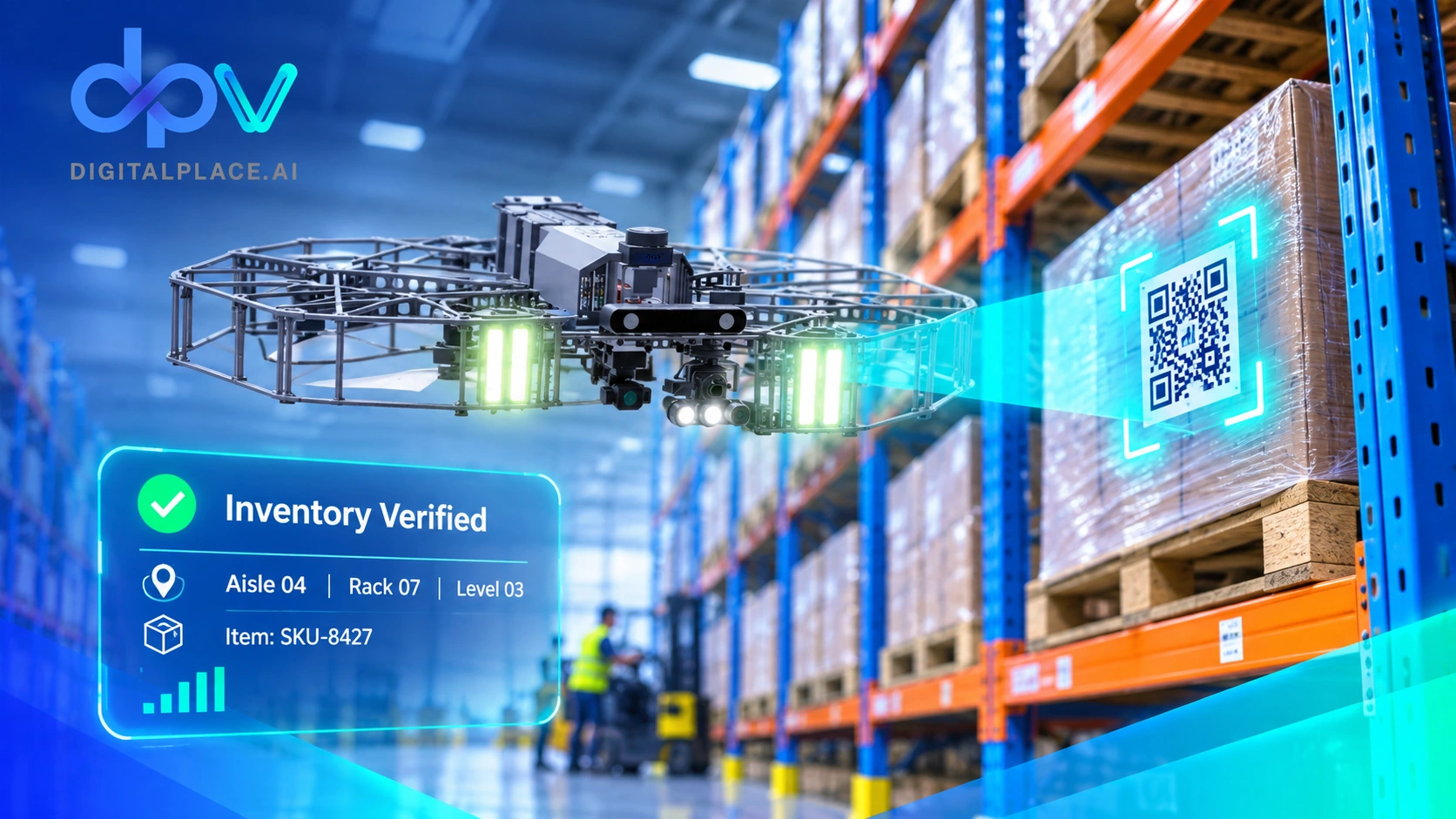
Visitor flows add another moving part. The Singapore Tourism Board forecast 17 to 18 million arrivals for 2026, but the first eight months brought 11.43 million, down 1.7% on the same period in 2025, which makes rosters for tourist-heavy stores harder to plan. Workforce scheduling that reads footfall, promotions, deliveries and events can match staff to workload, rather than cut headcount for its own sake. Further back in the chain, Digitalplace’s warehouse inventory drone takes over routine cycle counts, so the people who once climbed racks with handheld scanners can spend their shifts resolving the discrepancies the drone flags.
Start With the Decision, Not the AI Model
With so many AI applications on offer, it’s tempting to launch a dozen pilots at once. A better starting point is one operational decision, a measured baseline and a clear objective, such as “reduce excess inventory while maintaining product availability.” The table below maps each challenge to the decision behind it.

10 Singapore retail challenges, mapped to the decision AI can improve
Start with the decision, not the AI model. Each card shows the Singapore pressure, the decision behind it, where AI helps and the KPI that proves it worked.
- Challenge
- Decision
- AI role
- Action
- Measure
- Demand & inventory
- Commercial decisions
- Store & people operations
- Technology foundation
Rising costs, thin margins
Rent ≈ 26% of retail business costs (MTI, 2023)
- Decision
- Where to spend limited margin
- AI helps
- Forecasting, optimisation, exception ranking
- KPI
- Gross margin, inventory turns
One island, many micro-markets
CBD · heartland · Orchard · Changi: four demand rhythms
- Decision
- How much each store orders
- AI helps
- Store-level demand forecasting
- KPI
- Forecast bias by store
Tight space, imported supply
90%+ of food is imported (SFA)
- Decision
- Where stock sits in the network
- AI helps
- Multi-location inventory optimisation
- KPI
- Stock cover, backroom overflow
Festive peaks that move
Supermarket sales +29.3% YoY in CNY month, Feb 2026
- Decision
- How much to build before each event
- AI helps
- Event-aware forecasting
- KPI
- Peak-week availability, leftovers
Promotions that are hard to read
15% off, +25% units: real growth or pulled-forward demand?
- Decision
- Which offers to repeat
- AI helps
- Elasticity and incrementality analysis
- KPI
- Incremental margin per promotion
System stock vs shelf stock
System says 14, shelf shows 0
- Decision
- Which shelf gaps to fix first
- AI helps
- Scheduled shelf monitoring
- KPI
- On-shelf availability
Lean teams, consistent execution
83% of employers cite rising manpower costs (SNEF, 2026)
- Decision
- Where area managers spend time
- AI helps
- Automated exception flagging
- KPI
- Planogram compliance
Connected stores, disconnected data
Online ≈ 15% of retail sales (May 2026)
- Decision
- What stock each channel can sell
- AI helps
- Real-time stock sync (architecture first)
- KPI
- Oversell and cancellation rate
Perishables on a countdown
790,000 t food waste in Singapore, 2025 (NEA)
- Decision
- When to order less and mark down
- AI helps
- Short-horizon forecasting
- KPI
- Waste rate, fresh margin
Too many routine decisions
11.43M visitors Jan–Aug 2026, −1.7% YoY (STB)
- Decision
- How to staff stores and count stock
- AI helps
- Workforce scheduling, drone cycle counts
- KPI
- Labour cost per sale, count accuracy
Where Digitalplace Fits
AI retail is a broad field, and no single vendor covers all of it. Digitalplace focuses on a specific set of store and warehouse decisions that Singapore retailers make every day, combining AI Inventory Optimization for replenishment, On-Shelf Availability for shelf monitoring, a warehouse inventory drone for automated cycle counting, and an AI Avatar that answers customer questions at kiosks and screens when floor staff are stretched thin. Each tool is designed to slot into an existing workflow rather than replace it. Teams can start with the decision that costs them the most and expand from there.
What AI Still Cannot Fix
AI improves decisions, but it can’t repair everything underneath them.
- Supplier failures: a model can flag a late shipment, but it can’t make the vessel arrive sooner.
- Poor master data: wrong pack sizes, duplicate SKUs and missing shelf-life fields will mislead any forecast.
- Staffing and training gaps: an alert only helps if someone has the time and know-how to act on it.
- Trade-offs between metrics: higher availability usually means more stock, and leadership still has to choose the balance.
- Biased history: if a product kept running out, its sales history understates true demand.
The Real Opportunity Is Better Decisions at Scale
Singapore’s retail complexity isn’t a reason to wait; it’s where the value sits. A small improvement in forecast accuracy, shelf availability or roster fit looks minor in one store. Repeated across hundreds of SKUs, dozens of outlets and 365 trading days, though, it becomes material, especially when rents and wages leave so little slack. The retailers that benefit most will be the ones that use AI to sharpen decisions they already make, not the ones that add it for its own sake.
Ready to find the decision worth improving first? Talk to the Digitalplace team about where AI can make a measurable difference in your stores and warehouses.