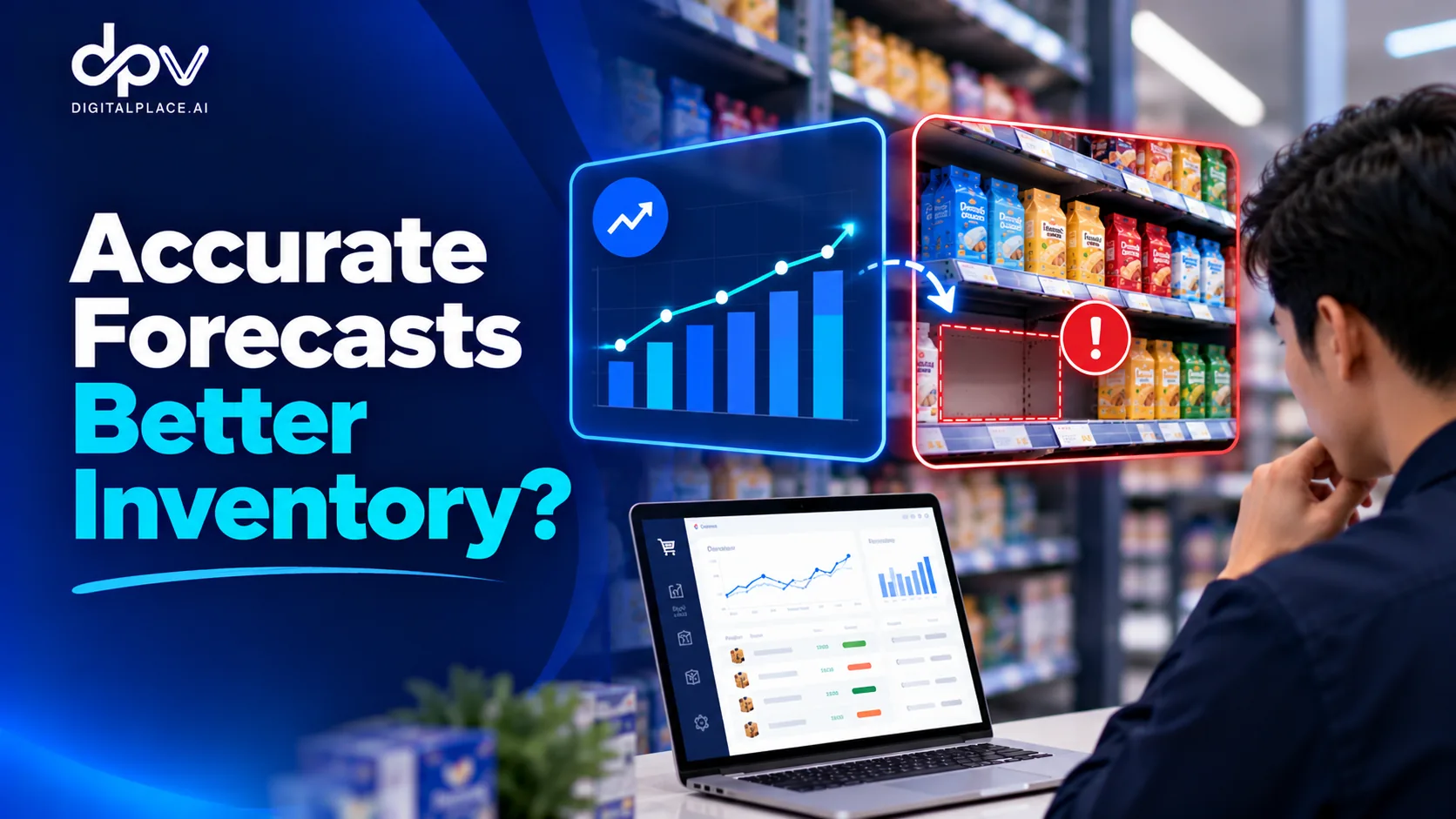
Managing stock replenishment manually becomes increasingly challenging as retailers expand their product assortments and store networks. Inventory planners must continuously review sales data, monitor stock levels, estimate future demand, and determine replenishment quantities across hundreds or thousands of SKUs. When these decisions rely heavily on spreadsheets, historical averages, or individual judgment, the process becomes time-consuming and vulnerable to inconsistencies. Products may run out before new inventory arrives, while other items accumulate excess stock because replenishment quantities do not reflect actual demand. These challenges become even more pronounced during promotions, seasonal demand fluctuations, or unexpected changes in purchasing behavior.

To address these challenges, retailers are increasingly exploring alternatives to manual stock replenishment. Available approaches range from simple rule-based ordering systems to AI-powered inventory optimization, RFID tracking, smart shelves, and warehouse automation. However, these technologies do not all solve the same problem. Some automate replenishment decisions, others improve inventory visibility, while certain solutions focus on reducing manual handling and physical stock movement. Understanding these differences helps retailers choose technologies that address their specific operational challenges.
8 Alternatives to Manual Stock Replenishment
- Reorder Point and Min-Max Systems — Automatically trigger replenishment based on predefined inventory thresholds.
- POS-Integrated Inventory Management — Use sales transactions and inventory records to generate replenishment alerts or orders.
- AI-Powered Demand Forecasting and Automatic Replenishment — Predict demand and optimize replenishment quantities across products and locations.
- Vendor-Managed Inventory (VMI) — Allow suppliers to manage replenishment for agreed product categories.
- RFID-Based Inventory Tracking — Improve stock visibility and inventory accuracy through electronic identification.
- Smart Shelves and IoT Sensors — Monitor product presence or stock levels using connected shelf technology.
- Computer Vision and AI Shelf Monitoring — Detect shelf gaps, missing products, and replenishment requirements through image analysis.
- Warehouse and Store Replenishment Automation — Use automated equipment and robotics to reduce manual inventory movement.
Each approach offers different capabilities, implementation requirements, and operational benefits. Some can be introduced independently, while others are more effective when integrated into a broader retail inventory management strategy.
Understanding Inventory Replenishment vs Physical Shelf Replenishment
Before comparing these technologies, it is important to distinguish between inventory replenishment planning and physical shelf replenishment. Although both activities contribute to product availability, they address different operational requirements and involve different types of automation.
Inventory replenishment planning focuses on determining when additional stock is required, how much should be ordered, and where inventory should be allocated. This includes purchasing from suppliers, replenishing distribution centers, and transferring inventory between warehouses and retail outlets. Effective planning requires retailers to consider expected demand, current stock positions, incoming inventory, supplier lead times, and distribution constraints.
Physical shelf replenishment, meanwhile, refers to moving products from storage areas or store backrooms onto sales shelves. A supermarket may have sufficient inventory in its system but still experience empty shelves because products have not been replenished on the sales floor. Conversely, employees may identify an empty shelf but have no available inventory to replenish it because upstream purchasing or distribution decisions were inadequate.
This distinction explains why different replenishment technologies often work best together. AI-powered forecasting can help determine future inventory requirements, while shelf-monitoring technologies identify whether products are physically available to customers. Warehouse automation supports the movement of inventory between locations. Improving one activity does not automatically resolve problems in the others, making it essential to understand which part of the replenishment process requires improvement.
1. Reorder Point and Min-Max Inventory Systems
Reorder point and min-max inventory systems are among the simplest alternatives to manual replenishment. Instead of requiring employees to determine when each product needs reordering, these systems use predefined inventory thresholds to trigger replenishment recommendations or purchase orders. A reorder point typically considers expected demand during supplier lead time and an appropriate safety stock allowance, while min-max systems establish minimum and maximum inventory levels to determine when replenishment should occur and how much inventory should be restored.
For example, a retailer might configure a product with a minimum inventory level of 30 units and a maximum of 100 units. When its inventory position falls below the minimum threshold, the system can recommend an order that restores stock toward the configured maximum. This approach reduces repetitive manual calculations, improves consistency, and is relatively straightforward to implement using existing inventory management software.
However, fixed replenishment thresholds can become less effective when demand patterns change significantly. An inventory rule established during normal trading conditions may not adequately respond to promotional campaigns, seasonal demand peaks, or changes in customer purchasing behavior. Although reorder points can be recalculated periodically, traditional systems generally depend on predefined parameters rather than continuously adapting to new demand signals.
For retailers with stable sales patterns and relatively predictable supplier lead times, this level of automation may be sufficient. Businesses managing highly variable demand across multiple locations may benefit from more adaptive replenishment approaches.
2. POS-Integrated Inventory Management Systems
Point-of-sale integration provides another practical alternative by connecting sales transactions directly with inventory records and replenishment workflows. Whenever a customer purchases an item, the POS system records the transaction and updates the associated inventory balance. Combined with information from goods receipts, returns, and stock transfers, these updates help retailers maintain a more current view of available inventory without requiring employees to record every transaction manually.
When integrated with purchasing software or an enterprise resource planning system, POS-based inventory management can also generate replenishment alerts or purchase orders when products reach predefined thresholds. This reduces administrative work and helps purchasing teams identify inventory requirements across multiple locations. For businesses still relying on disconnected spreadsheets or store-level reports, centralized inventory visibility can represent a significant operational improvement.
Read more
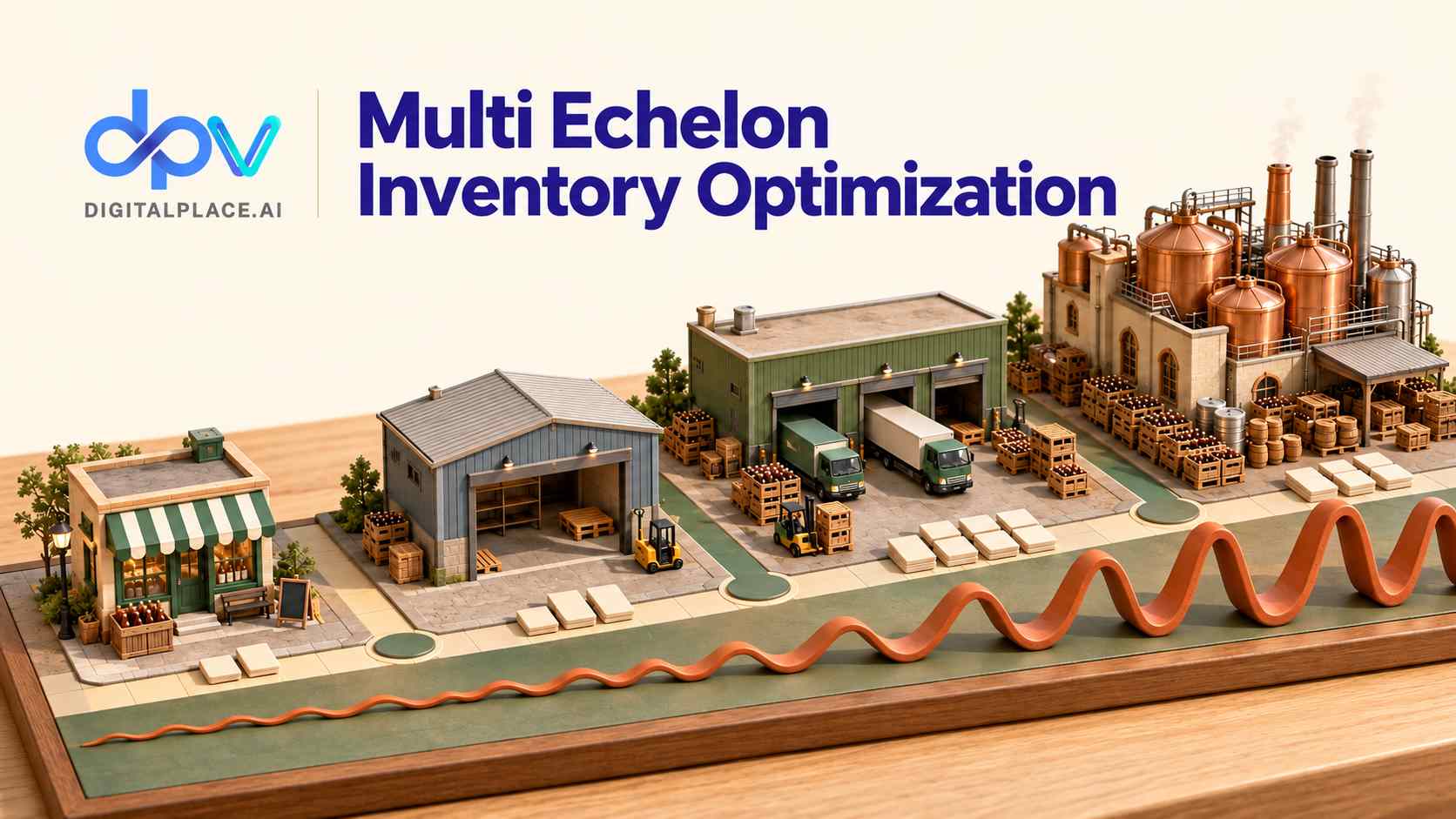
Multi-Echelon Inventory Optimization: Connecting Suppliers, DCs and Stores
Why Grocery Retail Inventory Is So Difficult to Optimize
Nevertheless, POS integration primarily improves transaction visibility and inventory recordkeeping. It does not automatically determine the most appropriate replenishment quantity or accurately predict future demand. A system may know that a store sold 50 units yesterday, but deciding whether to replenish 40, 60, or 100 units requires additional forecasting and inventory planning logic.
Inventory records can also become inaccurate because of shrinkage, receiving discrepancies, damaged goods, or unrecorded movements. Furthermore, products may remain available in a store’s backroom while being absent from the sales shelf. POS-integrated inventory management is therefore an important foundation for replenishment automation, but its effectiveness depends on reliable inventory data and appropriate ordering rules.
3. AI-Powered Demand Forecasting and Automatic Replenishment
AI-powered inventory optimization represents a more advanced approach to replenishment automation because it focuses not only on when inventory reaches a threshold, but also on predicting how much stock will be required in the future. Machine learning models can analyze historical sales, seasonal patterns, promotional activities, store-level purchasing behavior, and other relevant demand signals to produce forecasts that adapt as conditions change.
This capability becomes particularly valuable in multi-store retail operations, where identical products may experience substantially different demand patterns across locations. A supermarket near an office district may sell more ready-to-eat meals during weekdays, while a residential supermarket experiences stronger weekend demand. Similarly, seasonal products may perform differently between regions, and promotional campaigns may generate varying responses depending on local customer preferences. Applying the same replenishment rules to every location can result in excess inventory at some stores and recurring shortages at others.
AI-powered planning can account for these differences by generating forecasts at the SKU and location level. However, demand forecasting alone is not the same as inventory optimization. Retailers must translate predicted demand into practical replenishment decisions that account for existing inventory, incoming stock, supplier lead times, minimum order quantities, and other operational constraints. The objective is to determine appropriate replenishment quantities while balancing product availability against the cost of holding inventory.
Connecting Demand Forecasting with Automatic Replenishment
This is where solutions such as Digitalplace.ai’s AI Inventory Optimization become relevant. Rather than treating forecasting and replenishment as separate activities, Digitalplace.ai connects demand predictions with automated replenishment and inventory allocation decisions across retail outlets and distribution centers.
The solution focuses on three interconnected capabilities: demand forecasting, automatic replenishment, and balanced stock allocation. Demand forecasting estimates future requirements for individual products and locations, while replenishment optimization determines appropriate order quantities using forecasts, stock levels, and operational rules. Inventory allocation considers how available stock should be distributed across stores and warehouses according to their expected requirements.
For example, consider a retailer operating 150 supermarkets supplied by several distribution centers. Demand for a particular product may vary significantly between locations, while available inventory at the distribution centers may be limited. An AI-driven approach can help evaluate location-level requirements and determine how stock should be distributed based on expected demand rather than relying primarily on historical averages or uniform allocation rules.
Automatic replenishment can also be introduced progressively. Retailers may initially use AI-generated recommendations that inventory planners review and approve, then move toward automatic order execution for selected products once forecasting performance, data quality, and operational controls have been sufficiently validated. This allows organizations to reduce repetitive manual planning while maintaining appropriate human oversight.
For retailers managing substantial SKU portfolios, multiple warehouses, and geographically distributed stores, AI-powered inventory optimization addresses a fundamental challenge: making replenishment decisions that are responsive to demand while maintaining balanced inventory across the retail network.
8 Alternatives to
Manual Stock
Replenishment in Retail
Eight approaches to reduce manual work—what each solves, where it fits, and why replenishment automation is not the same as inventory optimization.
Replenishment decisions vs. shelf execution
A stockout can start with a poor order quantity—or with products sitting in a store’s backroom rather than on the selling shelf. These are different problems and require different tools.
Inventory Replenishment Planning
Decide when to reorder, how much to order, and where stock should be allocated across stores and distribution centers.
Physical Shelf Replenishment
Move available products from backrooms or storage areas onto shelves, so products physically reach shoppers.
Which alternative solves which problem?
These approaches are not direct substitutes. Some automate replenishment decisions, some improve stock visibility, and others help execute physical movements.
Reorder Point & Min-Max Systems
Trigger replenishment when inventory crosses predefined minimum levels; reorder toward target or maximum stock.
Watch out: Fixed thresholds struggle with promotions and demand changes.
POS-Integrated Inventory Systems
Connect sales transactions to inventory balances, replenishment alerts, and purchasing workflows.
Watch out: Sales visibility alone does not forecast future demand.
AI Forecasting & Automatic Replenishment
Estimate demand by SKU and location, then determine replenishment quantities using stock, lead times, and operational constraints.
Watch out: Requires reliable data, system integration, and oversight.
Vendor-Managed Inventory (VMI)
Share agreed inventory and sales data so suppliers manage replenishment for selected product categories.
Watch out: Requires data sharing and coordination across suppliers.
RFID-Based Inventory Tracking
Identify tagged merchandise electronically to support faster counts, movement tracking, and inventory accuracy.
Watch out: RFID does not determine future order quantities.
Smart Shelves & IoT Sensors
Use weight or presence sensors to signal low product availability on the selling shelf.
Watch out: Hardware, installation, calibration, and maintenance.
Computer Vision & AI Shelf Monitoring
Analyze shelf images from cameras, phones, or robots to flag shelf gaps, missing products, or planogram issues.
Watch out: Shelf detection is not purchasing or allocation logic.
Warehouse & Store Automation
Use conveyors, automated storage, robotics, and material-handling systems to move inventory more efficiently.
Watch out: Faster movement cannot correct poor planning decisions.
Automation ≠ Optimization
Automating a flawed ordering rule simply makes that rule run faster. Better inventory outcomes require connected decisions, reliable visibility, and physical execution.
Where AI Inventory Optimization fits
Digitalplace.ai connects forecasting with replenishment and allocation decisions. It helps retailers respond to differences in demand between stores while balancing inventory across distribution centers and outlets.
Compare the eight alternatives at a glance
| Technology | Main purpose | Important limitation |
|---|---|---|
| Reorder Point / Min-Max | Rule-based reordering | Limited adaptability to changing demand |
| POS Integration | Transaction-led stock visibility | Needs dependable inventory data and ordering logic |
| AI Inventory Optimization | Forecasting, replenishment, allocation | Requires data quality and integration |
| Vendor-Managed Inventory | Supplier-managed replenishment | Requires strong supplier coordination |
| RFID | Electronic identification and tracking | Tags and reading infrastructure add cost |
| Smart Shelves / IoT | Monitor physical shelf stock | Hardware and calibration requirements |
| Computer Vision | Detect shelf gaps and issues | Does not directly optimize supplier orders |
| Warehouse Automation | Move and handle physical stock | Infrastructure investment; not demand planning |
The most effective combination depends on retailer size, SKU complexity, demand variability, operating constraints, and the actual source of inventory errors.
Start with the problem—not the technology
Start by improving transaction integration, stock verification, and identification processes. POS integration or RFID may help.
Investigate store execution. Shelf monitoring, smart sensors, and better replenishment workflows may be more relevant.
Evaluate demand forecasting, replenishment decision logic, and inventory allocation across locations.
4. Vendor-Managed Inventory (VMI)
Vendor-managed inventory offers a different way to reduce manual replenishment activities by transferring responsibility for selected inventory decisions from retailers to their suppliers. Under a VMI arrangement, suppliers receive agreed sales and inventory information and use it to determine when additional stock should be delivered. Depending on the commercial agreement, suppliers may generate replenishment orders, schedule deliveries, or maintain inventory within predefined service-level targets.
For example, a beverage manufacturer supplying several supermarket chains may monitor inventory levels at participating distribution centers or retail outlets. Instead of waiting for individual purchase orders, the supplier can arrange deliveries according to available inventory information and agreed replenishment rules. This approach can reduce routine ordering work for retailers while improving coordination with strategic suppliers.
The effectiveness of VMI depends on accurate data sharing, clearly defined responsibilities, and alignment between supplier and retailer objectives. Suppliers typically focus on their own product portfolios, meaning retailers must still coordinate inventory across multiple brands, categories, and suppliers. A supplier may also prioritize the availability of its products without necessarily optimizing the retailer’s total inventory investment.
VMI is therefore particularly suitable for retailers with established supplier relationships and product categories where shared inventory visibility is commercially practical. It can also complement automated inventory management and demand forecasting systems rather than operating as a completely separate approach.
5. RFID-Based Inventory Tracking
Radio Frequency Identification (RFID) helps retailers automate portions of inventory identification and stock verification. RFID tags contain electronically readable identifiers that can be detected by compatible readers, allowing tagged products to be identified without the direct barcode alignment required by conventional scanning. In suitable environments, employees can verify multiple tagged items more efficiently than through traditional manual counting.
For retailers managing large volumes of apparel, electronics, or other higher-value merchandise, RFID can improve visibility into inventory movements and help identify discrepancies between recorded and physical stock. More accurate inventory records can support replenishment planning by reducing the risk of generating orders based on incorrect inventory balances. Depending on the infrastructure and system configuration, RFID may also help identify products that have been moved to unexpected locations.
However, RFID is fundamentally an identification and tracking technology rather than a demand forecasting solution. Knowing that 20 units remain in stock does not automatically determine whether the retailer should order another 30 or 100 units for the coming week. Retailers still need replenishment logic that considers expected demand, supplier lead times, and appropriate inventory targets.
Implementation economics also vary considerably by product category. Item-level tagging costs, reader infrastructure, system integration, and technical challenges involving certain materials can make RFID less practical for some low-value grocery products. Consequently, RFID is often most attractive where the operational benefits of improved item-level visibility justify the additional investment.
6. Smart Shelves and IoT Sensors
Smart shelves use connected sensors to provide information about product presence, changes in shelf weight, or other physical conditions associated with inventory availability. A shelf equipped with weight sensors, for instance, may estimate how much merchandise remains based on changes in measured weight. Other implementations use presence sensors or combinations of connected devices to identify when displayed stock falls below an operational threshold.
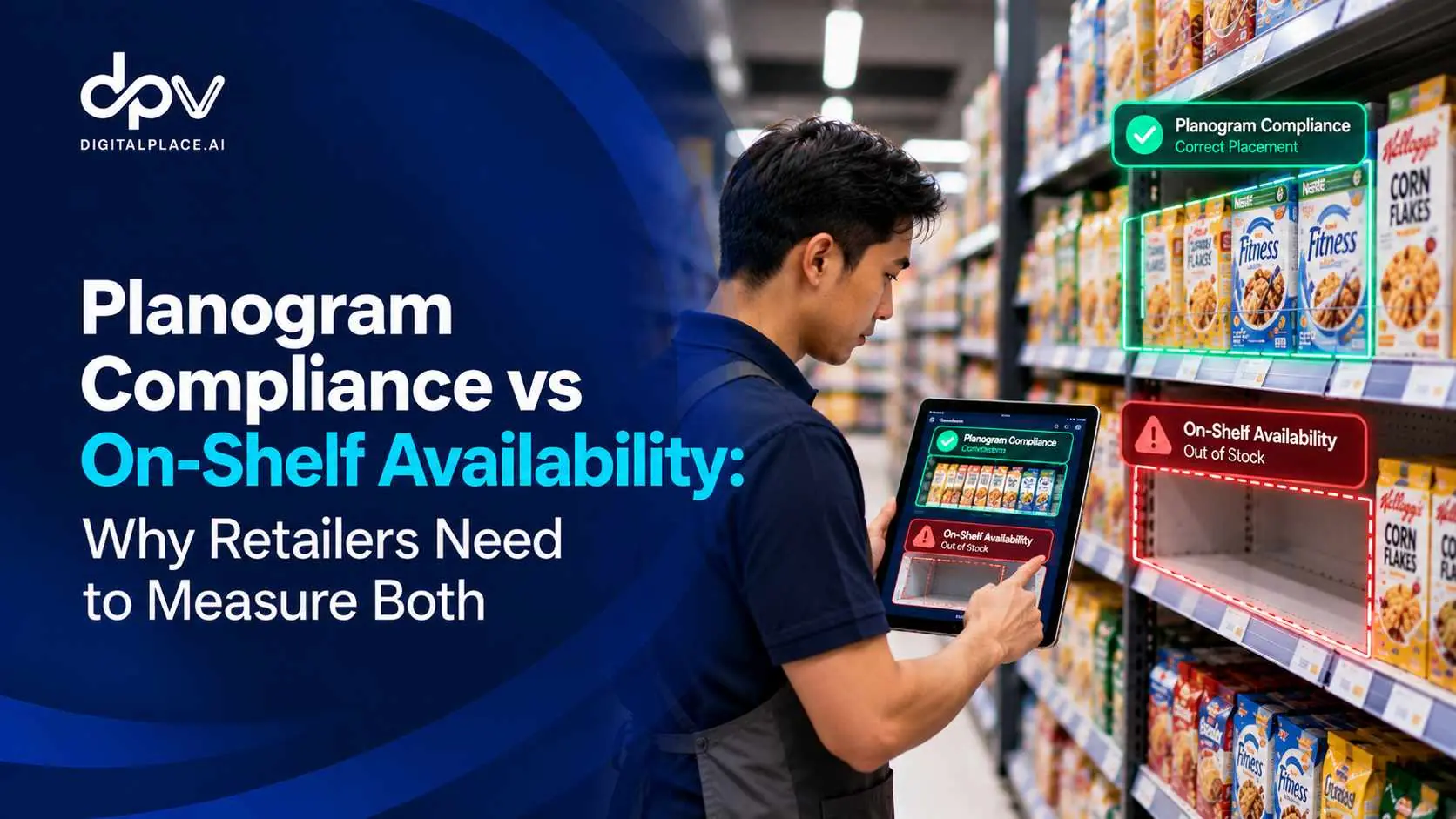
Unlike inventory systems that primarily rely on recorded transactions, smart shelves can provide information directly from the selling environment. This distinction is important because inventory availability and on-shelf availability are not always the same. A supermarket may have sufficient inventory recorded in its systems while products remain unavailable to shoppers because they have not been transferred from the backroom to the sales floor.
Smart shelf technology can help address this visibility gap by generating replenishment signals when displayed stock becomes low. When integrated with staff task management systems, these signals can help employees prioritize shelves requiring attention instead of inspecting every aisle with the same frequency. This is particularly relevant for fast-moving products where shelf availability changes throughout the day.
The main limitations involve hardware cost, installation, calibration, and ongoing maintenance. Different product weights, packaging formats, and shelf configurations can complicate stock estimation, especially in supermarkets with diverse assortments. Smart shelves also do not inherently predict future demand or optimize supplier orders, so their strongest role is often as part of a broader replenishment system.
7. Computer Vision and AI Shelf Monitoring
Computer vision provides an alternative method for identifying replenishment requirements by analyzing images of retail shelves. These images may be captured using fixed cameras, smartphones, or autonomous shelf-scanning robots. Depending on the system’s capabilities, AI can identify empty shelf spaces, missing merchandise, misplaced products, or deviations from expected planograms.
The principal benefit is improved visibility into actual shelf conditions. Instead of requiring employees to inspect every shelf manually, retailers can use visual analysis to identify potential problems and direct staff toward locations that need attention. For example, a supermarket may discover that a popular SKU has disappeared from its designated shelf even though inventory records indicate sufficient stock elsewhere in the store. Employees can investigate whether the product needs replenishment from the backroom or whether the inventory record requires correction.
However, shelf monitoring is not equivalent to inventory replenishment planning. Detecting an empty shelf does not establish whether additional goods should be ordered from a supplier, transferred from a distribution center, or simply moved from an existing backroom location. These decisions require additional inventory information and appropriate replenishment logic.
Computer vision systems also face practical limitations involving camera angles, lighting, customer obstruction, similar product packaging, and image resolution. Fixed cameras offer the potential for frequent monitoring but may require substantial infrastructure to cover every shelf. Smartphone-based systems provide greater flexibility in image capture but depend on employees conducting inspections. The appropriate approach depends on the retailer’s coverage requirements, SKU characteristics, operational model, and budget.
For supermarkets, computer vision can complement replenishment planning by revealing shelf-level problems that inventory records alone cannot reliably identify.
8. Warehouse and Store Replenishment Automation
While the previous technologies primarily improve inventory decisions or visibility, physical automation addresses the movement and handling of merchandise. Distribution centers may use automated storage and retrieval systems, conveyor networks, autonomous mobile robots, or goods-to-person picking systems to retrieve products, prepare orders, and move inventory through warehouse operations.
These technologies can reduce repetitive manual handling, improve throughput, and help large retail networks process replenishment orders more efficiently. For example, an automated distribution center may retrieve cases of products required by multiple supermarket outlets and direct them toward picking or dispatch operations without requiring employees to travel repeatedly between storage locations. When integrated with warehouse management systems, automated equipment can support more consistent execution of inventory movements and order fulfillment activities.
Automation can also support selected store-level replenishment tasks, although physically stocking diverse supermarket shelves presents additional challenges. Products vary considerably in weight, shape, fragility, packaging, and display requirements, making fully automated shelf replenishment more complex than many standardized warehouse movements.
The business case for physical automation depends on order volume, labor requirements, infrastructure, and operating conditions. Large distribution centers processing substantial daily volumes may benefit from investment in robotics and automated material handling, while smaller retail operations may achieve better returns through simpler process improvements.
It is also important to recognize that physical automation does not necessarily improve the quality of inventory decisions. A warehouse robot can move products efficiently, but it cannot compensate for inaccurate replenishment quantities generated by an inadequate planning process. Physical automation and inventory optimization therefore address complementary challenges.
Comparing the Alternatives: Which Replenishment Technology Fits Your Needs?
Although all eight approaches can reduce reliance on manual activities, they should not be evaluated as direct substitutes. Some automate ordering decisions, others generate inventory information, and others improve physical execution. Retailers should identify which operational problem contributes most significantly to their current replenishment inefficiencies before selecting a technology.
| Technology | Primary Purpose | Main Advantage | Key Limitation |
|---|---|---|---|
| Reorder Point / Min-Max | Rule-based replenishment | Simple and affordable automation | Limited adaptability to changing demand |
| POS-Integrated Systems | Inventory tracking and ordering triggers | Improved inventory visibility | Depends on data accuracy and ordering logic |
| AI Inventory Optimization | Demand forecasting, replenishment, allocation | Adaptive inventory decisions across locations | Requires reliable data and system integration |
| Vendor-Managed Inventory | Supplier-managed replenishment | Reduces retailer ordering workload | Requires supplier coordination |
| RFID | Inventory identification and tracking | Faster inventory verification | Tagging and infrastructure costs |
| Smart Shelves | Shelf-level stock monitoring | Frequent visibility into shelf conditions | Hardware and calibration requirements |
| Computer Vision | Shelf condition detection | Identifies shelf gaps and placement issues | Does not directly replenish inventory |
| Warehouse Automation | Physical inventory movement | Reduces repetitive material handling | Higher infrastructure investment |
For retailers whose main problem is inaccurate inventory records, improved POS integration or RFID may be a more appropriate starting point than sophisticated forecasting software. Supermarkets experiencing frequent shelf gaps despite having sufficient stock in their backrooms may instead benefit from computer vision, smart shelf monitoring, or more disciplined store replenishment workflows.
By comparison, businesses experiencing recurring stockouts and excess inventory across multiple locations may need to examine how demand forecasting, purchasing, replenishment, and allocation decisions are made. These problems often require improvements in planning logic rather than additional inventory monitoring devices.
Why Automating Replenishment Does Not Automatically Optimize Inventory
One of the most important distinctions is the difference between automating a replenishment process and optimizing the decisions behind it. A retailer might replace manual purchase orders with a rule-based system and successfully reduce administrative workload. However, if the underlying rules do not reflect changing demand, the business may continue experiencing inventory problems, only with faster order processing.
Consider a supermarket chain using identical minimum stock levels across multiple stores. Automatic replenishment may ensure products are reordered consistently, but it does not necessarily account for differences in local demand, promotional performance, or expected future sales. Some stores may accumulate excess stock while others experience shortages, even though the ordering process itself is fully automated.
Research published in Sustainability in 2021 examined the effects of automatic replenishment on product availability across 85 retail stores and 95 products. The study found that automated replenishment improved availability compared with manual ordering, particularly for fast-selling products, promotional items, and stores operating under demanding inventory conditions. These findings demonstrate the potential value of replenishment automation while also highlighting the importance of product and store characteristics in determining operational outcomes.
A similar challenge occurs when retailers invest in shelf monitoring without improving upstream inventory planning. Detecting an empty shelf more quickly is useful, but the information only creates value when employees can resolve the issue using available inventory or obtain additional stock within an appropriate timeframe. If the underlying problem is insufficient stock at the distribution center, additional shelf alerts alone cannot restore product availability.
Effective replenishment therefore requires coordination between demand planning, inventory visibility, ordering decisions, stock allocation, and physical execution. Retailers should evaluate technologies according to their impact on these interconnected processes rather than focusing exclusively on the number of manual tasks eliminated.
How to Choose the Right Alternative to Manual Replenishment
The most suitable solution depends on the retailer’s scale, operational maturity, product characteristics, and primary inventory challenges. Businesses with relatively stable demand and limited product assortments may achieve substantial improvements through POS integration and basic replenishment rules without introducing advanced AI or expensive automation infrastructure.
For supermarket chains and other multi-location retailers, the decision becomes more complex. Demand can vary considerably between stores, inventory must be balanced across distribution centers, and replenishment quantities need to reflect changing conditions. When planners rely heavily on historical averages and manual adjustments, AI-powered inventory optimization can help translate demand forecasts into more consistent replenishment and allocation decisions.
Retailers should also consider whether their challenges are primarily related to planning or execution. If products are available in storage but frequently missing from shelves, better shelf monitoring and store replenishment workflows may be necessary. If stock is consistently ordered in inappropriate quantities or distributed to locations where demand is insufficient, improvements in demand forecasting and inventory allocation may deliver greater value.
In many cases, the strongest operational model combines several technologies. POS systems provide transaction data, inventory tracking improves stock accuracy, AI supports forecasting and replenishment decisions, and warehouse or store execution systems help ensure that products reach their intended destinations. These technologies do not necessarily need to come from a single provider, provided the relevant systems can exchange reliable information.
Retailers should also consider the total cost of ownership, integration requirements, expected operational benefits, and the organization’s capacity to manage technological change. A solution that works well in a controlled pilot may require additional adjustments before being deployed across hundreds of stores with different layouts, product assortments, and operational practices.
Moving from Manual Replenishment to Smarter Inventory Decisions
Manual replenishment is not inherently unsuitable for every retailer. Smaller operations with limited assortments and predictable demand may find that simple automation provides sufficient control without introducing unnecessary complexity. As retail networks expand, however, the volume of inventory decisions increases, making it progressively harder to rely on manual calculations and individual judgment.
The most effective approach is to identify where manual processes create the greatest operational limitations. Retailers may need better stock visibility, more responsive demand forecasting, automated purchasing decisions, more efficient physical handling, or a combination of these capabilities. Rather than pursuing automation for its own sake, businesses should prioritize improvements that directly address the causes of stockouts, excess inventory, and operational inefficiencies.
For businesses seeking to improve the planning side of replenishment, Digitalplace.ai offers AI-powered Inventory Optimization that connects demand forecasting, automatic replenishment, and balanced inventory allocation. The solution helps retailers determine future stock requirements and coordinate inventory decisions across stores and distribution centers, reducing dependence on repetitive manual planning while maintaining greater responsiveness to demand.
The objective is not simply to replace manual ordering with automated transactions, but to make replenishment decisions more consistent, demand-driven, and aligned with inventory requirements throughout the retail network.
Forecast demand. Automate replenishment. Balance inventory.
Explore Digitalplace.ai’s AI Inventory Optimization solution to learn how retailers can improve forecasting, automate replenishment, and balance inventory across multiple locations.