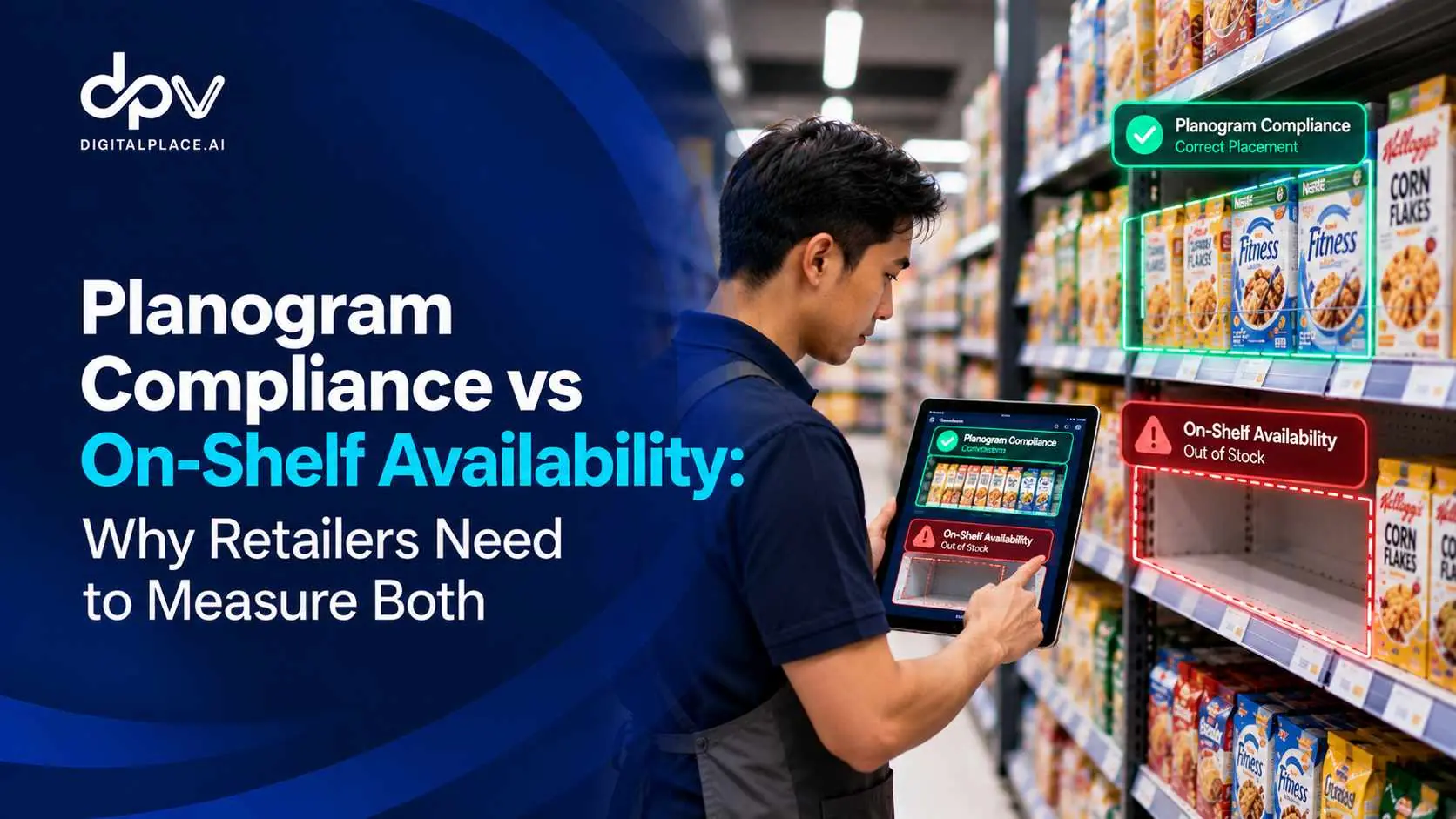
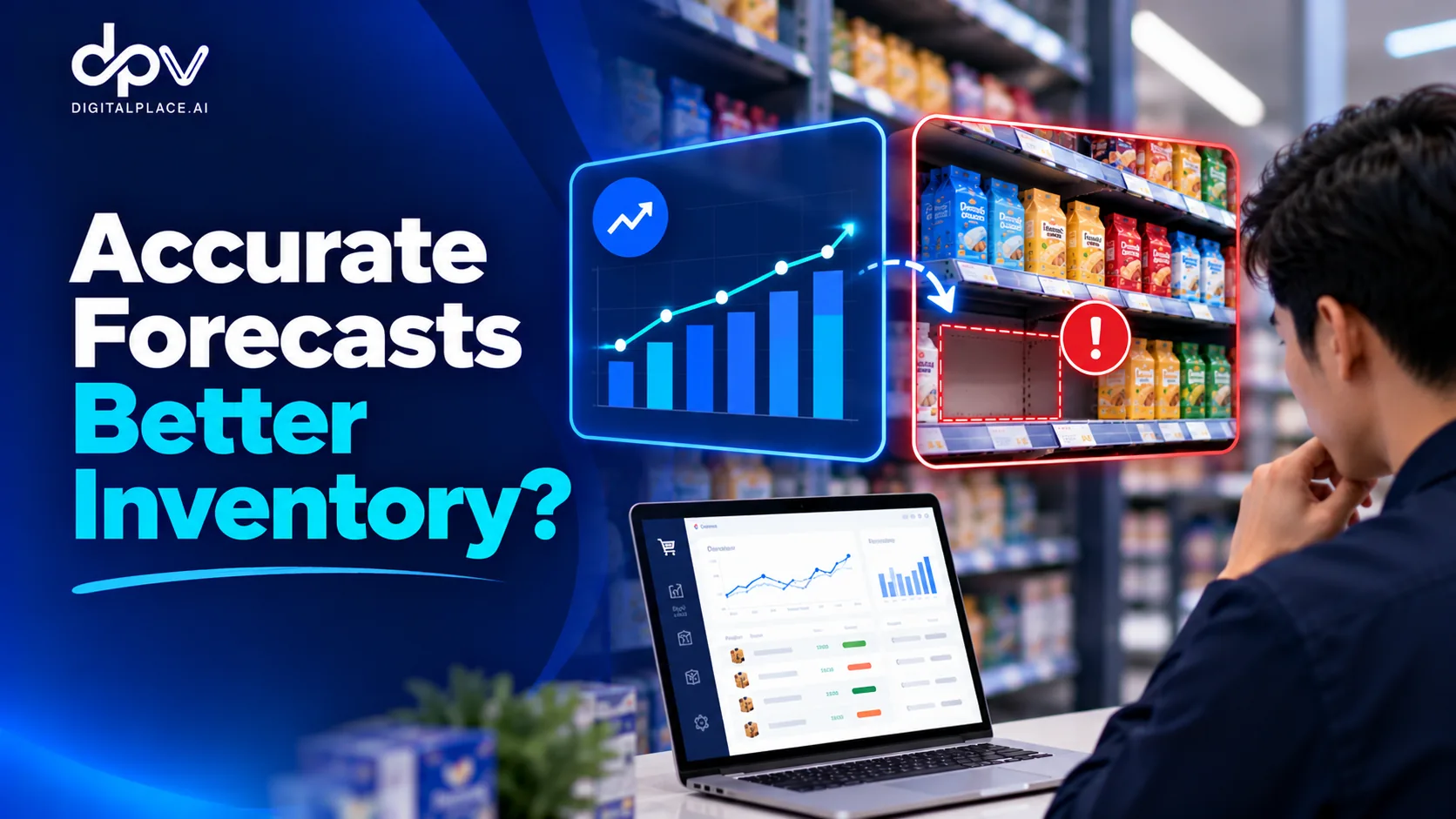
Why accurate stock records are only part of the solution—and how retailers can close the gap between inventory visibility, replenishment decisions, and shelf execution.
A retailer completes its inventory audit and reports encouraging results. Stock discrepancies have declined, inventory records are more reliable, and the operations team has greater confidence in the quantities displayed in its inventory management system. From a reporting perspective, the business appears to have made meaningful progress in inventory control.
Yet customers continue encountering empty shelves.
In one supermarket, a popular shampoo is missing from its designated display even though the inventory system shows 18 units available. The records are accurate, and all 18 units are physically present in the store. However, the products remain in unopened cartons in the backroom because the shelf has not been replenished. In another location, inventory is available but displayed in the wrong aisle, leaving customers unable to find the products they came to purchase.
These situations illustrate an important distinction in retail operations: inventory accuracy and on-shelf availability (OSA) are closely connected, but they measure different outcomes. Inventory accuracy evaluates whether recorded stock quantities reflect physical inventory, while on-shelf availability determines whether expected products are physically accessible at their designated shelf locations.
For retailers managing thousands of SKUs across supermarkets, grocery stores, convenience stores, and specialty retail outlets, understanding this difference is essential. Reliable inventory records provide the foundation for purchasing, replenishment, and stock allocation decisions, but they do not automatically guarantee that products will be available when customers want to buy them.
Improving retail availability therefore requires more than knowing how much inventory exists. It requires understanding how inventory moves through the business, how replenishment decisions are made, and whether products ultimately reach the correct shelves.
Key Takeaways
- Inventory accuracy measures how closely recorded stock quantities match physical inventory, while on-shelf availability measures whether expected products are accessible to customers at their designated shelf locations.
- A retailer can maintain accurate inventory records while experiencing shelf gaps caused by delayed replenishment, insufficient shelf capacity, or misplaced products.
- Inventory optimization helps retailers determine appropriate stock quantities, replenishment timing, and allocation across locations, but effective store execution remains essential.
- Research published in 2026 reinforces the importance of inventory verification, showing how correcting stock discrepancies can improve retail performance under certain conditions.
- Better product availability requires connecting demand forecasting, inventory decisions, shelf monitoring, and corrective actions rather than managing them as separate processes.
Inventory Accuracy and On-Shelf Availability Measure Different Things
Inventory accuracy measures the extent to which quantities recorded in inventory management systems correspond to physical stock. If a retailer’s system indicates that a particular SKU has 100 units available and a physical count confirms the same quantity, the inventory record is accurate at the time of verification. Maintaining reliable records is essential because purchasing decisions, replenishment recommendations, financial reporting, and stock allocation frequently depend on the information contained in inventory systems.
On-shelf availability addresses a different operational question. Instead of measuring whether inventory exists somewhere within the business, OSA evaluates whether a product is physically available at the location where customers expect to find it. This distinction matters because inventory may be stored in distribution centers, receiving areas, backrooms, promotional displays, or other locations before becoming accessible on the sales floor.
A supermarket may have accurate records for every unit of a particular beverage, yet customers can still encounter an empty shelf if those products have not been replenished. Similarly, a health and beauty retailer may accurately record its skincare inventory while displaying certain products in the wrong locations, making them difficult for shoppers to find.
Inventory accuracy and shelf availability can therefore produce different operational outcomes, even when they concern the same SKU.
| Inventory Condition | Inventory Accuracy | On-Shelf Availability | Operational Implication |
|---|---|---|---|
| Stock records match physical quantities, and products are available on shelves | High | High | Inventory and shelf execution are aligned |
| Stock records are accurate, but products remain in the backroom | High | Low | Shelf replenishment is required |
| The system reports stock that cannot be physically located | Low | Potentially low | Inventory discrepancies require investigation |
| Products are physically available but displayed in incorrect locations | Potentially high | Low at the expected location | Product placement needs correction |
| Inventory records are accurate, but shelf capacity is insufficient | High | Inconsistent | Display capacity or replenishment frequency may need adjustment |
The relationship is important because improving inventory accuracy alone may not resolve the operational problems responsible for poor shelf availability. Retailers must distinguish between missing inventory, delayed replenishment, incorrect product placement, and insufficient shelf capacity before determining the appropriate corrective action.
Why Accurate Inventory Records Can Still Produce Empty Shelves
Several operational factors can prevent products from becoming available to customers even when inventory records are accurate. These problems may involve the movement of goods within the store, the timing of replenishment, merchandising decisions, or the coordination between inventory planning and store operations.
Understanding these causes helps retailers avoid treating every empty shelf as a stock shortage, particularly when the actual solution may involve improving store execution rather than ordering additional products.
1. Products Remain in the Backroom Instead of Reaching the Shelf
One of the most straightforward causes of poor on-shelf availability is delayed movement of inventory from storage to the sales floor. A supermarket may receive a shipment of household essentials in the morning, complete its receiving process, and update inventory records accurately. However, the products may remain in the backroom while employees handle deliveries, customer service, merchandising activities, and other operational responsibilities.
During this period, inventory is physically available within the store but not accessible to customers at its designated shelf location. If the existing shelf stock sells out before replenishment is completed, customers encounter an out-of-stock situation despite the store having sufficient inventory overall.
This problem becomes more significant for fast-moving products that require frequent replenishment throughout the day. A shelf may be fully stocked when the store opens but become empty during periods of strong customer demand, while additional inventory remains available only a short distance away.
The underlying issue is not necessarily insufficient purchasing or inaccurate demand forecasting. It is the delay between inventory arriving at the store and becoming accessible to shoppers.
Improving inventory accuracy will not eliminate this delay because the problem concerns operational execution rather than stock recordkeeping.
2. Replenishment Schedules Do Not Match Customer Demand
Many retailers organise shelf replenishment around established routines, such as restocking before opening, during quieter trading periods, or at specific times throughout the day. These schedules provide structure for store employees, but customer demand does not always follow the same operational rhythm.
A convenience store located near a transportation hub may experience concentrated demand during commuting periods, while a supermarket serving residential customers may encounter stronger sales during evenings and weekends. Even when daily inventory quantities are sufficient, shelves can become empty if replenishment frequency does not match the timing of customer purchases.
Consider a beverage SKU that sells an average of 40 units per day. If a significant proportion of those sales occurs within a short afternoon period, a shelf holding only 15 units may become empty before the next scheduled replenishment. The inventory system may continue reporting sufficient stock because additional units remain in the backroom, but customers shopping during that interval cannot access the product.
Addressing this problem requires retailers to consider how sales velocity, shelf capacity, and replenishment frequency interact. Increasing overall inventory may not improve availability if the store continues using replenishment schedules that fail to reflect actual purchasing patterns.
3. Shelf Capacity Is Insufficient for Fast-Moving Products
Retailers frequently make inventory decisions based on expected demand, stock availability, and supplier constraints, while merchandising teams determine how much physical shelf space each product receives. Although these decisions are related, they are not always evaluated together.
A retailer may carry enough inventory to satisfy several days of demand but allocate only a small display area to a fast-moving SKU. When products sell quickly, the shelf repeatedly becomes empty despite sufficient inventory remaining in storage. Employees must replenish the display more frequently, increasing operational workload and creating additional opportunities for availability gaps.
For example, a personal care product may sell 60 units per day, while its designated shelf space accommodates only 12 units. If customer demand is concentrated during busy shopping periods, the shelf may require multiple replenishment activities to maintain availability. The retailer could potentially address the problem by increasing the number of facings, changing replenishment frequency, or adjusting the merchandising arrangement.
However, expanding shelf capacity for one product may reduce the space available for other SKUs. Retailers must therefore balance product sales velocity, category priorities, physical store constraints, and the operational costs of replenishment.
This illustrates why inventory optimization and merchandising execution should be considered together rather than assuming that sufficient total stock automatically guarantees shelf availability.
4. Products Are Stored or Displayed in the Wrong Location
An inventory management system may accurately report the quantity of a particular SKU without providing sufficient information about its precise physical location. Products may be placed in unexpected backroom sections, temporarily moved during receiving activities, or displayed on incorrect shelves during replenishment.
For example, a health and beauty retailer may have 20 units of a skincare product recorded accurately in its inventory system. However, employees cannot immediately locate the products because the cartons were stored in a different backroom area. Alternatively, the products may already be on the sales floor but positioned in another section, leaving their designated shelf location empty.
From the customer’s perspective, the expected product remains unavailable even though physical inventory exists within the store.
These situations also demonstrate the relationship between on-shelf availability and planogram compliance. Planogram compliance measures whether products follow the approved merchandising arrangement, including their designated positions and, depending on the retailer’s methodology, their required facings and assortment.
A shelf may appear fully stocked while containing misplaced products that occupy space intended for other SKUs. Consequently, retailers need visibility into both product availability and correct placement, particularly when evaluating whether a shelf execution problem requires replenishment or rearrangement.
5. Inventory Planning and Store Execution Operate Separately
In larger retail organisations, inventory planning, distribution, merchandising, and store operations are often managed by different teams using different systems and performance measures. Central planners determine replenishment requirements based on demand forecasts and inventory positions, distribution centers fulfil orders, and store employees manage receiving, stockroom organisation, and shelf replenishment.
Each function contributes to product availability, but the responsibilities are not always evaluated through a shared operational framework. A distribution center may consider an order successfully fulfilled once inventory reaches the store, while store employees still need to unpack, organise, and display those products before customers can purchase them.
If inventory planning focuses exclusively on whether sufficient quantities have reached each location, it may overlook problems that occur between store receiving and shelf replenishment. Similarly, store operations teams may repeatedly encounter shelf gaps without understanding whether the underlying cause involves inventory allocation, display capacity, or replenishment timing.
The distinction between inventory available within the store and inventory available at the point of purchase is therefore essential. Retailers need to connect planning decisions with the operational activities that ultimately determine customer-facing product availability.
What Academic Research Reveals About Inventory Accuracy
Inventory record inaccuracy has been studied extensively because unreliable stock information can distort replenishment decisions, interfere with operational planning, and reduce product availability. One influential study, Inventory Record Inaccuracy: An Empirical Analysis, published by Nicole DeHoratius and Ananth Raman in Management Science in 2008, examined nearly 370,000 inventory records across 37 stores belonging to a single retailer. The researchers found that approximately 65% of the records contained inaccuracies, highlighting the extent to which physical inventory can differ from the quantities maintained in retail information systems.
The study also identified several factors associated with inventory record inaccuracy, including store complexity, distribution structures, and inventory auditing practices. These findings demonstrate why retailers should not automatically assume that system records accurately represent physical inventory, particularly in environments involving numerous SKUs, frequent transactions, and complex stock movements. However, the reported 65% figure describes the specific retailer and records examined in that study; it should not be interpreted as the current inventory inaccuracy rate across the global retail industry.
More recent research provides additional insight into how inventory accuracy affects retail performance. A study published in the Journal of Business Logistics in July 2026, titled Inventory Record Inaccuracy in Grocery Retailing: Impact of Promotions and Product Perishability, and Targeted Effect of Audits, examined approximately 24,000 SKUs across 11 grocery stores. The researchers investigated how factors such as inventory levels, replenishment frequency, product perishability, and promotional activity relate to stock record discrepancies.
The study found that higher inventory levels, more frequent replenishment, and product perishability were associated with greater inventory record inaccuracy in the examined environment. It also evaluated the operational effects of stock counting through a field quasi-experiment, reporting an approximately 11% increase in store-wide sales during the two months following an inventory audit. Importantly, the sales improvement was concentrated among products for which recorded inventory exceeded actual physical stock, suggesting that correcting overstated inventory records can improve replenishment decisions and product availability.
These findings are relevant because they illustrate how inventory accuracy influences business performance rather than simply reporting quality. Nevertheless, the estimated sales improvement came from a specific retailer and a limited field comparison, so it should not be treated as a universal return from inventory audits or a result that every retailer can expect to achieve.
The distinction between these studies and the central issue of on-shelf availability is equally important. Inventory record inaccuracy occurs when recorded quantities differ from physical stock, while poor on-shelf availability can occur even when those quantities match perfectly. Research into inventory accuracy therefore explains one significant source of retail availability problems, but it does not establish that accurate records alone are sufficient to keep products on shelves.
For retailers, the practical implication is that inventory verification and shelf execution should be treated as complementary activities. Physical inventory checks establish whether stock information is reliable, while shelf monitoring and replenishment processes help determine whether that inventory is accessible to customers.
The Hidden Business Cost of Inventory That Never Reaches the Shelf
When products remain unavailable on shelves despite being present within the store, retailers experience operational inefficiencies that may not be visible through traditional inventory reporting. Stock balances can appear healthy, replenishment orders may have been completed successfully, and inventory accuracy may remain high, yet customers continue encountering empty shelf spaces.
The commercial consequences depend on product characteristics, customer preferences, and the duration of the availability gap. Some shoppers may choose alternative brands, while others postpone their purchases or leave without buying the intended products. Retailers may also incur additional labour costs when employees need to investigate missing items, search through backroom inventory, or respond to urgent replenishment requirements.
Several business consequences can arise when these problems occur repeatedly:
- Missed sales opportunities: Customers cannot purchase expected products even when physical inventory exists elsewhere in the store.
- Underutilised inventory: Products occupy storage space and working capital without being consistently available for sale.
- Additional operational workload: Employees spend time searching for misplaced products or performing unplanned replenishment activities.
- Misleading performance indicators: Positive inventory balances can conceal shelf execution problems that directly affect customer experience.
- Inconsistent product availability: Shoppers encounter different availability conditions across stores or throughout the operating day.
These issues should not automatically be addressed by increasing total inventory. Maintaining additional stock may provide greater protection against certain supply or demand uncertainties, but it can also increase storage requirements, inventory holding costs, and working capital commitments without resolving delays in shelf replenishment.
A more effective approach is to identify the specific cause of each availability problem and determine whether it requires changes to inventory planning, replenishment frequency, shelf capacity, product placement, or store execution. The objective is to improve product availability without creating unnecessary excess inventory.
Why Inventory Optimization Must Go Beyond Accurate Stock Records
Reliable inventory records provide the foundation for purchasing, replenishment, and allocation decisions, but they do not determine whether a retailer is holding the right quantities of the right products in the right locations. A business may have highly accurate inventory information while carrying excessive stock of slow-moving products and insufficient quantities of fast-moving SKUs.
Traditional inventory management approaches frequently rely on historical sales averages, fixed minimum-stock rules, or manually maintained replenishment parameters. Although these methods can provide operational consistency, they may not respond adequately to changes in demand, supplier performance, or differences between store locations.
For example, two supermarket branches may sell the same shampoo SKU but experience different demand patterns. One location may generate steady weekday sales, while another experiences stronger weekend demand. Applying identical replenishment quantities and safety stock rules to both stores could result in excess inventory at one location and stockout risks at the other, even when their inventory records are perfectly accurate.
AI-powered inventory optimization addresses these planning challenges by connecting demand forecasts with available stock, supplier lead times, replenishment constraints, and inventory allocation decisions. Rather than simply reporting how much inventory exists, the objective is to determine how much should be maintained, when replenishment should occur, and where inventory should be positioned according to expected customer demand.
This represents an important progression from inventory visibility to inventory decision-making. Reliable stock information tells retailers what they currently have, while inventory optimization helps determine what they should do with that information.
Digitalplace.ai develops AI-powered retail solutions designed to connect granular demand forecasting with replenishment optimization and stock allocation. By analysing demand patterns at SKU and location level alongside inventory positions and operational rules, the approach supports more informed decisions about stock requirements across stores and distribution centers.
For retailers evaluating ways to improve inventory productivity and product availability, the company’s AI-Powered Inventory Optimization solution focuses on translating demand forecasts into replenishment and allocation decisions rather than treating prediction accuracy as the final objective.
However, inventory optimization should not be confused with shelf monitoring. More effective replenishment decisions can help ensure that sufficient inventory reaches the store, but products must still be unpacked, positioned correctly, and replenished on the sales floor. Inventory optimization and on-shelf availability monitoring therefore address different parts of the same operational process.
Connecting Inventory Planning With Shelf-Level Execution
Retailers seeking to improve product availability need to understand how inventory moves from demand planning to the customer’s shopping experience. Demand forecasting estimates what customers are likely to purchase, inventory optimization determines appropriate stock requirements, and replenishment processes move products through distribution centers and stores. Once inventory arrives, store employees must ensure that products are displayed in their designated positions and remain available throughout operating hours.
A connected operational framework can be represented as follows:
Forecast Demand → Optimize Inventory → Replenish Stores → Check Shelves → Correct Issues → Measure Results
Each stage influences the next, but problems can emerge at different points. A forecasting error may result in insufficient stock being ordered, while an allocation problem may cause one store to receive excess inventory and another too little. Even when inventory planning and distribution are effective, delayed shelf replenishment or incorrect product placement can prevent customers from accessing stock that is already physically available.
Structured shelf monitoring helps retailers identify problems that may not be visible through inventory records alone. Depending on the operational environment, these checks may be conducted manually or supported by computer vision systems that analyse shelf images and identify missing products, misplaced SKUs, and merchandising deviations.
The findings should then be translated into appropriate corrective actions rather than treating every shelf issue as an inventory shortage.
| Shelf Condition | Inventory System Status | Recommended Action |
|---|---|---|
| Shelf empty, products available in backroom | Positive inventory balance | Replenish the designated shelf |
| Shelf empty, insufficient physical stock | Zero or low inventory | Review replenishment and supply requirements |
| Shelf empty, system reports stock that cannot be located | Potential inventory discrepancy | Investigate and verify physical stock |
| Product displayed in the wrong location | Inventory record may be accurate | Correct product placement |
| Shelf repeatedly empties despite sufficient total stock | Positive inventory balance | Review shelf capacity and replenishment frequency |
This framework helps retailers distinguish between problems that appear similar to customers but have different operational causes. An empty shelf may require additional replenishment from a distribution center, but it may also require a store employee to move existing stock from the backroom or return misplaced products to their intended positions.
Without this distinction, businesses risk applying inventory solutions to store execution problems or repeatedly increasing stock levels when the underlying issue concerns replenishment timing.
Building a More Connected Approach to Retail Availability
Retailers managing multiple stores, large assortments, and different product categories need a coordinated approach to inventory planning and shelf execution. The operational priorities may vary according to store format, demand characteristics, shelf capacity, and supplier requirements, but the underlying objective remains consistent: making the right products accessible when customers want to purchase them.
A supermarket chain may benefit from granular replenishment planning across thousands of SKUs, combined with scheduled shelf inspections that identify recurring product gaps. A health and beauty retailer may require more precise inventory allocation because customers often seek specific product variants, while a convenience store operator may need to prioritise shelf capacity and replenishment frequency within a limited physical footprint.
These examples demonstrate why inventory accuracy, inventory optimization, and shelf monitoring should not be evaluated as isolated capabilities. Accurate inventory records provide reliable information about physical stock, optimization supports decisions about replenishment and allocation, and store execution determines whether available inventory becomes accessible at the point of purchase.
A practical improvement programme can begin by identifying recurring shelf gaps and examining the conditions behind them. Rather than assuming that every missing product represents insufficient inventory, retailers can investigate whether the cause involves incorrect stock records, inadequate replenishment quantities, poor shelf capacity, or delays in moving products from storage to the sales floor.
These observations can then inform broader operational decisions. Repeated shelf gaps affecting fast-moving SKUs may indicate that replenishment frequency needs adjustment, while recurring excess inventory across certain locations may reveal opportunities to improve stock allocation. Similarly, persistent product placement problems may suggest that merchandising routines or planogram execution require further attention.
By connecting these observations with inventory planning, retailers can move beyond correcting individual shelf problems and begin addressing the conditions that repeatedly create them.
Measuring Performance Beyond Inventory Accuracy
Inventory record accuracy is an important indicator of operational control, but it should not be used as the sole measure of retail inventory performance. A high accuracy score demonstrates that physical counts closely match system records, yet it does not reveal whether products remain accessible during busy shopping periods or whether inventory quantities are appropriately balanced across stores.
A broader performance framework should combine inventory accuracy with measures such as on-shelf availability, stockout frequency, service levels, inventory turnover, days of inventory, replenishment effectiveness, and working capital tied up in stock. Each metric provides a different perspective on performance, helping retailers evaluate whether improvements in inventory information and planning translate into better operational outcomes.
The relationship between these measures also matters. A retailer may improve product availability by carrying substantially more inventory, but the additional holding costs and working capital requirements could offset some of the benefits. Conversely, reducing inventory too aggressively may improve turnover while increasing exposure to stockouts and lost sales opportunities.
Effective inventory management therefore involves balancing availability, inventory productivity, and operational costs rather than attempting to maximise every performance indicator independently.
Through its work in AI-powered demand forecasting, replenishment optimization, and inventory allocation, Digitalplace.ai supports the inventory decision-making side of this process. Retailers can strengthen the overall outcome by combining these planning capabilities with reliable inventory records and consistent shelf execution, ensuring that inventory decisions produce practical improvements across their store networks.
Conclusion: Inventory Accuracy Is the Foundation, Not the Final Outcome
Inventory accuracy and on-shelf availability represent two important but distinct aspects of retail operations. Accurate inventory records help retailers understand what stock they physically hold, while on-shelf availability reflects whether customers can find and purchase expected products at their designated shelf locations. A business may perform well on the first measure while continuing to experience poor shelf availability because of delayed replenishment, insufficient shelf capacity, misplaced products, or weaknesses in store execution.
For retailers managing large assortments and multiple locations, improving product availability requires a more comprehensive approach that connects inventory information with replenishment decisions and daily shelf management. Reliable inventory data provides a stronger foundation for planning, while AI-powered inventory optimization helps determine appropriate stock requirements, replenishment timing, and allocation across locations. These capabilities must be supported by effective store execution so that inventory reaches customers when they need it.
The objective is not simply to maintain more accurate stock records or increase the amount of inventory held within stores. It is to position inventory appropriately, replenish efficiently, and maintain product availability without creating unnecessary holding costs or working capital commitments.
Ultimately, knowing that a product is in stock is not the same as ensuring that customers can buy it. Better retail performance requires both accurate inventory information and effective shelf availability.