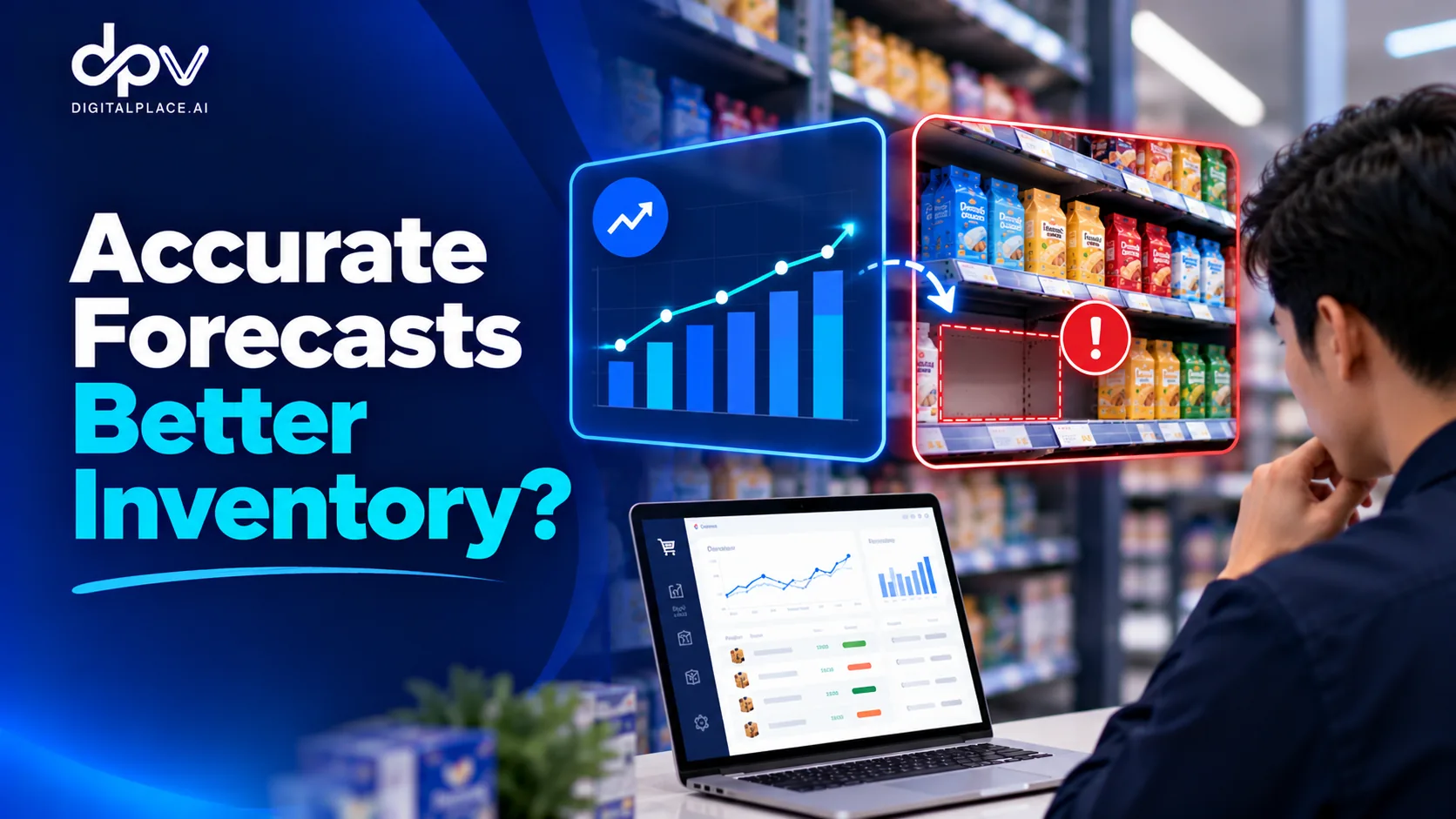
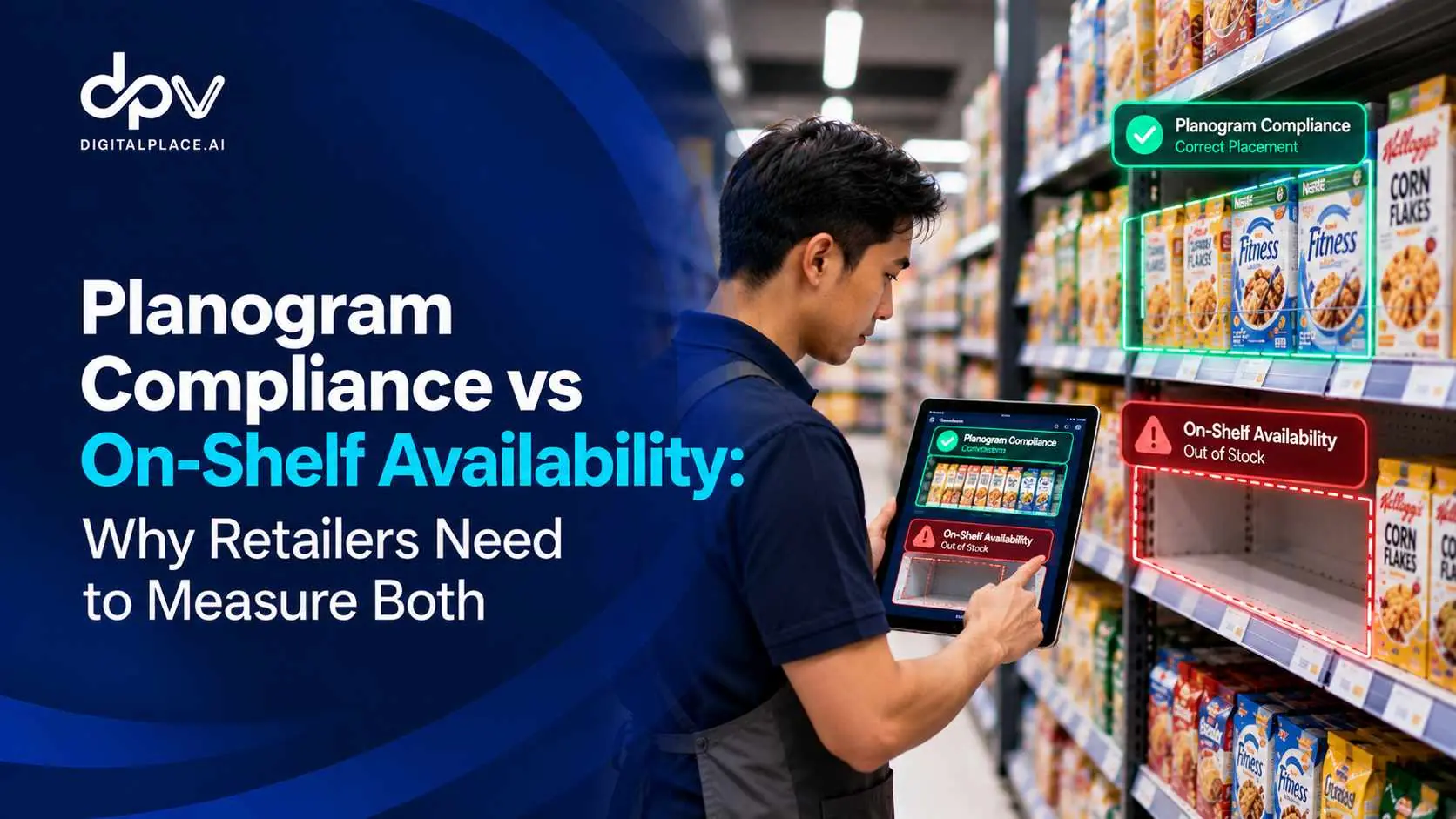
A supermarket shelf can look perfectly organized while still failing to meet customer demand. Products may be arranged according to the approved display plan, but several popular items are missing because they have sold out or have not been replenished. In another store, the shelf may be fully stocked, yet products are positioned incorrectly, occupying spaces intended for different brands or SKUs. Both situations can affect retail performance, although the underlying problems are different.
This distinction highlights two important retail execution metrics: planogram compliance and on-shelf availability (OSA). While both concern the condition of products on store shelves, they measure different aspects of retail operations. Planogram compliance focuses on whether products are displayed according to the approved merchandising plan, while on-shelf availability measures whether customers can find the products they intend to purchase.
Retailers that monitor only one of these metrics may overlook important operational problems. Understanding how they differ, how they interact, and how technology can measure both helps retailers improve shelf execution, prioritize corrective actions, and reduce missed sales opportunities.
What Is Planogram Compliance in Retail?
A planogram is a visual representation of how products should be arranged on retail shelves. It specifies where individual SKUs belong, how much shelf space they receive, how many product facings should be displayed, and how products should be positioned relative to one another. Retailers use planograms to maintain merchandising consistency, manage limited shelf space, improve product visibility, and implement category strategies across multiple stores.
Planogram compliance measures how closely the actual shelf arrangement follows the approved planogram. Depending on the retailer’s measurement methodology, compliance may include product placement, the number of facings, required assortment, shelf allocation, and whether products are displayed in their designated positions.
For example, a planogram may require three facings of Brand A, two facings of Brand B, and four facings of Brand C. If store employees accidentally allocate five facings to Brand A and reduce Brand C to two, the shelf may still appear organized and fully stocked. However, it no longer follows the intended merchandising arrangement, even though customers can still find all three products.
A compliant shelf generally meets several conditions:
- Products occupy their designated shelf positions.
- Required SKUs are displayed according to the approved assortment.
- Product facings match the merchandising plan.
- Shelf space follows the intended category allocation.
- Products are not misplaced, incorrectly substituted, or over-displayed.
Maintaining these conditions becomes increasingly challenging as retail operations scale. A supermarket chain may manage thousands of SKUs across hundreds of stores, with different shelf configurations, employee routines, replenishment schedules, and customer demand patterns. Even when every store receives the same merchandising guidelines, actual execution can gradually diverge from the approved planogram.
What Is On-Shelf Availability?
On-shelf availability refers to whether a product is physically available to customers at its expected shelf location when they want to purchase it. Unlike inventory availability, which typically reflects stock recorded in inventory management systems, OSA focuses on whether shoppers can actually access the product on the sales floor.
Consider a grocery store with 24 units of a popular beverage recorded in its inventory system. The products have arrived from the distribution center, and the store’s inventory records indicate sufficient stock. However, all 24 units remain in the backroom because employees have not yet replenished the shelf. Although the product is technically available within the store, customers encounter an empty shelf and may assume that the item is out of stock.
This situation demonstrates why inventory availability does not automatically translate into on-shelf availability. The problem may not involve purchasing, demand forecasting, or supplier deliveries. Instead, it may originate from the final operational step of moving products from storage to the correct shelf location.
Several factors can reduce on-shelf availability:
- Delayed replenishment despite available backroom inventory.
- Unexpected demand that empties shelves before the next replenishment cycle.
- Incorrect inventory records or phantom inventory.
- Products placed in the wrong shelf locations.
- Insufficient shelf capacity for fast-moving SKUs.
- Supply shortages that prevent inventory from reaching stores.
Poor OSA can affect purchasing behavior because customers generally make decisions based on what they can see and access. If an intended product is missing, shoppers may choose a competing brand, postpone the purchase, or leave without buying the item. For retailers, this means that having sufficient total inventory is not enough if products are unavailable at the point where purchasing decisions occur.
Planogram Compliance vs On-Shelf Availability: Key Differences
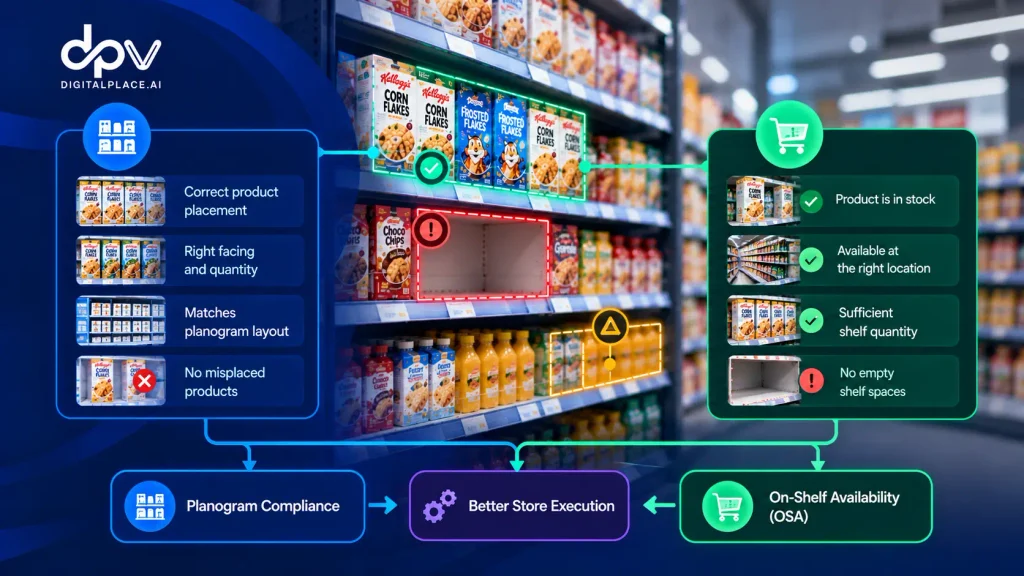
Although planogram compliance and on-shelf availability are closely related, they answer different operational questions. Planogram compliance evaluates whether shelf arrangements follow the intended merchandising strategy, while OSA evaluates whether expected products are physically available for purchase.
| Comparison | Planogram Compliance | On-Shelf Availability |
| Main question | Are products displayed according to the approved plan? | Are expected products available for customers to purchase? |
| Primary focus | Product placement and merchandising execution | Product presence and shelf availability |
| Typical issues | Wrong positions, incorrect facings, over-display, missing planned products | Empty shelf positions, missing products, delayed replenishment |
| Operational responsibility | Merchandising, category management, store operations | Store operations, replenishment, inventory management |
| Common corrective action | Rearrange products or correct display quantities | Replenish shelves or investigate missing inventory |
| Business objective | Consistent merchandising execution | Reduce shelf-level out-of-stocks and missed sales |
The differences become clearer when examining common shelf conditions.
High Planogram Compliance, Low On-Shelf Availability
A store may begin the day with products arranged according to the approved planogram, with correct positions and facings. However, as customers purchase popular items, empty spaces begin appearing on the shelves. The remaining products are still correctly positioned, but the shelf no longer contains every expected SKU.
In this situation, the immediate operational priority is replenishment rather than rearranging products. However, the reported planogram compliance score may also decline if the retailer’s methodology includes required SKU presence, rather than evaluating only the placement of products that remain on the shelf.
High On-Shelf Availability, Low Planogram Compliance
Another store may have every expected product available, but several items occupy incorrect shelf positions. A slow-moving product receives more facings than intended, while a popular SKU has less display space than specified in the merchandising plan.
Customers can still purchase the products, so availability may remain high. Nevertheless, the incorrect allocation of shelf space can interfere with merchandising strategy, product visibility, and future replenishment requirements. Corrective action should focus on restoring the planned arrangement instead of simply adding more inventory.
Low Planogram Compliance and Low On-Shelf Availability
A third situation occurs when several products are missing and other SKUs have been moved into their designated positions. Employees may fill empty spaces with nearby products to make shelves appear complete, even though the arrangement no longer matches the planogram.
Here, both availability and compliance are affected. Resolving the problem requires identifying which products are missing, checking inventory availability, replenishing the appropriate SKUs, and restoring the approved shelf arrangement.
These scenarios demonstrate why retailers should avoid relying on a single shelf-performance metric. A shelf that appears full is not necessarily compliant, while a correctly arranged display does not guarantee that all expected products are available.
Why Retailers Need to Measure Both Metrics
Measuring planogram compliance and on-shelf availability together provides a more complete picture of store execution. Rather than evaluating merchandising arrangements and product availability independently, retailers can understand whether products are both correctly positioned and accessible to customers.
1. Better Identification of Operational Problems
A missing product can result from several different causes, including insufficient inventory, delayed shelf replenishment, incorrect product placement, or inaccurate inventory records. Without additional information, employees may treat every empty shelf position as a stock shortage, even when the product is available elsewhere in the store.
By measuring availability and compliance separately, retailers can better distinguish between these situations and determine whether the appropriate response involves replenishment, product relocation, inventory verification, or a broader supply chain investigation. This helps reduce unnecessary corrective actions and allows store teams to address problems closer to their actual causes.
2. More Effective Shelf Space Management
Shelf space is limited, particularly in supermarkets and convenience stores that manage large assortments within fixed store layouts. Planograms help retailers allocate this space according to merchandising priorities, but actual execution can change throughout the day as products sell, employees replenish shelves, and promotional displays are adjusted.
Monitoring both metrics helps retailers identify situations where products remain available but occupy inappropriate amounts of shelf space. It also reveals when a correctly allocated display repeatedly becomes empty because its capacity is insufficient for actual demand. These observations can provide useful feedback for category management and future planogram adjustments.
3. More Consistent Execution Across Stores
Retail chains often manage stores with different traffic patterns, customer demographics, staffing levels, and replenishment schedules. Even when merchandising guidelines are standardized, execution quality can vary significantly between locations.
Consistent monitoring makes it easier to compare stores, identify recurring issues, and determine where additional operational attention is needed. However, comparisons should account for differences in store formats, approved assortments, shelf configurations, and planogram versions to avoid drawing misleading conclusions.
4. Better Coordination Between Retail Functions
Planogram development, inventory management, and store operations are often managed by different teams. Category managers determine product placement, inventory teams plan stock availability, and store employees are responsible for keeping shelves properly arranged and replenished.
Measuring both compliance and availability creates a shared operational view across these functions. Instead of treating shelf problems as isolated store-level incidents, retailers can identify patterns that require adjustments to merchandising plans, replenishment schedules, or inventory allocation decisions.
How to Measure Planogram Compliance and On-Shelf Availability
Traditional shelf inspections typically involve employees walking through aisles, comparing actual shelf arrangements against reference plans, and recording missing or misplaced products. This process may be manageable for small assortments, but becomes increasingly time-consuming when retailers operate multiple stores containing thousands of SKUs.
Digital measurement systems can help standardize how these observations are collected and evaluated. However, retailers still need to define consistent measurement criteria because planogram compliance and OSA can be calculated using different methodologies.
Measuring Planogram Compliance
A simplified position-based calculation is:
Planogram Compliance (%) = (Compliant Planned Positions ÷ Total Evaluated Planned Positions) × 100
For example, if a shelf contains 100 evaluated planogram positions and 87 meet the retailer’s compliance requirements, its compliance score would be 87%.
However, this calculation represents only one possible methodology. Some retailers measure correct SKU placement, while others incorporate required product presence, the number of facings, shelf-space allocation, and additional merchandising rules. These distinctions are important because two stores with similar physical shelf conditions may receive different scores depending on how compliance is defined.
Measuring On-Shelf Availability
A simplified SKU-based OSA calculation is:
On-Shelf Availability (%) = (Available Expected SKUs ÷ Total Expected SKUs Checked) × 100
If 95 out of 100 expected SKUs are physically available at their designated shelf locations during an inspection, measured OSA is 95%.
This result represents availability at the time of measurement rather than throughout the entire operating day. A product may be present during the morning inspection but become unavailable during peak shopping hours, which means inspection frequency and timing can significantly affect how accurately retailers understand shelf conditions.
For this reason, retailers should evaluate not only the reported percentages but also how frequently checks are performed and whether they capture the periods when shelf problems are most likely to occur.
How AI and Computer Vision Improve Shelf Monitoring
Computer vision provides a more structured approach to analyzing shelf conditions using images captured inside retail stores. Instead of relying entirely on manual observation, AI-powered systems can identify visible products, evaluate their positions, and compare actual displays against approved merchandising plans.
A typical AI-supported shelf monitoring process includes four stages:
- Shelf image capture: Employees use mobile devices or other supported imaging systems to capture shelf conditions during routine inspections.
- Product recognition: Computer vision identifies visible products, their positions, and relevant display characteristics.
- Planogram comparison: The system compares observed shelf arrangements with approved reference layouts to identify discrepancies.
- Issue classification: Detected problems are categorized into actionable issues, such as missing products, misplaced SKUs, or incorrect facings.
This approach can reduce the effort required to inspect large assortments while helping retailers apply more consistent assessment criteria across stores. It also creates a structured record of shelf conditions that can be compared between inspection periods, making recurring problems easier to identify.
However, computer vision is not infallible. Products with similar packaging, obstructed labels, poor lighting, reflective surfaces, and changes in product designs can affect recognition accuracy. Maintaining updated reference information and providing a process for verifying uncertain detections remain important parts of an effective implementation.
Digitalplace.ai supports these operational requirements through AI-powered on-shelf availability and planogram compliance solution. Using scheduled mobile shelf scans, the solution helps retailers identify missing products, misplaced SKUs, unknown items, and merchandising deviations, providing store employees with clearer information about which issues require attention.
Turning Shelf Detection Into Corrective Action
Detecting shelf problems is valuable only when the information leads to appropriate operational action. An empty shelf position does not always require the same response, just as a planogram discrepancy does not necessarily indicate that additional inventory is needed.
For example, if a product is missing from its designated shelf location but remains available in the backroom, employees should prioritize replenishment. If the product is displayed in the wrong position, it may simply need to be relocated. Meanwhile, an unidentified item may require verification before employees can determine whether it represents new packaging, an incorrect SKU, or an outdated product reference.
A practical corrective-action framework can classify issues as follows:
| Detected Issue | Recommended Action |
| Empty shelf position | Check inventory and replenish if stock is available |
| Product in the wrong position | Move the product to its approved location |
| Unknown or unrecognized SKU | Verify product identity and update reference information if necessary |
| Incorrect product facings | Adjust the display according to the approved planogram |
| Excessive product display | Reduce excess facings and restore planned shelf allocation |
| Repeated missing products | Investigate replenishment frequency, inventory accuracy, or supply constraints |
Not every discrepancy requires the same level of urgency. A missing fast-moving SKU during peak shopping hours may create a more immediate sales risk than a minor facing deviation involving a slow-moving product. By considering product velocity, customer demand, and the potential business impact of each issue, retailers can prioritize corrective actions instead of treating every alert equally.
Digitalplace.ai helps connect shelf observations with operational follow-up by identifying issues that store teams can act on, including restocking, repositioning, verification, and display correction. The objective is to make shelf inspections more useful for daily store execution rather than simply generating compliance scores.
Why Shelf Monitoring Should Happen Throughout the Day
Retail shelf conditions change continuously as customers purchase products, employees replenish displays, and promotional activities influence demand. A store may begin the morning with high on-shelf availability and strong planogram compliance, but these conditions can deteriorate as the day progresses.
An inspection performed only before opening may therefore miss problems that develop during the busiest shopping periods. Similarly, a single inspection near closing time may not reveal how long products were unavailable earlier in the day.
A practical monitoring schedule can include several checkpoints:
- Morning: Verify shelf readiness and identify problems before customer traffic increases.
- Midday: Detect availability gaps created by early sales activity.
- Afternoon: Review high-demand categories and outstanding replenishment requirements.
- Evening: Identify unresolved issues and prepare replenishment priorities for the next operating day.
The appropriate inspection frequency depends on store traffic, assortment complexity, replenishment routines, and available resources. Stores with high transaction volumes or fast-moving categories may benefit from more frequent checks, while lower-traffic locations may require fewer inspections.
Scheduled mobile shelf monitoring provides a practical option for retailers that want structured visibility without installing fixed cameras throughout every aisle. However, it is important to distinguish periodic inspection from continuous real-time monitoring. A mobile scan captures shelf conditions at a specific moment, so the resulting data should be interpreted within the context of the inspection schedule.
Connecting Shelf Execution With Inventory and Merchandising Decisions
Planogram compliance and on-shelf availability are often treated as separate operational responsibilities, even though customers experience their combined outcome. A product must be sufficiently stocked, correctly positioned, and accessible before it can contribute to a successful purchase.
A more integrated approach treats shelf execution as a connected process:
Plan → Stock → Display → Check → Correct → Measure
The planogram defines the intended display arrangement, while inventory planning and replenishment determine whether sufficient stock reaches the store. Store employees then place products on shelves, and routine inspections identify differences between expected and actual conditions. Corrective actions address these differences, while performance measurements help retailers evaluate whether the underlying processes are working effectively.
Over time, recurring shelf problems can also provide feedback for merchandising and inventory planning. For example, repeated out-of-stocks affecting the same SKU may indicate insufficient shelf capacity, inappropriate replenishment frequency, or demand patterns that existing stock rules fail to capture. Similarly, recurring planogram deviations may suggest that the proposed layout is difficult to maintain under actual store conditions.
By connecting shelf observations with broader operational decisions, retailers can move beyond simply correcting visible problems and begin addressing the conditions that repeatedly create them.
Conclusion: Better Shelf Performance Requires Both Availability and Compliance
Planogram compliance and on-shelf availability measure different but closely connected aspects of retail execution. Planogram compliance evaluates whether products follow the approved merchandising arrangement, while OSA measures whether expected products are physically available for customers to purchase.
A store may perform well on one metric while underperforming on the other. Measuring both provides a more complete understanding of shelf conditions, helps identify different operational problems, and supports more targeted corrective actions. When combined with regular inspections and structured follow-up processes, these metrics can also provide useful feedback for merchandising, replenishment, and inventory planning.
AI-powered shelf monitoring makes it easier to collect and interpret this information across multiple stores. Through its On-Shelf Availability and Planogram Compliance solution, Digitalplace.ai helps retailers conduct scheduled, AI-supported shelf inspections that connect product recognition, display compliance, and operational follow-up.
Ultimately, effective shelf execution is not simply about keeping displays attractive or maintaining high compliance scores. It is about ensuring that the right products are available, correctly positioned, and accessible when customers are ready to buy.