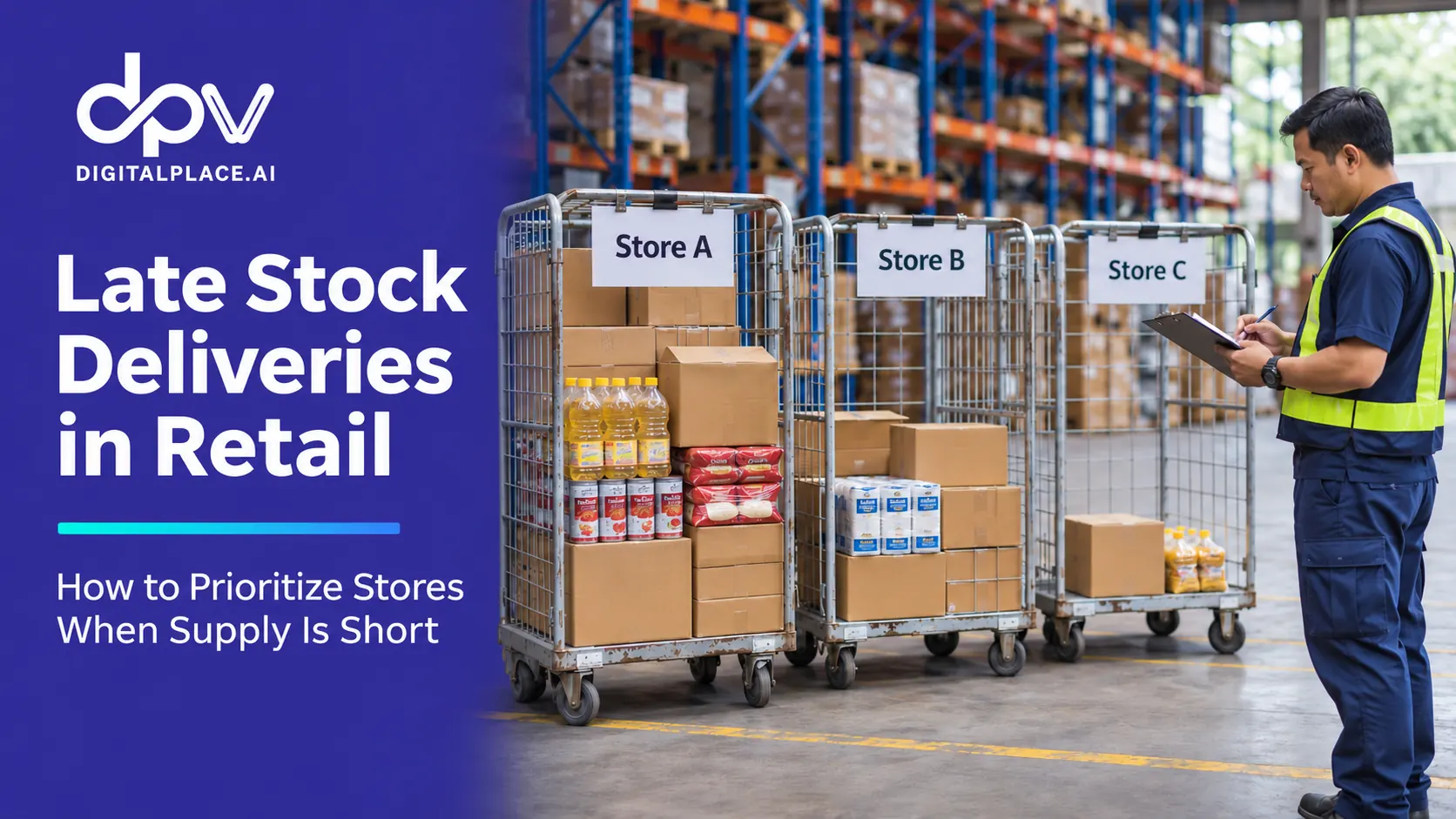
A supermarket and a minimarket both need cooking oil. The supermarket sells more bottles each day. The minimarket has only one carton left. A supplier delivery is late, and the warehouse has just four cartons to share. Which store should get more?
In this case, the smaller store should. Its next delivery is three days away, while the supermarket can receive more stock tomorrow.
That second detail is easy to overlook. When supply is short, knowing how much a store sells is only half the picture. You also need to know how long its remaining stock must last.
A simple example with two stores
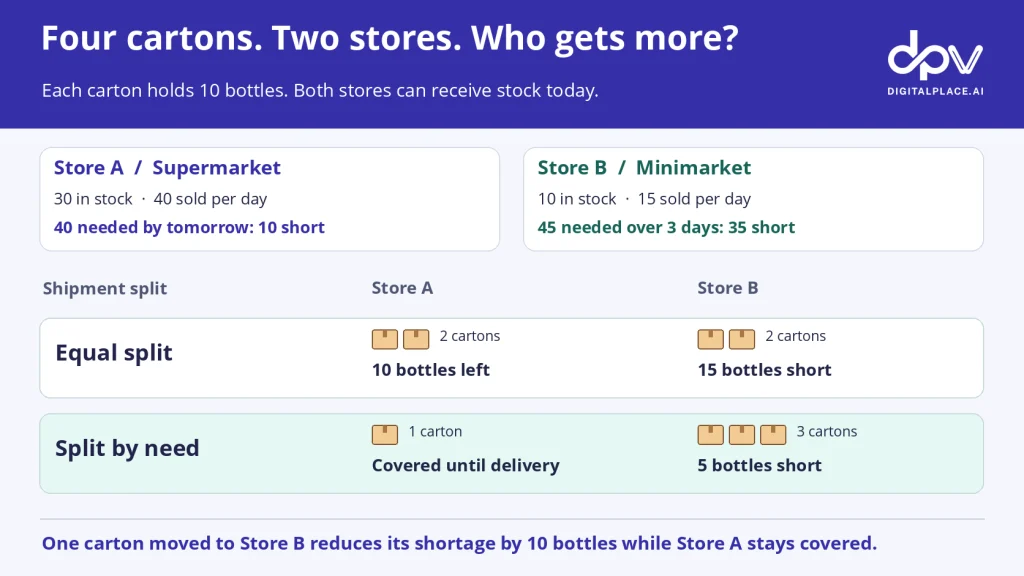
Suppose the warehouse can send a truck to both stores today. Each carton contains 10 bottles of the same cooking oil, so the four available cartons hold 40 bottles. The stores have checked their shelves and backrooms. Here is what they have before the truck arrives.
| What the planner checks | Store A · Supermarket | Store B · Minimarket |
|---|---|---|
| Bottles available to sell now | 30 | 10 |
| Bottles usually sold per day | 40 | 15 |
| Time until the next delivery after today’s truck | 1 day | 3 days |
Store A needs one carton today. It expects to sell 40 bottles before tomorrow’s delivery and already has 30. Sending 10 more bottles covers the gap.
Store B should get the other three cartons. It expects to sell 45 bottles over the next three days and has only 10. Ideally, it would receive 35 more. The three remaining cartons give it 30, leaving an expected shortage of just five bottles.
Why not send two cartons to each store? With an equal split, Store A would still have about 10 bottles left when its next truck arrived. Meanwhile, Store B would run out roughly a day before its next delivery, with 15 bottles of expected demand left to meet. Moving one carton from A’s shipment to B’s reduces B’s expected shortage from 15 bottles to five, while A still has enough.
For Digitalplace.ai, this is the starting point for store-level planning: when does each branch actually need its next carton?
Four things to check before sending the truck
1. How much stock can customers actually buy?
Start with the shelf and the backroom. If Store B has an unopened carton in the back, staff can put it on sale today. If the system includes a carton of leaking bottles, the planner should leave those bottles out of the count.
A quick check of the shelf and backroom gives the planner reliable stock figures for replenishment before the truck leaves.
2. How quickly will the product sell over the next few days?
To estimate demand before the next delivery, start with what the store sold on similar days when the product was in stock. A weekend promotion might lift demand at one branch while sales continue as usual at the other.
Also check whether the item was available on the days used for the estimate. If Store B sold only five bottles yesterday because the shelf was empty by lunchtime, those five sales tell you little about how many bottles customers wanted that afternoon. A recent day when the product stayed on the shelf is a better starting point.
3. When can the next delivery reach the store?
Ask for the next delivery to the branch. A supplier might promise to deliver to the warehouse on Thursday, but if the goods arrive at 11 a.m. and the store’s truck leaves at 8 a.m., the branch will miss that shipment.
This can change the decision even when the sales figures stay the same. Store A needs only one carton in the example because another delivery is due tomorrow. If that truck is cancelled, the planner should revisit the split before sending today’s cartons.
4. What can customers buy if the product runs out?
Sometimes two stores are equally close to running out, and there is only one carton left. Check the alternatives customers will find on each shelf. One branch may carry a second brand of one-litre cooking oil at a similar price. The other may have only a five-litre pack that costs much more upfront.
In that situation, the carton may be more valuable at the second branch. A shopper buying oil for dinner has a practical alternative at the first store and fewer options at the second.
Make the remaining shortage clear
Once the truck leaves, tell the store team what still needs attention. In this example, a useful handover would read: “Store A has enough until tomorrow. Store B will receive three cartons today but may still need five more bottles before its next delivery. Check whether a nearby branch can send them in time.”
For retailers managing many branches, Digitalplace.ai supports this work by combining demand forecasts with store stock levels and delivery schedules. A planner can use those details to decide where an extra carton will help and flag the branch that still needs a follow-up.
The next time a shipment arrives late, start with one question for each store: “Will what you have today last until the next truck reaches you?” In the cooking oil example, that question explains both decisions: why the busy supermarket gets one carton, and why the smaller minimarket gets three.