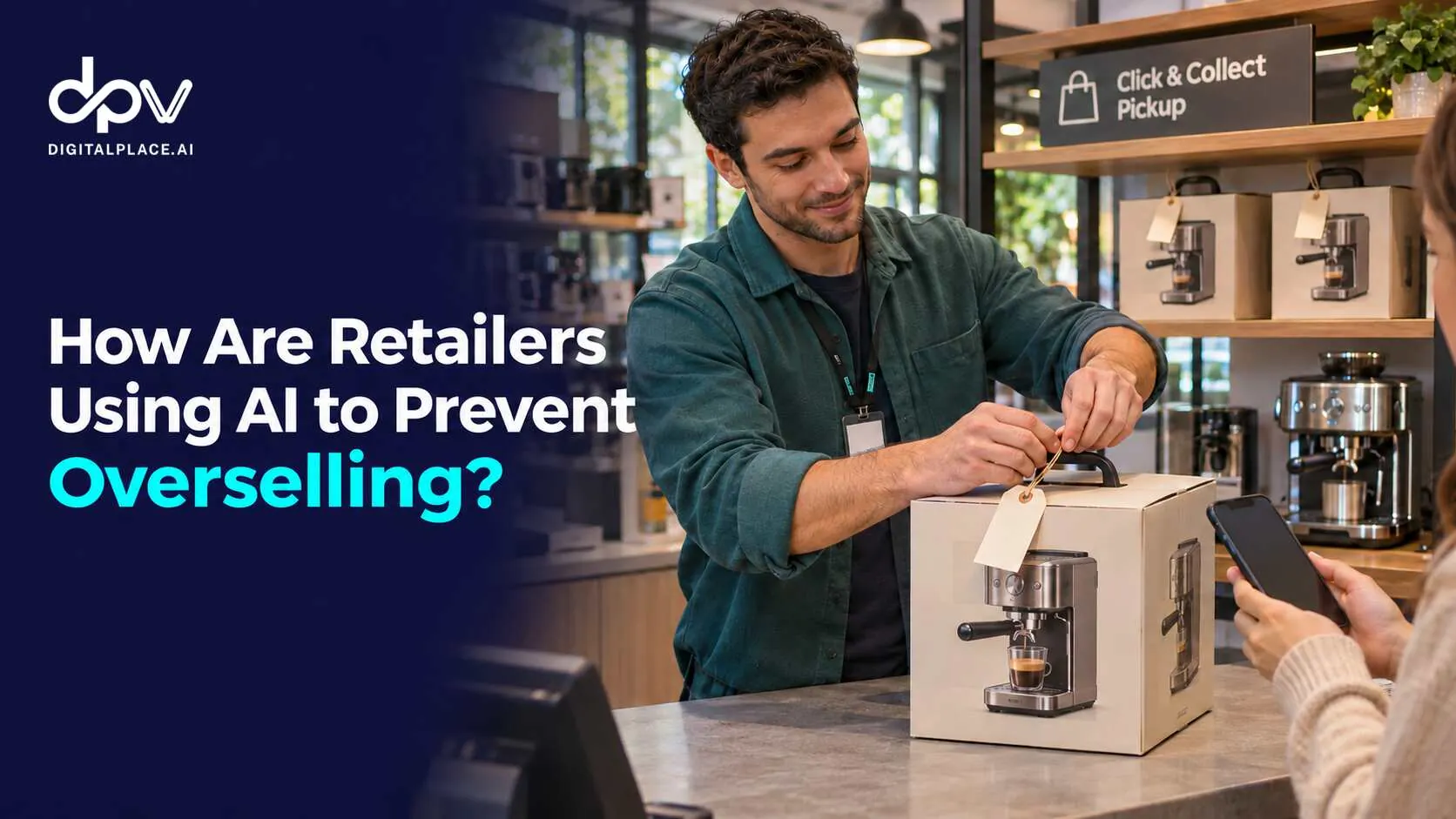
A customer walks into an appliance store on Friday morning and asks for six coffee machines to take back to the office. The sales associate checks the stockroom and counts twelve boxed machines. Eight carry customers’ names. Can the associate promise all six for collection today?
Only four machines are free to sell. The earlier customers bought theirs at the counter and arranged to collect them that afternoon. If the associate accepts payment for six more and promises immediate collection, the store will owe customers fourteen machines while holding twelve.
Retailers use AI to forecast demand for each branch, identify items likely to run short before the next delivery, and plan replenishment or transfers between stores. Those decisions can reduce the pressure that leads to overselling during a promotion or a busy weekend. At the sales counter, staff still need an accurate count of sellable stock and a record of what they have already promised.
How many units can the store promise right now?
Start with the sellable units physically in the store. If that count includes goods already set aside for customers, deduct those commitments once. In this example, all twelve boxed machines are in saleable condition.
| Stockroom check | Units | What the sales associate knows |
|---|---|---|
| Boxed coffee machines on hand | 12 | The count includes the eight tagged machines. |
| Set aside for customers | 8 | These machines are awaiting collection. |
| Available to sell now | 4 | The associate can offer these four today. |
| Requested by the customer | 6 | The store needs two more to fill the request. |
The associate can offer four machines immediately. If the customer needs all six together, the next step is to call a nearby branch, confirm that two uncommitted machines are physically available, and check when they can reach the store. Only then can the associate give the customer a collection time for all six.
Even two colleagues working the same floor can promise the same stock. Suppose one associate sets aside three of the four available machines for a customer. Recording that hold before the next colleague confirms a sale leaves everyone working from the same figure: one machine remains available.
Where AI can help before the next order arrives
Forecast demand for the store that will fulfil the order
A promotion can look well supplied at chain level while one branch runs through its stock before lunch. Imagine two stores carrying the same coffee machine at the same price. One is beside a commuter station where shoppers stop on their way home from work. The other serves more weekend shoppers. Sending each store half the promotional stock makes the allocation easy to explain, but it leaves the evening shopping rush out of the decision.
A planner can use store-level sales history, promotion dates and recent changes in demand to estimate how many units each location will need before its next delivery. Digitalplace.ai uses these kinds of signals in its inventory planning approach. For a closer look at how a change in recent sales can affect the next order, see Demand Sensing in Retail.
Decide whether stock can reach the customer in time
Return to the store with four machines available. Its updated forecast indicates demand for nine more units before the next scheduled delivery. That gives the planner a projected five-unit shortfall. At this point those five units represent expected demand. Overselling occurs only if the retailer accepts an order it cannot fulfil as promised.
A nearby branch has ten uncommitted machines and expects to sell three before its own replenishment arrives. A transfer of five could cover the projected gap while leaving that branch with five machines, two above its expected demand. The deciding detail is the departure time. If the transfer can arrive and be received before the evening rush, it may protect those sales. If it arrives tomorrow, the planner needs to reconsider what the sales team can offer today.
This is where AI inventory optimization from Digitalplace.ai fits into the decision. A demand forecast and a replenishment recommendation help the planner choose how much stock to move or order. Staff can add the transferred units to the sellable balance after receiving and checking them.
Flag stock balances that need a physical check
At another store, the system shows two coffee machines. Twice this week, staff have tried to pick one and come back empty-handed. Increasing the next forecast will do little to explain those two failed picks. Someone needs to check the area used for customer holds, display stock, returns area and the transactions behind the recorded balance.
A retailer with access to pick outcomes and inventory adjustments can use anomaly detection to flag combinations such as repeated failed picks against a positive balance. Give the store team the SKU, location, last successful pick and time of the first failure. That makes the alert actionable. While staff investigate, the retailer can ask staff to check the stockroom before promising the item to another customer.
What should staff do with the last unit on display?
A store may have one coffee machine left on the showroom counter. The box is gone, the milk jug is missing, and staff use it for demonstrations. Whether that machine counts as stock available to a customer depends on its condition and the store’s sales policy. If the customer expects a sealed machine with all accessories, confirming the sale from the stock total alone creates a promise the branch cannot keep.
Record display stock separately when it has different conditions of sale. Apply the same discipline to damaged items, returns awaiting inspection and customer holds. At the end of a promotion, a planner can use those records to investigate why an item with a positive stock balance stopped selling. A unit held for collection and a sealed unit ready for sale look identical in a branch total, but they call for different decisions on the shop floor.
How to measure whether overselling is improving
Start with a number that reflects the customer’s experience. Count confirmed order lines that the retailer could not fulfil as promised because stock was unavailable, then divide by all confirmed order lines in the same scope. Count an affected line once, including when the customer accepts a substitute or only part of the original quantity. This keeps a successful service recovery from hiding the original stock problem.
Suppose 12 of 2,000 order lines confirmed at store counters were affected in one week. The rate is 0.6%. Before changing an algorithm, review those twelve cases individually. The next action depends on what staff actually found.
| What the review uncovers | What to check first |
|---|---|
| Two associates promised the same final unit | Whether staff recorded the first customer’s hold before the second sale |
| Staff repeatedly failed to find units the system showed as available | The physical count, stock condition and recent movements at that store |
| A promoted SKU repeatedly ran low before the next delivery | Store-level demand, replenishment lead time and the timing of the promotion |
| Stock was available elsewhere but missed the collection deadline | The supplying branch, transfer departure time and collection time promised |
For a wider review of the inventory issues behind these cases, Digitalplace.ai covers inaccurate records and replenishment decisions in Inventory Management Problems and Challenges.
In the coffee machine example, today’s customer needs a clear answer: four units are available here, and the retailer must verify where and when it can supply the other two. Tomorrow’s planner needs to know why that store ran short. Tracking both decisions gives the retailer a way to improve the next order it accepts and the next delivery it schedules.
Frequently asked questions
What is the difference between a stockout and overselling?
A stockout means a product is unavailable at a particular place and time. A sales associate who tells a shopper the last machine has already been sold has identified a stockout. Overselling occurs if the associate accepts another sale and promises a machine the store cannot supply on the agreed date.
When can a store promise stock from another branch?
Ask the supplying branch to confirm the quantity is sellable, set it aside and agree on a transfer time. A stock balance from yesterday can help staff decide which branch to call. A confirmed transfer and a realistic arrival time let them tell the customer when the item will be ready.
Which data should a retailer connect first?
To investigate a failed order, start with the SKU, fulfilment location, sellable balance, open reservations, and timestamps for the order and the last stock update. To improve future supply decisions, add store-level sales, promotions, delivery schedules and supplier lead times. Keeping the order timestamp lets a planner reconstruct what the store could reasonably promise when the customer checked out.