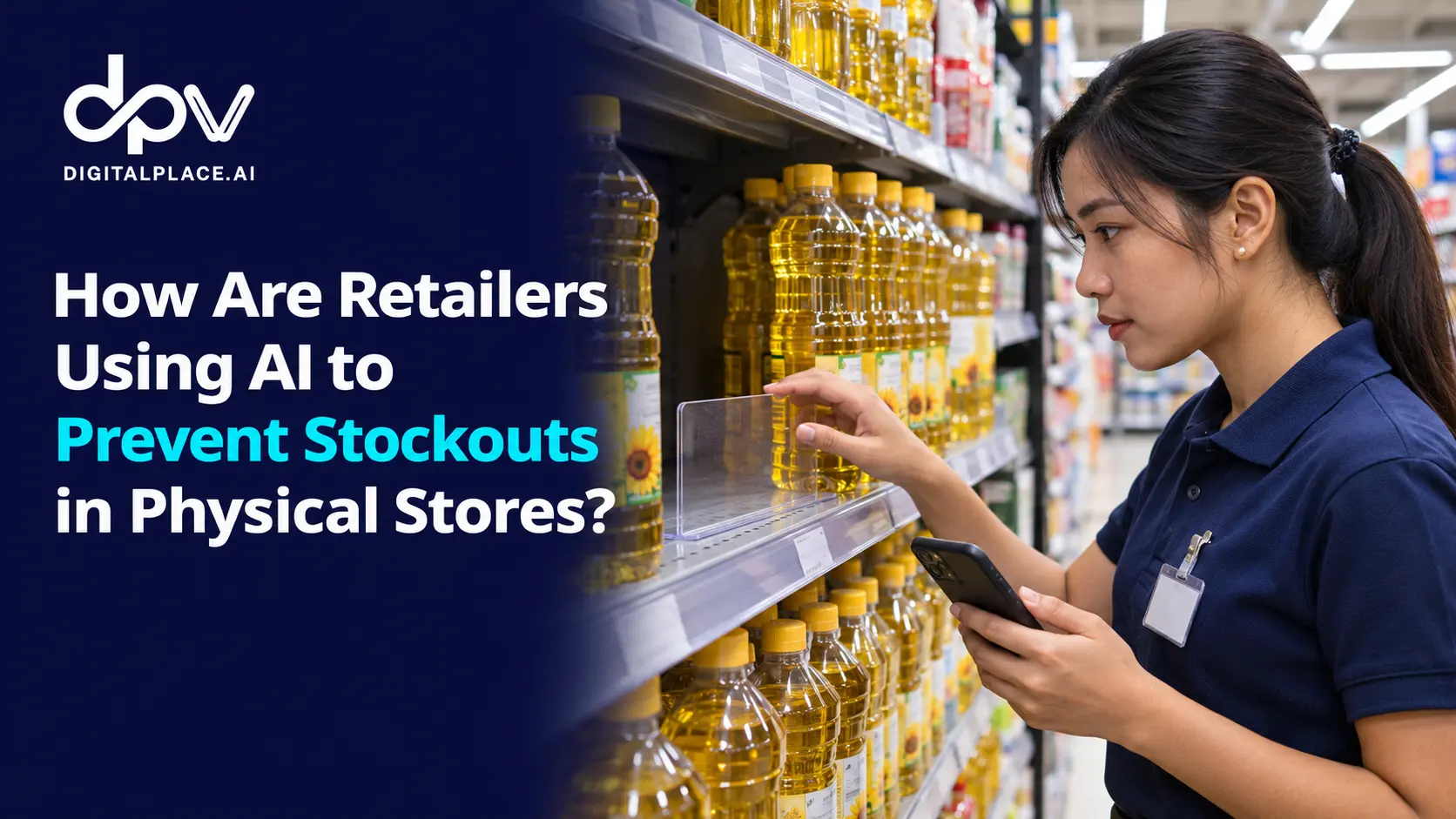
The cooking oil aisle looks full. A shopper stops at a promotional label for a one-litre bottle, checks the shelf above it, and finds only the two-litre size. She leaves without buying. A few metres away, an unopened carton of the promoted product is sitting in the backroom.
For the store manager, the next question is simple: why order more oil when the branch already has enough to make the sale?
Retailers use AI to reduce stockouts in physical stores by connecting two decisions. A scheduled shelf check can identify a product that needs attention on the shop floor. A store-level demand forecast can help a planner decide whether the branch has enough stock to last until its next delivery. Both decisions affect availability, but they involve different people, different information, and different timescales.
Why can a full shelf still cost a retailer a sale?
Walk down the cooking oil aisle from a distance and the display looks healthy. The bottles are upright, the labels face forward, and there is no obvious gap. The problem becomes visible only when someone compares the pack size on the shelf with the product on the promotional label.
A shelf stockout occurs when shoppers cannot find the expected product on the shelf, even though the store may have more units elsewhere. A store stockout occurs when the branch has run out of sellable units. The distinction matters because sending another carton to a branch with stock in the backroom adds inventory without fixing the immediate problem.
Even the same empty position can call for different actions:
| What the store team finds | What to do next |
|---|---|
| The one-litre position is empty, but a carton is in the backroom. | Refill the shelf and verify that shoppers can find the product above the correct label. |
| Two-litre bottles occupy the space assigned to the one-litre promotion. | Move the two-litre bottles to their assigned position and restore the promotional display. |
| The shelf and backroom are empty, and the next delivery is two days away. | Review expected demand, incoming stock, and nearby branches before deciding whether to transfer stock or adjust replenishment. |
The second case is easy to miss during a visual walk-through. It illustrates how a merchandising plan can differ from what shoppers actually find on the shelf.
Use AI shelf checks to find the right product in the wrong place
InfiniShelf from Digitalplace.ai helps store teams check recorded shelf conditions against the approved planogram.
During a scheduled check, a store associate records the assigned shelf using a smartphone. Computer vision analyses the recording and can flag an expected product that is missing or a recognised product occupying the wrong position. In the cooking oil example, the useful finding is specific enough for someone to act on: the space assigned to the one-litre bottle contains the two-litre version.
The associate can then follow the problem through to resolution:
- Check the flagged position. Confirm the pack size against the shelf label and the current promotion.
- Locate the expected product. Check the promotional end display and backroom before recording that the branch is out of stock.
- Correct the display. Move the misplaced bottles and refill the one-litre position.
- Verify the result. Check the shelf again and record when shoppers can pick up the promoted bottle.
The recording shows the condition of the shelf at the time of the check. If the morning check repeatedly finds a full display but customers report gaps in the afternoon, the manager has a reason to schedule a check closer to the afternoon rush. That can be more useful than asking staff to inspect every aisle more frequently.
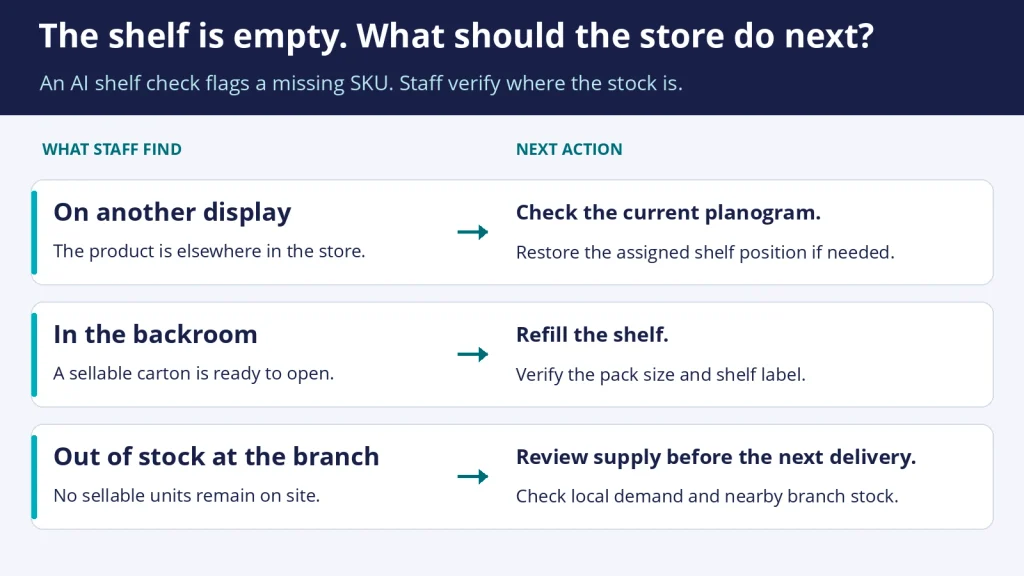
An empty space above a promotional label tells staff where to look first. If the one-litre cooking oil is on an end display, the team can check the planogram to see whether some bottles belong on the main shelf. If a carton is in the backroom, staff can refill the shelf during the same shift. When both checks come up empty, the question shifts to supply: can a nearby branch spare enough bottles to cover expected sales until the next delivery?
Forecast whether each branch has enough stock until its next delivery
Now consider a different outcome. The associate checks the backroom and finds that the last carton was opened that morning. Every remaining one-litre bottle is already on display. This time, the shelf team has done its job. The branch needs a supply decision.
Digitalplace.ai’s InfiniSupply uses store-level demand signals to support forecasting, replenishment, and stock allocation. For a planner overseeing several supermarkets, the relevant question is how many bottles each branch is likely to sell before its next delivery. Two outlets running the same promotion may need different quantities because their sales patterns and delivery schedules differ.
Consider two branches on a Friday morning. The quantities below are illustrative.
| Branch | Sellable bottles on hand | Expected sales before the next delivery | Planning decision |
|---|---|---|---|
| Residential branch | 18 | 30 | Review a potential shortfall of 12 bottles. |
| Office-district branch | 26 | 14 | Check whether part of the projected 12-bottle surplus can reach the residential branch in time. |
Across the two branches, there are 44 bottles on hand and 44 bottles of expected demand. The chain has enough in total, yet one branch could still run out. A transfer is worth considering if it can arrive before the shortage and leave the sending branch enough protection against a busier-than-expected day.
The forecast can also change while the promotion is running. If Friday morning sales at the residential branch are already ahead of expectations, the planner can revisit the decision before the afternoon rush. This is where short-term demand signals can change a replenishment decision.
Use recurring shelf gaps to decide what needs to change
Suppose the one-litre bottles are missing again on Saturday afternoon. A second incident is an opportunity to check whether Friday’s fix addressed the cause or simply got the product back on the shelf for a few hours.
Three patterns deserve different responses:
- The shelf empties while cartons remain in the backroom. Review the timing of refill rounds and how many bottles fit in the assigned display space. A larger delivery would give staff more cartons to store.
- The shelf and backroom both empty before each delivery. Review the branch’s forecast, order quantity, and delivery schedule. The promotion may have changed local demand enough to justify a replenishment adjustment.
- The promoted pack repeatedly appears in the wrong position. Check that the shelf label, current planogram, and instructions given to staff all identify the same pack size. A placement error can recur even when the branch receives exactly the right quantity.
The appropriate response can vary within the same aisle. A promoted one-litre bottle may need an afternoon refill, while a slower-selling two-litre bottle needs less display space. That is a practical example of why one inventory rule cannot work for every SKU in retail.
Measure whether shoppers can find the product
Counting scans tells a manager how much inspection work took place. To judge whether that work improved availability, start with one category and compare the same products at similar times of day. Record when promotions or delivery schedules change so the team can interpret the results.
| Metric | What it tells the retailer |
|---|---|
| On-shelf availability at scheduled checks | In what share of SKU checks was the expected product available in its assigned position? |
| Time to restore shelf availability | After staff detected a gap, how long did it take to verify that the product was back on the shelf? |
| Shelf gaps with stock in the backroom | What share of confirmed gaps could staff resolve using sellable stock already at the branch? |
| Repeat shelf gaps | How often did the same SKU go missing again at the same branch after staff had refilled its shelf? |
Read the measures together. A branch might cut its average refill time from 40 minutes to 15 and still find the same promotional position empty every afternoon. Staff are responding faster, but the repeated gap suggests that shelf capacity or refill timing still needs attention. If the shelf and backroom keep running dry, the planner has a different problem to solve before the next delivery.
For the shopper looking for one-litre cooking oil, availability comes down to a particular bottle, in a particular place, at a particular moment. For the retailer, the value of AI lies in knowing which action can put it there: correct the display, bring out the carton already in the store, or change how much stock reaches that branch.