Retail growth is often associated with attracting more customers. When sales targets increase, management may respond by expanding advertising budgets, launching promotional campaigns, opening new stores, or investing in customer acquisition. These approaches can work, but they also require additional spending, resources, and operational capacity. An important question is sometimes overlooked: How much additional revenue could the retailer generate from the customers already visiting its stores?
Consider a retail store that attracts 10,000 visitors each month. Some leave without purchasing, others buy only the item they originally intended to purchase, and some complete larger transactions. Each of these outcomes represents a different opportunity to improve revenue without necessarily increasing foot traffic. The challenge is identifying which opportunity matters most and whether the retailer can realistically influence it.
For retail executives, growing revenue from existing traffic requires more than encouraging employees to sell harder. It involves understanding how conversion, transaction value, product availability, merchandising, and customer experience work together. More importantly, management needs to determine where improvements can generate the greatest commercial value without sacrificing profitability.


Find Shelf Issues.
Fix Them Faster.
Retail Revenue Growth Has More Than One Lever
At the store level, revenue can be understood through a relatively simple relationship:
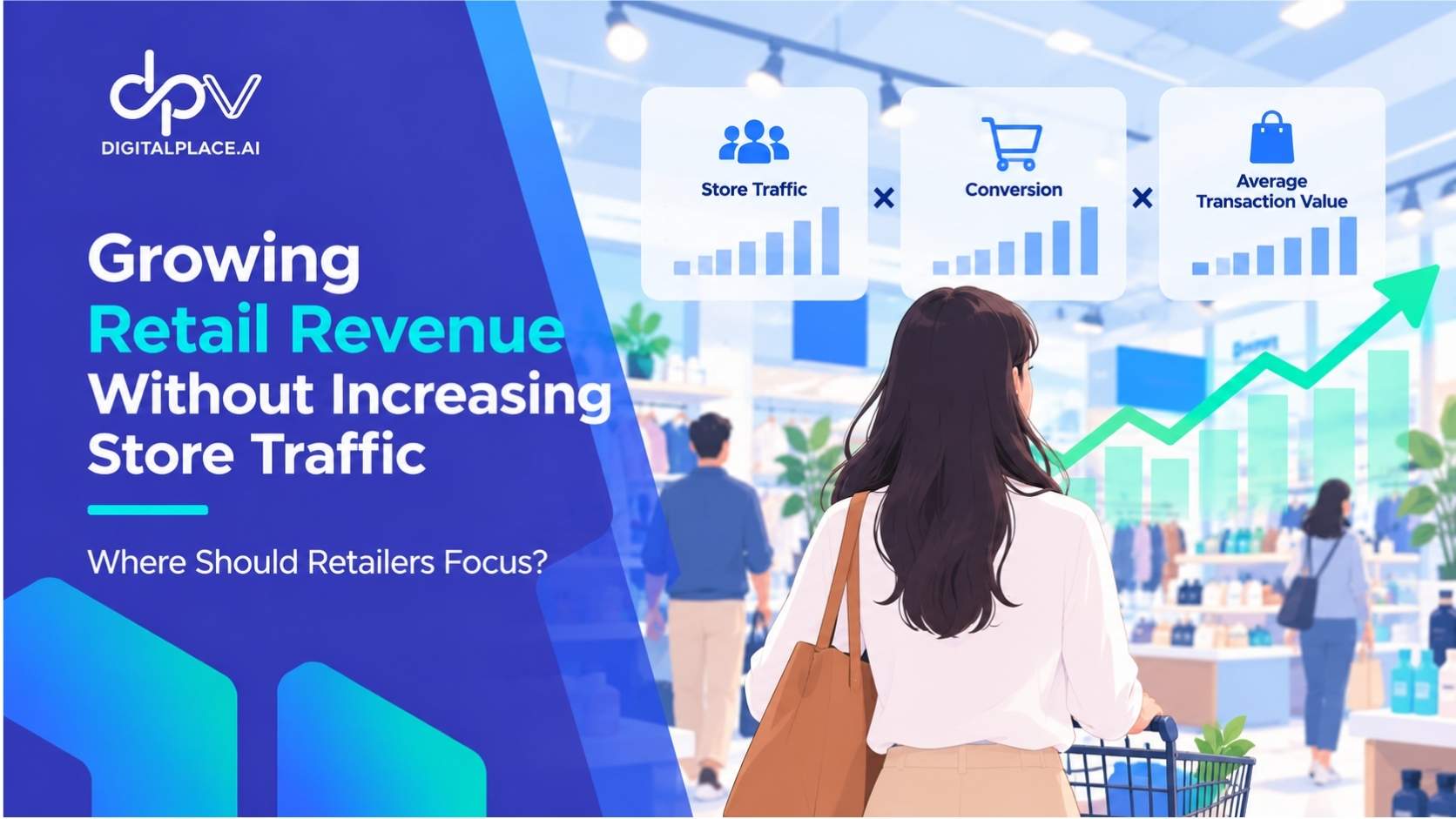
Retail Revenue = Store Traffic × Conversion Rate × Average Transaction Value
This relationship provides a useful framework for identifying growth opportunities. Traffic represents the number of visits entering the store, conversion measures how many visits result in purchases, and average transaction value (ATV) measures revenue generated per transaction. The equation assumes consistent measurement periods and definitions, with conversion calculated using transactions divided by counted visits.
Many retailers focus heavily on the first component because traffic growth is visible and easily associated with marketing performance. However, improving conversion or ATV can also increase revenue, even when visitor numbers remain unchanged. These improvements may be particularly attractive when acquiring additional customers is expensive, available retail space is limited, or existing stores have not yet reached their commercial potential.
Illustrating the Opportunity
Imagine a store with 10,000 monthly visits, a conversion rate of 25%, and an average transaction value of $40. Its monthly sales are $100,000. The following hypothetical scenarios illustrate what happens when the store improves conversion, ATV, or both while maintaining the same traffic.
| Scenario | Monthly Visits | Conversion Rate | ATV | Monthly Revenue |
|---|---|---|---|---|
| Current Performance | 10,000 | 25% | $40 | $100,000 |
| Higher Conversion | 10,000 | 27% | $40 | $108,000 |
| Higher Transaction Value | 10,000 | 25% | $43 | $107,500 |
| Combined Improvement | 10,000 | 27% | $43 | $116,100 |
The combined scenario generates 16.1% more revenue without increasing traffic. These figures are illustrative rather than projected results, but they demonstrate an important strategic principle: retailers can potentially unlock growth by improving how effectively existing customer visits translate into sales. Whether this growth is profitable depends on the costs, discounts, and operational investments required to achieve it.
Where Should Retailers Focus First?
Although conversion and transaction value are both important, retailers should not assume that improving them produces equal results in every situation. The most valuable opportunity depends on current store performance, customer behavior, product categories, and operational constraints. A retailer with relatively high traffic but weak conversion faces a different challenge from one where most visitors purchase something but rarely buy additional products.
1. Improve Conversion When Customers Are Leaving Without Buying
A store receiving substantial foot traffic but converting relatively few visits may have an execution problem rather than a marketing problem. Customers may struggle to find products, encounter unavailable sizes or variants, receive insufficient assistance, or abandon purchases because checkout takes too long. These issues can reduce sales even when the store has attracted customers who were initially interested in buying.
Management should investigate where the purchasing journey breaks down before increasing promotional spending. For example, if visitors frequently ask for products that are unavailable, better product availability may be more valuable than launching another advertising campaign. If customers can find what they need but leave because of long queues, improving staffing schedules or checkout processes may produce a more immediate benefit.
Conversion should also be assessed by store format and customer intent. Grocery stores, fashion retailers, electronics stores, and specialty retailers naturally experience different shopping behaviors. Comparing conversion rates without considering these differences can lead to unrealistic targets and inappropriate management decisions.
2. Improve Transaction Value When Customers Buy Too Little
Some stores convert visitors effectively but generate relatively small transactions. Customers may regularly purchase only one product, overlook complementary items, or select lower-priced alternatives. In these situations, management should investigate opportunities to increase basket value without pressuring customers into unnecessary purchases.
Two useful indicators are Units Per Transaction (UPT), which measures the average number of units purchased per transaction, and Average Selling Price (ASP), which measures the average realized price per unit sold. Their relationship determines ATV, as explained in the ATV = UPT × ASP retail basket equation.
Increasing transaction value can involve better product recommendations, thoughtful cross-merchandising, relevant product bundles, or improved availability of complementary products. A fashion retailer might display matching accessories alongside clothing, while a grocery retailer could position frequently purchased complementary products conveniently. The objective is not simply to sell additional units, but to help customers complete purchases that better satisfy their needs.
3. Strengthen the Experience That Supports Future Purchases
Growth from existing traffic should not be evaluated entirely through immediate transaction metrics. A customer who completes a larger purchase today but receives a poor experience may be less likely to return. Aggressive upselling, confusing promotions, or persistent product unavailability can undermine the very customer relationships retailers depend on for future sales.
Retailers should therefore distinguish between increasing revenue per visit and increasing the long-term value of customer relationships. Measures such as repeat purchase rate, customer complaints, product returns, and loyalty participation can help management understand whether short-term sales improvements are creating sustainable value. This is particularly important when evaluating promotions that encourage customers to buy more than they originally intended.
Why Bigger Baskets Do Not Always Mean Better Business
Increasing ATV is attractive because its effect on revenue is relatively easy to calculate. However, a larger transaction does not automatically produce a more profitable transaction. A customer purchasing five heavily discounted products may generate less gross profit than someone purchasing three regularly priced products. Similarly, shifting sales toward high-value but low-margin categories can increase average transaction value while weakening overall profitability.
This distinction is supported by a 2024 research paper from the U.S. Bureau of Labor Statistics, which examined sales-based and margin-based measures of retail productivity. The researchers found that changes in prices, product mixes, and industry conditions can cause sales productivity and margin productivity to follow different patterns. Across much of the period studied, sales productivity grew faster than margin productivity.
The implication for retailers is important: revenue growth initiatives should be assessed using both sales and profitability indicators. Management should consider gross profit per transaction, promotional costs, product margins, and incremental operating expenses alongside ATV and conversion. A strategy that produces slightly lower revenue growth but stronger incremental gross profit may be commercially preferable to one that maximizes sales through excessive discounting.
Product Availability Connects Retail Strategy With Store Execution
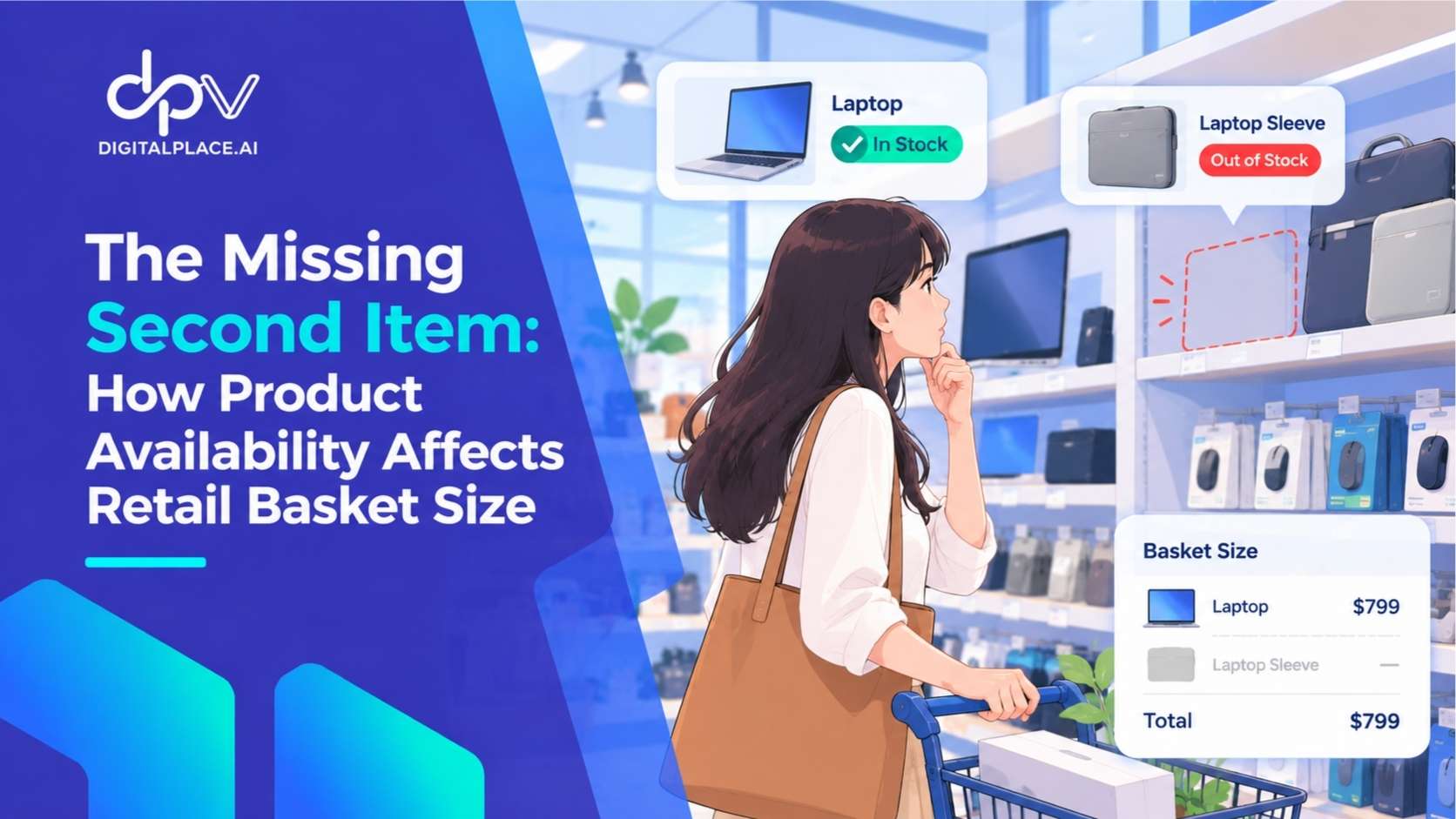
Product availability is one of the most important operational factors connecting conversion and basket value. If a customer cannot find the product they intended to purchase, the retailer risks losing the transaction. However, the consequences can be less obvious when a customer purchases the main item but cannot find a complementary product. The transaction is recorded as successful, yet its potential value may remain unrealized.
Research published in the Journal of Retailing in 2025 examined fulfillment failures in online grocery retail. The study found that unexpected stockouts could influence customers’ subsequent purchasing behavior, including delaying future orders. Although the research specifically examined online grocery fulfillment rather than general in-store shopping, it reinforces the broader importance of evaluating availability beyond immediate lost sales.
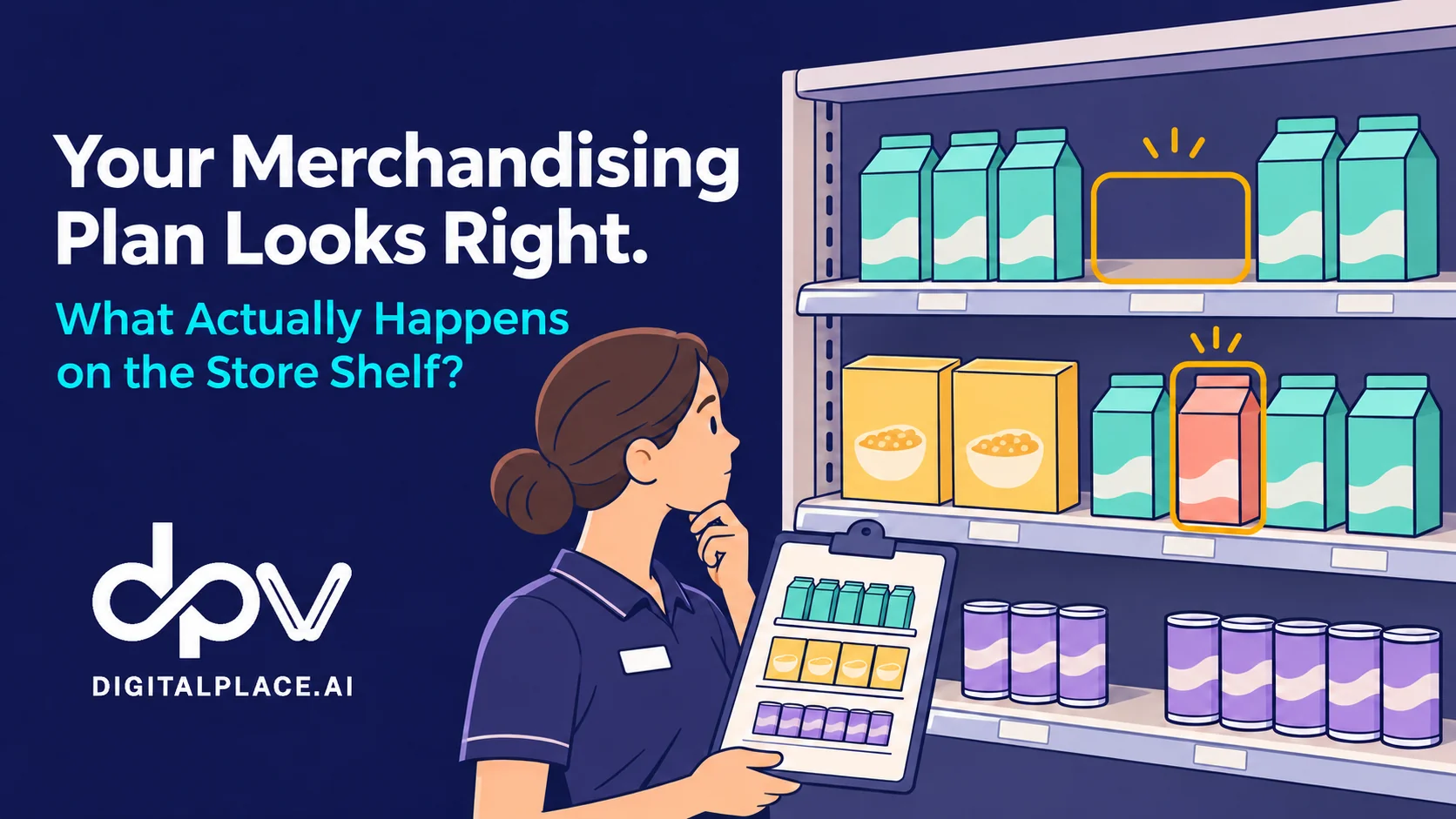
For physical retailers, this creates two related management challenges. The first is ensuring that inventory planning places suitable products in the right stores. The second is ensuring that available inventory actually reaches the shelf where customers expect to find it. A product may exist in inventory records but remain unavailable to shoppers because it has not been replenished, is misplaced, or is difficult to locate.
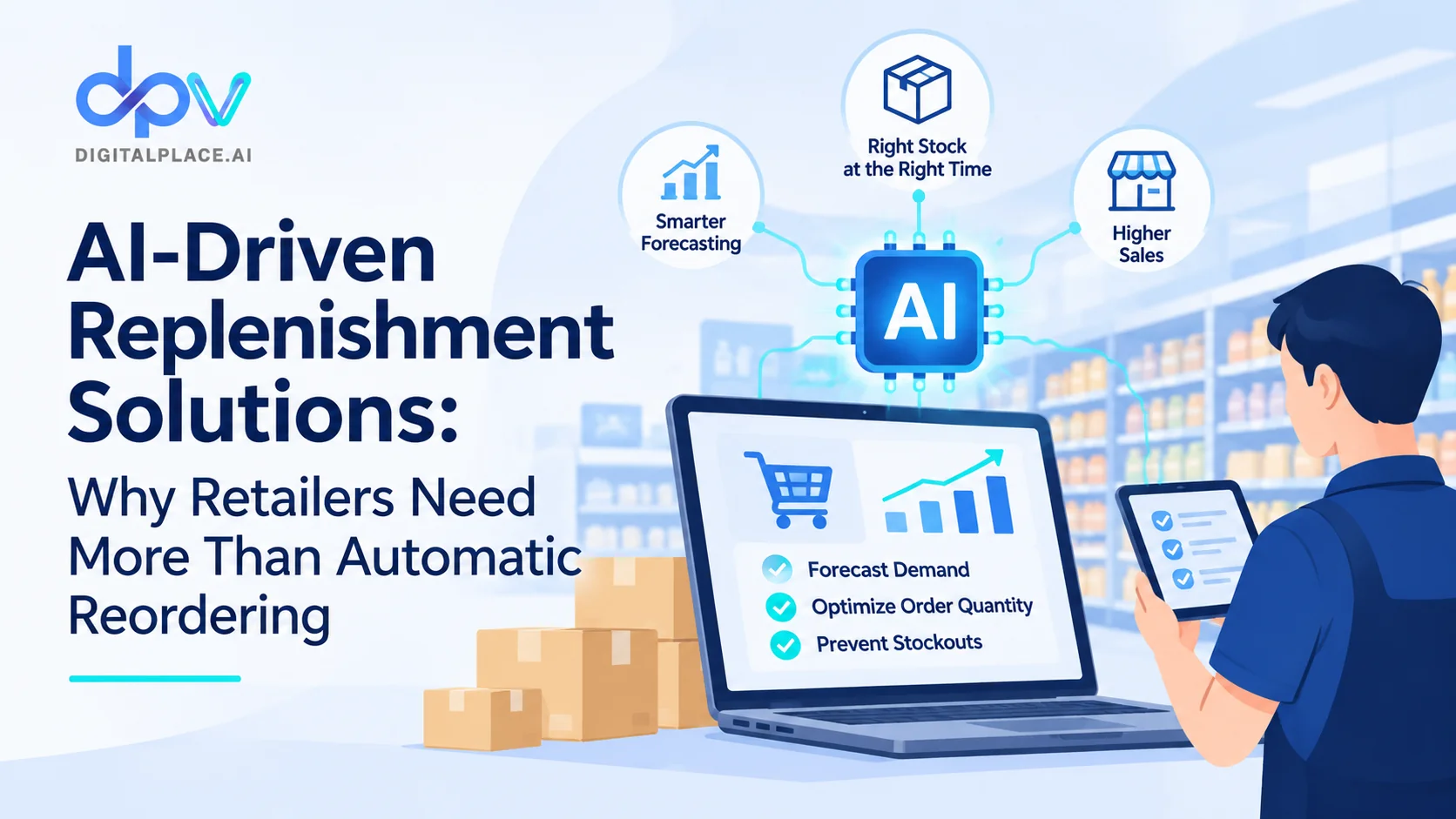
Digitalplace.ai addresses these operational areas through AI-powered inventory optimization, which supports demand forecasting and replenishment decisions, and on-shelf availability monitoring, which helps store teams identify missing or misplaced products. These capabilities address different parts of the availability problem: planning inventory and improving its physical execution at store level.
For retail management, the strategic lesson is that improving sales productivity may require coordination between commercial, merchandising, inventory, and store operations teams. Marketing cannot solve every revenue problem, just as inventory planning alone cannot guarantee that customers will find the products they want.
Prioritizing Growth Opportunities Across Stores
When retailers operate multiple locations, growth opportunities are rarely distributed evenly. A high-traffic flagship store may have strong conversion but declining transaction value, while a smaller neighborhood outlet may experience the opposite situation. Applying one improvement program across every store can waste resources or overlook important local differences.
A more effective approach is to segment stores according to their performance patterns and identify the most plausible cause of underperformance. The following framework illustrates how management priorities can change depending on the underlying signals.
| Performance Pattern | Possible Issue | Management Priority |
|---|---|---|
| High traffic, low conversion | Purchase friction or unmet demand | Review availability, service, and checkout |
| Healthy conversion, low ATV | Small baskets or weaker product mix | Improve relevant product pairing and merchandising |
| Rising ATV, declining margins | Discounting or unfavorable sales mix | Review promotional profitability |
| Frequent stockouts, unstable sales | Inventory planning or shelf execution gaps | Improve replenishment and product availability |
This framework should be treated as a diagnostic starting point rather than a definitive explanation of store performance. Revenue metrics show what changed, but additional investigation is necessary to establish why it changed. Store size, category mix, seasonality, promotional periods, and local competition can all influence the interpretation.
A Practical Approach to Growing Revenue From Existing Traffic
Retailers do not need to launch a large transformation program to evaluate these opportunities. A focused improvement initiative can begin with existing POS, traffic, inventory, and store performance data. The objective is to identify one commercially meaningful problem, introduce a measurable intervention, and determine whether the results justify broader implementation.
- Establish a baseline. Measure store traffic, conversion, ATV, UPT, gross profit, and relevant product availability indicators over comparable periods.
- Identify performance gaps. Compare similar stores, categories, and trading periods to determine where the largest addressable opportunities exist.
- Select a specific intervention. Examples include improving checkout staffing, correcting shelf availability, adjusting product placement, or introducing more relevant product recommendations.
- Test before scaling. Evaluate performance against comparable stores or periods, accounting for promotions, holidays, and other external influences.
- Measure commercial outcomes. Assess incremental revenue alongside gross profit, implementation costs, customer experience, and operational sustainability.
One useful management principle is to prioritize improvements by potential financial impact, confidence in the diagnosis, implementation cost, and speed of execution. For example, correcting a recurring shelf replenishment problem may require less investment than a major customer acquisition campaign. However, the retailer should test whether the correction produces meaningful sales or margin improvements rather than assuming that better availability automatically guarantees higher revenue.
Conclusion: Growth Starts With Understanding Existing Demand
Retail revenue growth does not always require more visitors. Existing store traffic already represents customer interest, purchasing intent, and potential demand. The commercial opportunity lies in understanding how much of that demand becomes a transaction, how much value each transaction creates, and which operational constraints prevent stores from performing better.
For retailers, the most useful question is not simply how to increase ATV or conversion. It is which improvement will create the greatest sustainable commercial value, given the store’s current performance and constraints. The answer may involve better customer service, more relevant merchandising, stronger product availability, or a combination of these factors.
Digitalplace.ai’s focus on inventory decisions and store execution reflects an important part of this broader challenge: retail growth depends not only on generating demand, but also on having the right products available and making them accessible when customers are ready to buy. Retailers that connect commercial strategy with operational evidence are better positioned to grow revenue from the opportunities already entering their stores.